

When Rise of the Planet of the Apes came out in 2011, I was apprehensive about the film to say the least, having only experienced the series through Tim Burton’s bizarre and unremarkable Planet of the Apes in 2001. It was a reminder to not completely judge a film by its trailer, and to this day I still regularly quote “Apes together strong.” So when I first caught wind of another Planet of the Apes film on the horizon, to say I was hyped would be an understatement.
Set generations after the death of our previous protagonist Caesar, Kingdom of the Planet of the Apes presents a world where the now-dominant apes have split off into their own thriving communities. At the same time, humans have continued to dwindle and devolve, robbed of their intelligence and speech by the very man-made virus that granted it to the apes.
Our guide to this new era is a young chimpanzee named Noa (Owen Teague) whose clan leads a peaceful life raising eagles to help them fish for food while fending off scavenging humans, who they call “echoes.” This idyllic existence is shattered when a band of apes loyal to the megalomanic chimp Proximus Caesar (Kevin Durand) attack and enslave Eagle Clan, Noa embarks on an quest to avenge and liberate them.

As the lead, Teague delivers a commendable performance. At once, Teague can channel Noa’s desire for revenge, his sense of failure for not defending his family, and his struggle to reconcile his old perspective of the world with the new discoveries around him. Though his story follows the standard path of a classic “hero’s journey,” Noa’s emotional pain and how his discoveries shape his understanding of his place in the world, especially in relation to the humans, never failed to hold my interest.
Freya Allan, known for playing the spunky and charismatic Ciri in Netflix’s adaptation of The Witcher, plays one of the few and most boring human characters. While it makes sense for her character, Nova/Mae, to prioritize her safety and goals, her constantly guarded speech, mannerisms and actions aren’t interesting compared to Noa’s quest to save his clan.
What is intended to be a guarded stoicism necessary for her survival, unfortunately comes off as bland acting, especially in contrast with the more prominent personalities of the apes. There also is zero explanation behind her skills and knowledge, and though these details are being saved for the possible next installment, her potential to be interesting goes unfulfilled and she does little more than progress the plot.

As for the villains, Kevin Durand and Eka Darville hold nothing back in their respective roles as Proximus and his gorilla enforcer Sylva. Durand is captivating, delivering his lines with the self-righteous zeal of a ruthless leader who truly believes that the ends justify the means. Unfortunately, despite Proximus’ influence being felt throughout the film (and his prominence in the marketing), there is precious little of him actually in it, such that he almost seems like an afterthought. Darville’s Sylva is much more of a direct antagonist to Noa. Though relatively one-dimensional, Darville’s performance is full of brutal, animalistic fury and unquestioning devotion to his king, making him an enjoyable character to hate.
The standout role was Peter Macon as the orangutan scholar Raka. While Noa’s single-minded devotion to his quest drives the plot forward, Raka’s comedy, compassion, and curiosity ensure that even the slower, quieter moments of the film are still enjoyable. His fascination with humans and devotion to Caesar’s compassionate teachings provide a welcome bridge for fans of the previous films into the new world.
With a run time of two hours and 25 minutes, Kingdom is the longest of the modern Apes films and quite the odyssey in every sense of the word, and though Noa’s quest feels sprawling, it thankfully stops short of being overstuffed and outstaying its welcome. Viewers unfamiliar with the events of the previous three films need not worry, as Kingdom provides just enough exposition to understand how the fall of man and rise of the apes occurred.
For most of the film, I found it hard to stay engaged with the Mae subplot, which mostly left me with more questions. Without giving anything away, Mae’s ideas and actions establish the potential for conflict in future films and a deeper exploration into the struggling remnants of humanity.

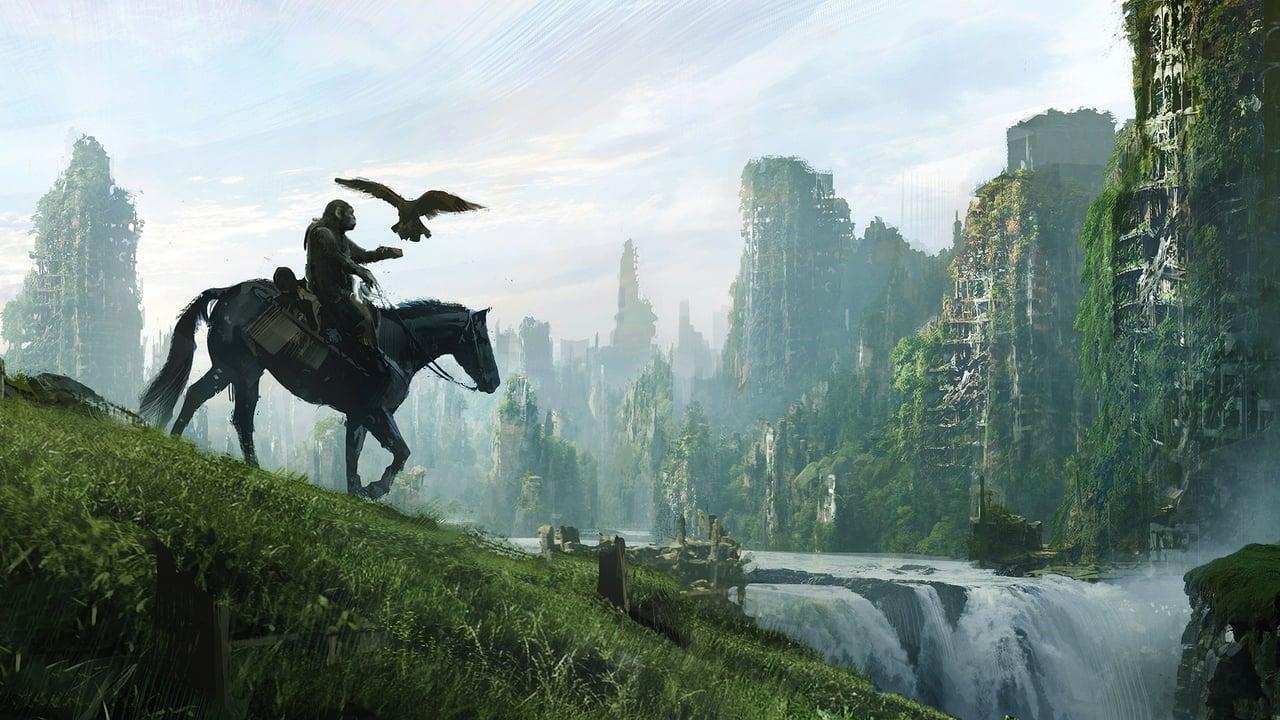
Thankfully, when it comes to the main plot, Kingdom is an awe-inspiring spectacle of a film. Grueling fights and tense chase sequences are spread throughout the story and not only kept me on the edge of my seat, but also serve as a reminder of the danger and savagery of the post-apocalyptic world, newly reclaimed by nature. Be it the lush, grassy fields, rocky shoreline, or the rusting carcass of a beached ocean liner, every location and set piece across the ruins of California offers a breathtaking sight.
My favorite moments featured the crumbling and overgrown ruins of skyscrapers, and the scenes of apes effortlessly climbing them reminded me heavily of the Horizon: Forbidden West game in the best of ways. The decaying remnants of human civilization inspire an air of melancholic beauty. As special effects technology continues to improve, so does the look of the apes. I often found myself marveling at the renderings of their fur and how lifelike and expressive their face were.
I appreciated the film’s brain candy even more than the eye candy. Central to Kingdom are themes and questions that have plagued humans for millennia, like the lust for power, the perversion and abuse of a heroic legacy and the choice between dominion over the planet or peaceful coexistence. Having been a fan of Caesar’s saga for over a decade, I loved exploring his status as a mythic figure to future generations, and how the different factions of ape chose to interpret and exploit his teachings.
On the surface, Kingdom is a fun action/adventure/sci-fi revenge quest with talking chimps, but just below the surface is an opportunity for lite philosophical pondering about the nature of society and humanity. It’s nothing too intense and won’t radically shift your views, but compared to the bland explosion fests that tend to dominate the summer box office, I enjoyed the opportunity to do some thinking.
Kingdom of the Planet of the Apes is a film that caters to both existing and new fans, making everyone feel included. While some characters may fall flat, they don’t diminish the splendor and excitement of exploring the primate post-apocalypse. Whether it’s through the thrilling action sequences or the nuances of its plot, the newest entry in the series proves that the apes are still strong, inviting both old and new fans to enjoy the journey.
Rating: 8/10