

When did the mummy become a movie star? After the film shoot wrapped! (I’ll imagine your polite chuckles, slow claps, and pained groans.)
For my latest cinema escapade, I went to the theater to see Lee Cronin’s The Mummy with my own mummy (my mother, not a preserved corpse). This film is a modern take on mummy curses and is not tied to the iconic franchise featuring Brendan Fraser and Rachel Weisz, nor to the lackluster reboot with Tom Cruise. In fact, by putting his name right in the title, writer/director Lee Cronin emphasizes his independence from the Universal Studios legacy of mummy films and, for better or for worse, does his own thing.
Set in the modern day, Lee Cronin’s The Mummy followsthe misadventures of the Cannon family, who are stationed in Egypt while the father, Charlie (Jack Reynor), pursues work as a journalist. The family’s oldest child, Katie (Natalie Grace), is kidnapped in the middle of a desert storm without any leads, only to be uncovered eight years later, trapped and mummified in an ancient sarcophagus. The Cannon family is initially overjoyed to have Katie back, but as they struggle to piece together what happened to her, Katie’s erratic and disturbing behavior takes a dark turn toward the supernatural.

The best way I can think of to unwrap the different layers of this film is to break it into three sections: the good, the bad, and the ugly.
The film’s marketing hinges around the tagline “What happened to Katie?” and Cronin’s story certainly leans into the mystery of why Katie was mummified and what nightmares she will inflict upon her family.
While it can be a bit of a slow burn at times, the intrigue is enough to keep pushing the story forward. Even though there were a few scenes that could have been cut for pacing and runtime, I was never bored and never thought the film dragged.
The bread crumbs of why Katie was abducted and mummified are dripped out at a steady pace that balances well against the scenes that show her condition worsening. The story takes its time, but uses its scenes to effectively deepen the mystery and the sense of disquiet and dread.

The real stars of the show were the literal stars of the show. Laia Costa carries every scene that she’s in as Katie’s mother, Larissa. Larissa’s regret, sorrow, and guilt are at the core of Costa’s performance, which makes some of her more questionable choices and more delusional moments understandable and authentic for the character. Much of the film’s story hinges on the family drama surrounding Katie’s disappearance and return, and Costa anchors its emotional center.
Shylo Molina and Billie Roy also deliver remarkable performances as Katie’s siblings, Sebastián and Maud, respectively. It’s often hard to write and direct children in a way that feels believable and modern, rather than how older generations think kids sound, but Molina and Roy breathe that youthful energy into their characters. Sebástian’s guilt, resentment, and isolation feel perfectly natural for an angsty teenager without being a caricature and counter perfectly with his parents’ uncritical enthusiasm over having their daughter home. Roy’s Maud has never met her older sister, and her understated fear and apprehension while trying to keep a brave face make her probably the most relatable character. Pair this with how the mummy’s influence affects the siblings throughout the film, and the young actors portray a surprising depth.
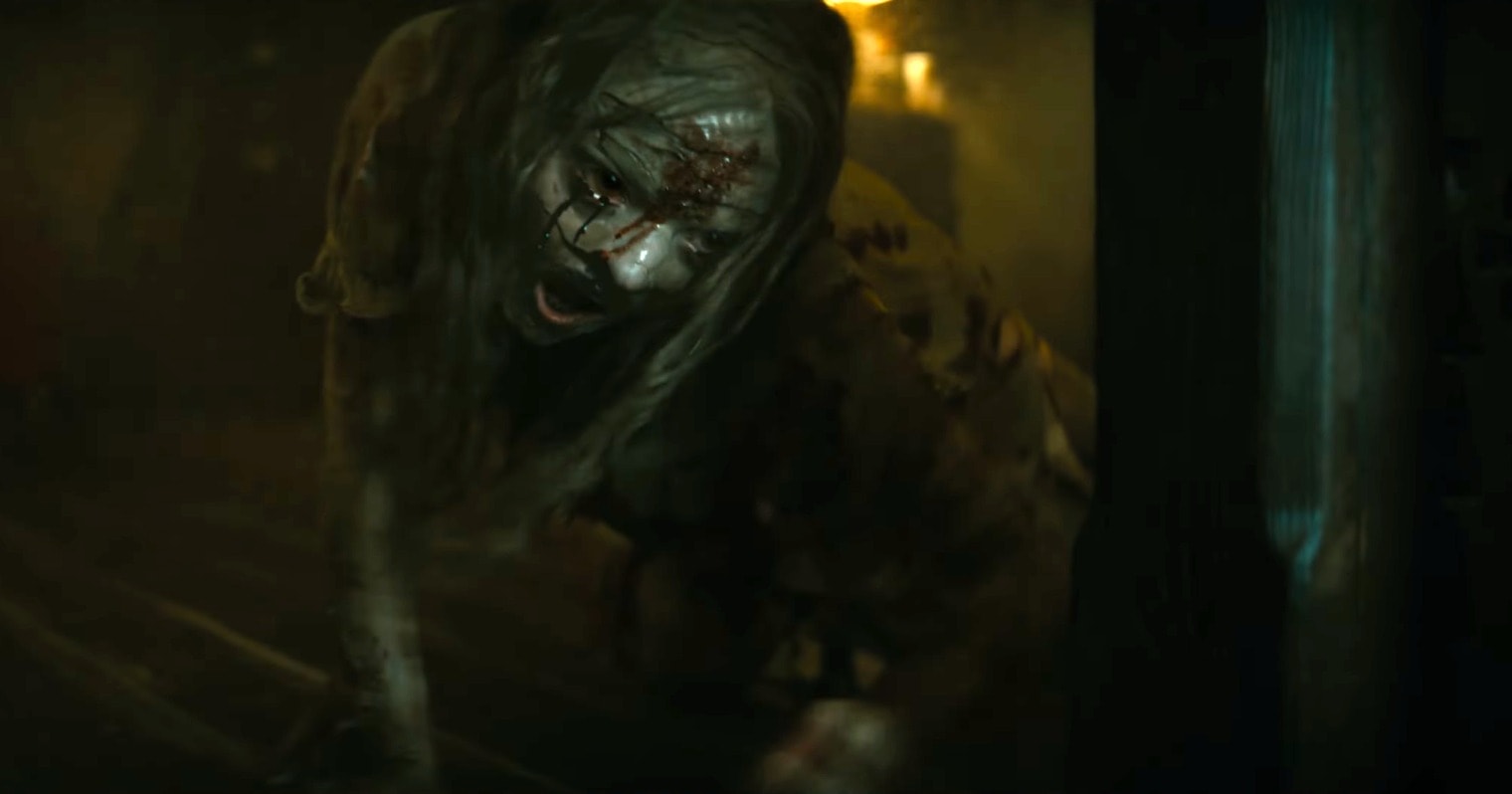
Of course, there is the titular star, Natalie Grace’s Katie/Mummy. So much of Katie’s character is nonverbal. She screams, groans, and clicks. Her movements are twitchy, jerky, and inhuman. Pretty much all of the horror in the film is carried on Grace’s shoulders, which she does exceptionally well, especially when you learn that this is her first feature film role, and as a lead to boot!

Sadly, not all the performances are laudable. Reynor is painfully bland as the family’s patriarch, Charlie. He has flashes of emotion and good acting, particularly when Charlie is angry or shows concern for Katie. But for most of the film, Reynor is bland and unconvincing. He stares at everyone and everything with an almost comical buggy-eyed befuddlement and stumbles through the story with a lack of energy or initiative. For a movie based on preserved corpses, Reynor is the deadest thing on screen.
I believe that there is a misconception that horror movies have to be terrifying nightmare fuel. Horror films, in my opinion, can instead seek to unnerve, unsettle, disgust, and disquiet their audiences; in other words, they horrify, rather than just terrify.
That being said, I wanted Cronin to terrify me. Catholic guilt and a witchy girlfriend who talks to ghosts have me predisposed to freak out at supernatural horror, and I felt like the trailers heavily implied that it would be a supernatural scream fest.
Lee Cronin’s The Mummy was gory. It was suspenseful, with well-drafted scenes of dread and disgust. But not once did it scare me. That would normally be fine, given what I just said about the purpose of horror films, but with how much Warner Bros. and the marketing team have emphasized the film’s “nightmare fuel” aspect, it just felt like another case of “overpromise and underdeliver.”

Some scenes seem to have been added solely for shock and gore value, but they create a narrative problem due to the lack of consequences. Bad things happen, and then everyone just kind of shrugs and moves on. Katie’s parents never try to get her more medical or psychological help. People get injured and never show up again. While I can get behind the occasional need to suspend disbelief in a fictional story, Cronin’s story relies on it as a crutch.
The biggest failure of Lee Cronin’s The Mummy is that it’s not a mummy movie. Okay, yes, part of it takes place in Egypt and, yes, there is technically a mummified body that comes back to life, but that’s really it. Bare minimum.
I have enjoyed Blumhouse’s other modernized versions of classic horror stories like The Invisible Man and Wolf Man, but the forced Americanization of the story by transplanting it into New Mexico for whatever reason removes much of the monster’s identity. Exploring the culture and history of ancient Egypt and its ties to the hubris of colonialism is so core to Egyptology and mummies. Cronin’s story lacks any sense of adventure, and all the discoveries conveniently come to the characters.
It’s not even a movie, really, about a mummy. It’s a possession movie. The real villain isn’t Katie as a mummy, but the ancient spirit inside of her. The film hits so many of the same beats as Evil Dead Rise, which is not surprising, given that it was Cronin’s last movie. If Cronin wanted to do another possession movie, that’s fine, but framing the story around a mummy fails both the film and the audience by setting up different expectations.

In most cases, calling something ugly would be a negative, but The Mummy is ugly in the best way.
The makeup and creature design departments did wonderful work with Katie. Her disfigurement from years of being trapped in a sarcophagus and her dry, crusty skin are really gross. I did get used to it as the film went on, but post-mummification Katie was never pleasant to look at.
Where the movie lacks in traditional screaming horror, it more than makes up for it with body horror. Cronin isn’t afraid to get up close and personal, flinging skin, guts, and so many fluids across the cinematic canvas.
Cronin also subverts your expectations with his gore and kills. Where other movies may lead you down one conventional path, Cronin decides to go off the path and bushwhack in delightfully unexpected and gruesome directions. One scene in particular was so shocking and visceral that I jumped and unconsciously covered part of my face with my hoodie. I will never look at clipping my toenails the same way again.

Mummies may not have stomachs, but I hope yours is strong if you’re going to see this movie.
Lee Cronin’s The Mummy was neither what I wanted nor what I expected from a mummy movie. The ties to Egypt were tangential, and the monster was an evil spirit rather than a mummy. It lacks scares or adventure.
However, Lee Cronin’s The Mummy is not a bad film. Cronin’s story is unique enough to stand on its own, independent of the inevitable comparisons to the beloved Brendan Fraser series. The plot is well-paced and suspenseful, exploring both the horrors of Katie’s possession and its devastating effects on the family dynamic. The cast is (mostly) engaging and believable, allowing us to become invested in their plight.
By this point, Lee Cronin has definitively proven that he can make a demon/possession film after doing it twice in a row. He did a good job with that. However, if you’re looking for a new, good film about mummies, then you may need to keep digging.
Rating: 6.5/10