

Hokum (noun):
1. nonsense
2. The title of a 2026 psychological folk horror film by writer/director Damian McCarthy
This review will, of course, discuss the latter definition, which I can thankfully assert I would not describe using the former definition.
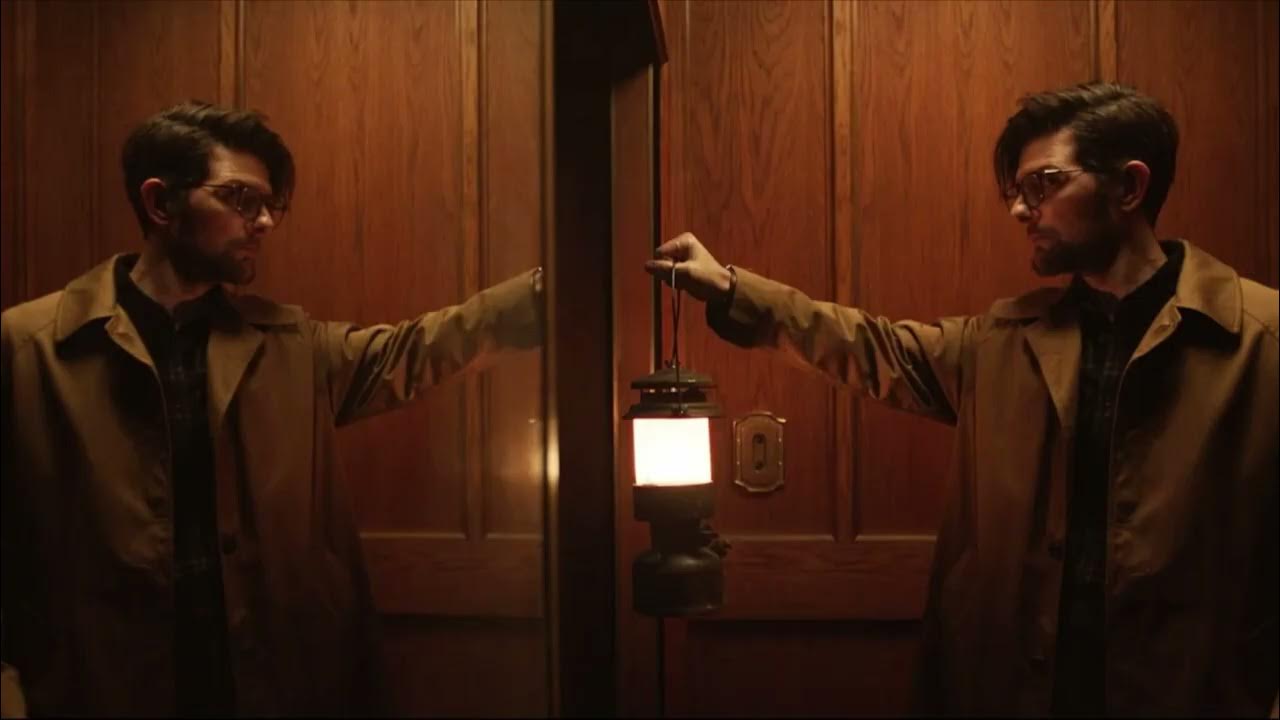
Adam Scott plays Ohm Bauman, a successful but surly author who resents his fans, prefers his solitude and is haunted by deep, personal demons. Ohm makes a pilgrimage to the Irish inn where his parents honeymooned to spread their ashes and discovers, according to local folklore, that the honeymoon suite is permanently unavailable because the owner trapped a local witch inside. After one of the inn’s employees goes missing and is presumed dead, Ohm and the local hermit, Jerry (David Wilmot), break into the honeymoon suite to search for clues, only to discover more than they bargained for.

Hokum movie review: An Irish folk horror that earns its scares
If you’re familiar with my reviews, then by now you probably have the sense that I set a very high bar for the horror genre. A lot of the time, filmmakers/studios hide behind clichés, cheap jump scares, or legacy reboots that are less scary than they are disappointing. This week alone, I’ve seen five horror movies.
Hokum was easily my favorite.
I accept that jumpscares are an established core tenet of the horror genre, and I will never be able to escape them. Though McCarthy employs the technique more often than I would have liked, most instances do not suffer from egregious telegraphing. Many of the best scares are carefully crafted moments, built up through pacing, imagery, acting and storytelling such that even though I knew the shock was coming, I welcomed it as an earned release of the scene’s tension. Other instances arrive completely unannounced, to surprise and delight, then disappear just as quickly, never overstaying their welcome.

Like he did with Oddity, McCarthy and crew have other tools in their bag of frights, unlike many modern horror franchises with larger budgets. McCarthy crafts his tale with a sense of balance. He includes enough signposts that his audience can try to guess what’s going to happen next, and doesn’t bash us over the head with the foreshadowing before the characters actually reach that payoff, and we return to pick up those narrative breadcrumbs. He confidently builds the forbidden mystique of the honeymoon suite and its potential paranormal horrors so that I genuinely worried that Ohm was in danger and felt fear for him, something that a horror film has not instilled in me in a long time.
Everything from the lighting to the set design to the costuming to the music contributes to the authentic sense of place and the feelings of suspense and dread. The camerawork is fluid and unobtrusive, forcing us to focus on the hotel’s fixtures we might otherwise try to avoid. Though the lighting was dim and dreary, it seemed mainly for mood, as it was never difficult to see what was going on, and the darkness didn’t seem to be a tool for hiding shortcuts the production team may have taken. The props and fixtures are gorgeously hideous, helping to tell the tale of the hotel’s age. Joseph Bishara’s score deserves special mention for being so instrumental (pun intended) in creating the dangerous, haunted mood.
Adam Scott in Hokum: A career-best horror performance
Adam Scott’s performance as Ohm caught me off guard. I admit that even though it is his most prominent recent work, I have not yet seen him in Severance (I’m very busy and have a huge TV backlog, but I’m working on it). I’m more used to seeing Scott in comedic roles, like the iconic Ben Wyatt in Parks and Recreation. His performance in Hokum is nothing like that. Where Ben Wyatt is earnest, affable and a good person, Ohm Bauman is none of those things.

Ohm Bauman is, quite frankly, an asshole. He’s cynical, bitter and rude. He has such contempt for the fans who made him a success that he’s not only rude and insulting to them, but physically assaults them. He’s a man who’s not only haunted by the strange goings-on at the hotel, but by some deep, personal demons. Scott delivers a performance that is dry and understated in its smugness and matter-of-fact in Ohm’s self-loathing that adds to its believability. Even though he’s immediately unlikable as a protagonist, Ohm remains compelling because we’re left to wonder why he’s such a miserable wreck and applaud his begrudging character growth.
Scott is backed by a strong supporting cast. Brendan Conroy, Florence Ordesh, Michael Patric, Peter Coonan, and Will O’Connell play the hotel’s employees who have varying levels of screen time and impact on the plot, but all serve their purpose and feel perfectly in place in a charming yet spooky countryside hotel. Without giving too much away, some characters are on screen only once or twice to establish the haunting atmosphere or to be the receiving end of Ohm’s attacks, while others have a more direct impact on the plot. Ordesh and O’Connell, in particular, lend some welcome warmth and humanity to a story and setting that are otherwise bleak and hostile. The hotel staff interact beautifully with one another, and there’s a sense of knowing and familiarity between them that, in-world, helps the hotel run like a well-oiled machine and, for our viewing pleasure, contributes to the feeling of the world being lived-in.
David Wilmot also turns in a respectable and endearing performance as the kooky, drugged-out forest hermit. Like Ordesh and O’Connell, Wilmot’s Jerry breathes some hope and levity into the story. His character serves as a foil to Ohm: both characters have endured trauma and horrors, but while Ohm has let his regrets consume him, Jerry allows himself to move forward and try to make the best of his unfortunate life. Wilmot is a warm and magnetic presence on the screen who quietly commands the attention of every scene he is in.
There is never a dull moment in Hokum. Every scene feels essential to either develop its characters or advance the plot. Unfortunately, with so much going on, the different plot threads at times feel a bit disjointed, as if they could have been parts of separate movies altogether. While the tale of the witch haunting the honeymoon suite is central to the plot and the source of most of the film’s horror, there were moments when I forgot all about her.

The murder mystery that drives most of the plot is compelling on its own, yet it often feels disconnected from the witch and the horrors she brings. In some ways, the witch only complicates the plot by raising unanswered questions about her presence and how she operates. Ohm’s personal and familial trauma helps inform his character, but takes such a backseat plotwise that when those metaphorical demons manifest for him, it’s like a puzzle piece has been forcefully wedged in just for the sake of it. Never fear, McCarthy is more or less able to tie all these threads together in a neat bow by the end of the one hour and 47 minute runtime, with only a few stray threads hanging out if you’re really stopping to look closely.
When I saw Hokum, it was one of the Monday Mystery Movie screenings at my local theater, and I had no idea I’d be seeing it that night, though I had hoped it would be the selection. I had been greatly anticipating the movie based on the trailers, and I don’t think it’s just my excitement from unexpectedly seeing it early that leads me to say it well exceeded my expectations. Or maybe it was my disappointment with another big-budget movie earlier in the week.
Damian McCarthy tells a vivid and disquieting tale in Hokum, brought to life by unsettling visuals, a moody score, and strong performances from Adam Scott and the rest of the cast. The various plot threads can occasionally seem disconnected, but by the time the credits roll, they all come together for a satisfyingly disturbing experience.
Hokum is genuinely the best horror experience I’ve had in the theater in a long time.
Rating: 8/10
Where to watch Hokum
Hokum is in theaters now via NEON. The film premiered at SXSW in March 2026 before its wide theatrical release on May 1.