

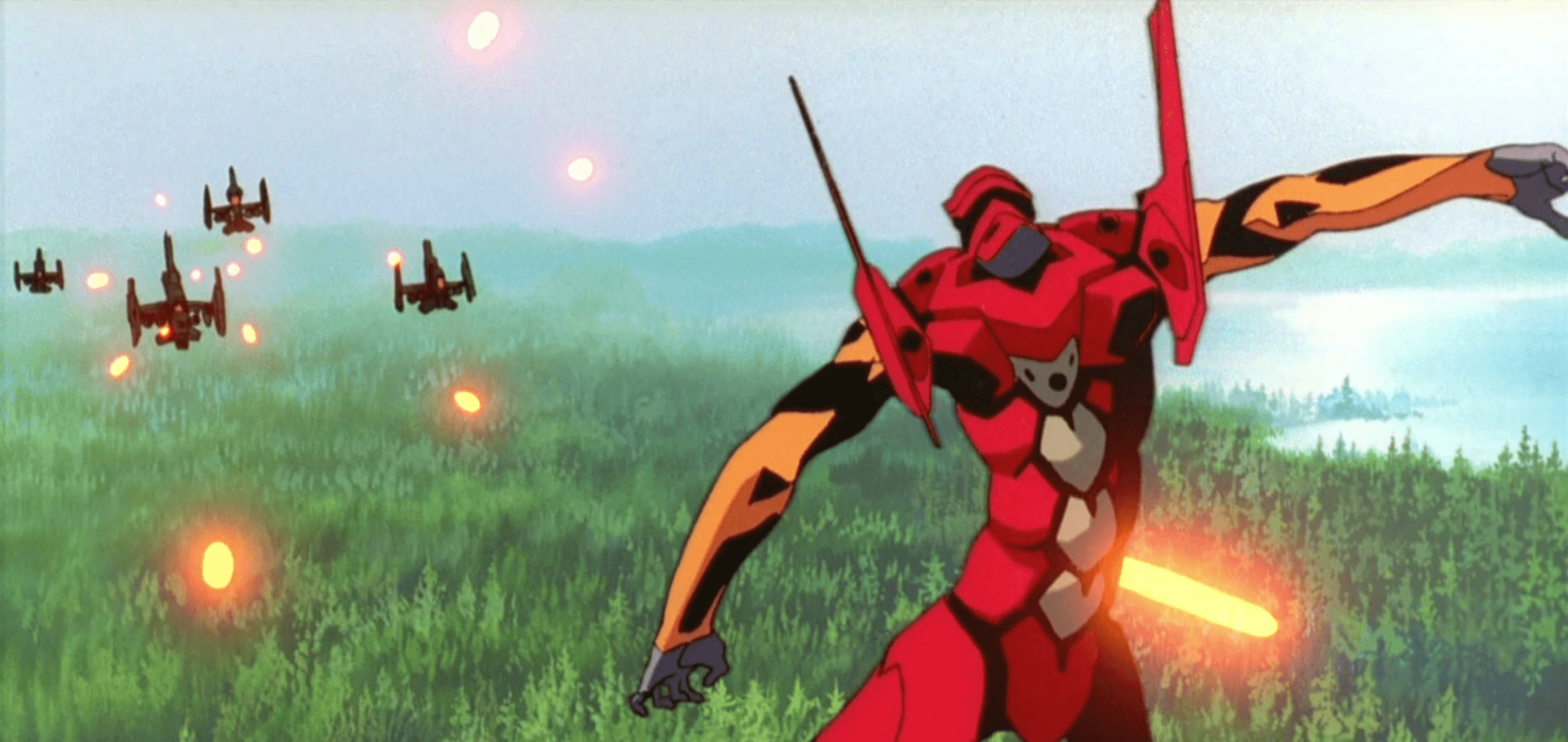
I was 15 years old when I first watched Neon Genesis Evangelion and its cinematic conclusion, The End of Evangelion. Even as someone who was still new to anime at the time, I immediately recognized that I was watching something that wasn’t just special but would forever leave a mark on my psyche. It’s why I’ve always argued that The End of Evangelion isn’t just a film. It isn’t just the conclusion to an incredibly popular mecha anime series. It manages to be more than that, pushing the limits of what an anime film can be and challenging the traditional conventions of storytelling in general.
The End of Evangelion feels less like a movie and more like a terror-inducing, psychedelic, cosmic horror art piece that assaults every part of your brain with the most horrific form of depression and leaves you wondering if you just sat through the most nihilistic therapy session of all time. The End of Evangelion is a visual nightmare that leaves me feeling empty and on the brink of tears whenever I watch it. Still, it’s precisely because of these emotions that I consider it to be one of my favorites of all time, and it is something that absolutely must be seen on the big screen.

Written by Neon Genesis Evangelion creator Hideaki Anno and co-directed by Anno and Kazuya Tsurumaki, The End of Evangelion serves as an alternate ending to the Evangelion anime series as the final two episodes of the original Eva anime series was met with backlash from fans. The film picks up directly after the end of episode 24. It follows Eva pilots Shinji Ikari and Asuka Langley Soryu trying to prevent the initiation of the Third Impact while also attempting to overcome their guilt and personal trauma.
While the basic plot of The End of Evangelion sounds simple on paper, the way that Anno executes this story on screen truly makes this film unique. The movie throws a lot of concepts and thematic imagery on the screen, and it is up to the viewer to understand what is happening and what everything means. There are very few if any, moments in which the film holds your hand or tells you what to feel, and while that may be frustrating to some viewers, for others like me, it is what makes The End of Evangelion unlike any other animated movie.

For a movie that isn’t considered horror, The End of Evangelion is one of the scariest cinematic experiences as towards the second half of the film, in which the Third Impact begins, the film engages in a montage of cosmic horror that will forever be etched into my memory. From Shinji’s terrified screeches as he is unwillingly sacrificed as part of the Human Instrumentality Project to the montage of humans dissolving into an orange liquid called LCL to the Mass Production Evangelions with Rei faces piercing their chests with spears, all while the iconic song, Komm, süsser Tod, plays in the background; it’s all horrifying to watch.
The film does not hold back from showcasing such traumatizing imagery because Anno wants the audience to feel, or at the very least understand, the exact raw emotions that the characters are feeling. Anno has made it no secret that he was heavily depressed while developing Evangelion, so much so that a lot of the characters, especially Shinji, serve as extensions of his own personality and mental state at the time. Considering this critical piece of information makes everything happening to these characters in the film much more haunting. It’s not just the characters who are suffering and coping, but Anno himself to an extent as well.

This is a movie that explores a lot of concepts that Anno was grappling with, like existentialism, identity, depression, psychological trauma, despair, isolation, and a lack of communication. When you take away the giant mechas and the alien god entities, you are left with a story about a group of characters who have so much self-hatred and are so riddled with depression that they lash out against the world instead of addressing their internal problems head-on. These characters are desperate for any semblance of love and human connection, and Anno excellently communicates both subtly and unsubtly that these goals are possible if they are willing to put themselves out there and work hard to make their paradise possible, even if they face the risk of rejection.
The End of Evangelion is just as much a story about these characters overcoming their flaws and inner demons. It is a commentary on Anno’s mental state and how he is using this piece of art to cope with his emotions and issues. There is so much that can be interpreted about The End of Evangelion, as there is no single correct answer to the questions that this film is asking. Even almost 30 years after this film’s initial release, fans of the franchise are still arguing about what exactly everything means, and there probably will never be a day when we fully understand The End of Evangelion. However, that mystery is exactly what makes The End of Evangelion, and the Eva series in general, special. Everyone’s interpretations of the film are valid because this movie means something different to each viewer. Hundreds of essays and analyses attempt to break down the more profound significance of every frame in the Eva franchise. While they may be able to tell you what The End of Evangelion means, they can’t tell you what The End of Evangelion will mean to you.