

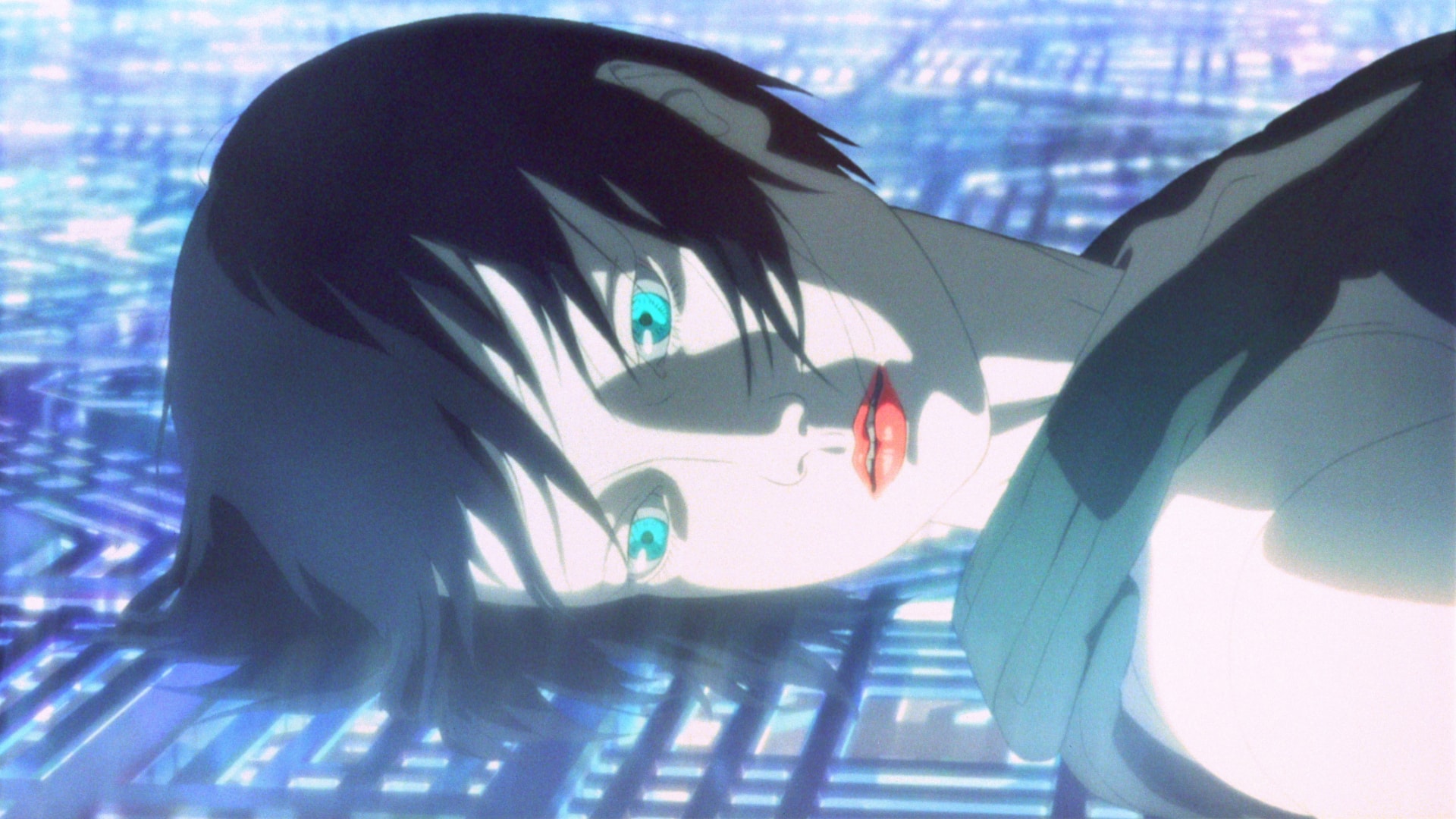
Mamoru Oshii’s Ghost in the Shell and Ghost in the Shell 2: Innocence are some of my favourite movies of all time. They perfectly encapsulate everything that I love about cyberpunk narratives and stand out from other films within the genre by being so cerebral and philosophical. That’s not to say that other cyberpunk films are not intelligent or articulate with their themes, but at the end of the day, a lot of these movies’ messages can be reduced to “what does it mean to be human” or “humans shouldn’t be mean to robots.”
What makes Ghost in the Shell so special is that while its messages could also be reduced to those statements, it never feels like your conversation with the movie is that simple or easy. It feels much more complex than that, but not because the movie references or alludes to advanced intelligent people you haven’t had to think about since college, like Confucius, Descartes, John Milton, or Isaac Asimov. It feels like you’re having an intellectual discourse with Oshii through the characters’ words and the visuals he’s showing you. It’s one thing when Major Motoko Kusanagi and Batou discuss consciousness and memory while drinking beer on a boat.
It’s another thing to visually showcase these ideas through a man having a mental breakdown after realizing that his memories of having a wife and daughter are nothing more than a lie artificially implanted into his mind without him realizing. Besides defining features like the gorgeous animation (the sequel is one of few anime films to make 3D CG animation work and look aesthetically pleasing) and the beautifully presented set pieces, these moments define the Ghost in the Shell series.

Therefore, whether you prefer the original or the sequel depends on how much of this cerebral nature you can process before an action scene happens. Suppose you want a film that perfectly balances these deep philosophical discussions about humanity, artificial intelligence, and identity with adrenaline-fueled, awe-inspiring action set pieces. In that case, the original Ghost of the Shell is the film for you. However, if you prefer the intellectual discourse surrounding these themes over people fighting, then Ghost in the Shell 2: Innocence will be the one you fall in love with more.
That’s not to say that this sequel lacks any visually impressive action scenes, as some of the most exciting moments are the ones that feature intense gun fights (my favourite of which being towards the end in which Batou and Motoko have to shoot their way through the LOCUS SOLUS headquarters ship). However, as fun as these set-pieces are, they are not what I remember about Ghost in the Shell 2: Innocence, nor are they what Oshii prioritized.
Years after the original events, Ghost in the Shell 2: Innocence follows Batou, a cyborg detective and Motoko’s former second-in-command, who investigates a series of murders caused by doll-like sex robots called gynoids. The plot is not very complicated, but at the same time, it doesn’t need to be because that is not where this film’s priorities lie. From the very first frame, it becomes apparent the plot is just an excuse for Oshii to explore these complicated questions about humanity and identity. Ghost in the Shell 2: Innocence blurs the line between humans and robots to the point that it is genuinely difficult to discern whether they are different.

For example, even though Bataou is a cyborg whose entire body has been replaced with machinery, he is treated like his partner Togusa, a character with minimal, if any, cybernetic enhancements, making him the most “human” character in the film. Similarly, the gynoids are treated as nothing more than objects created for the sexual pleasure of their masters. Yet, it’s later revealed in the third act that the gynoids that committed the murders had duplicated “ghosts” (which are this universe’s version of souls or consciousnesses) from girls who were trafficked by the yakuza.
Every scene in Ghost in the Shell 2: Innocence challenges our perception of the black-and-white division between humanity and artificial intelligence that other sci-fi and cyberpunk narratives have promoted for decades. From Oshii’s perspective, there is no such thing as 100% human or robot, and almost every scene reinforces this belief. One of the best scenes (and my favourite in the entire film) that highlights this central theme is the trippy, mind-bending time-loop Batou and Togusa undergo as the human-turned-marionette, Kim, attempts to hack their brains.
As visually stimulating and drop-dead gorgeous as this moment is, what truly makes it unique is the philosophically rich dialogue between Kim and the detectives. Kim explains how it’s strange that humans treat robots and dolls as objects they can use and throw away, like toys or electronics. However, suppose that all robots and dolls are to humans.

Why did they go out of their way to morph these machinery into adopting human-like qualities to the point that they almost become idealized versions of humans? Kim then speculates that perhaps this stems from humans’ fear that what “defines” humanity can be artificially replicated and that there might be very little difference between humans and robots.
This is just one scene that deeply explores its subject matter to this extent. Plenty of moments give just as much detailed commentary, some of which don’t even require dialogue. One of the best examples is the famous parade scene, which showcases beautiful imagery, animation, and haunting music yet manages to say so much without needing dialogue.
Ghost in the Shell 2: Innocence is a movie that has so much to say about so many complex ideas, and yet not once does it feel like I’m sitting through a boring college philosophy lecture because it is full of exciting characters, a rich universe, and an engaging story. Ghost in the Shell 2: Innocence may not be as tightly written and paced as the original, but this sequel is, in some ways, far bolder and more ambitious.