

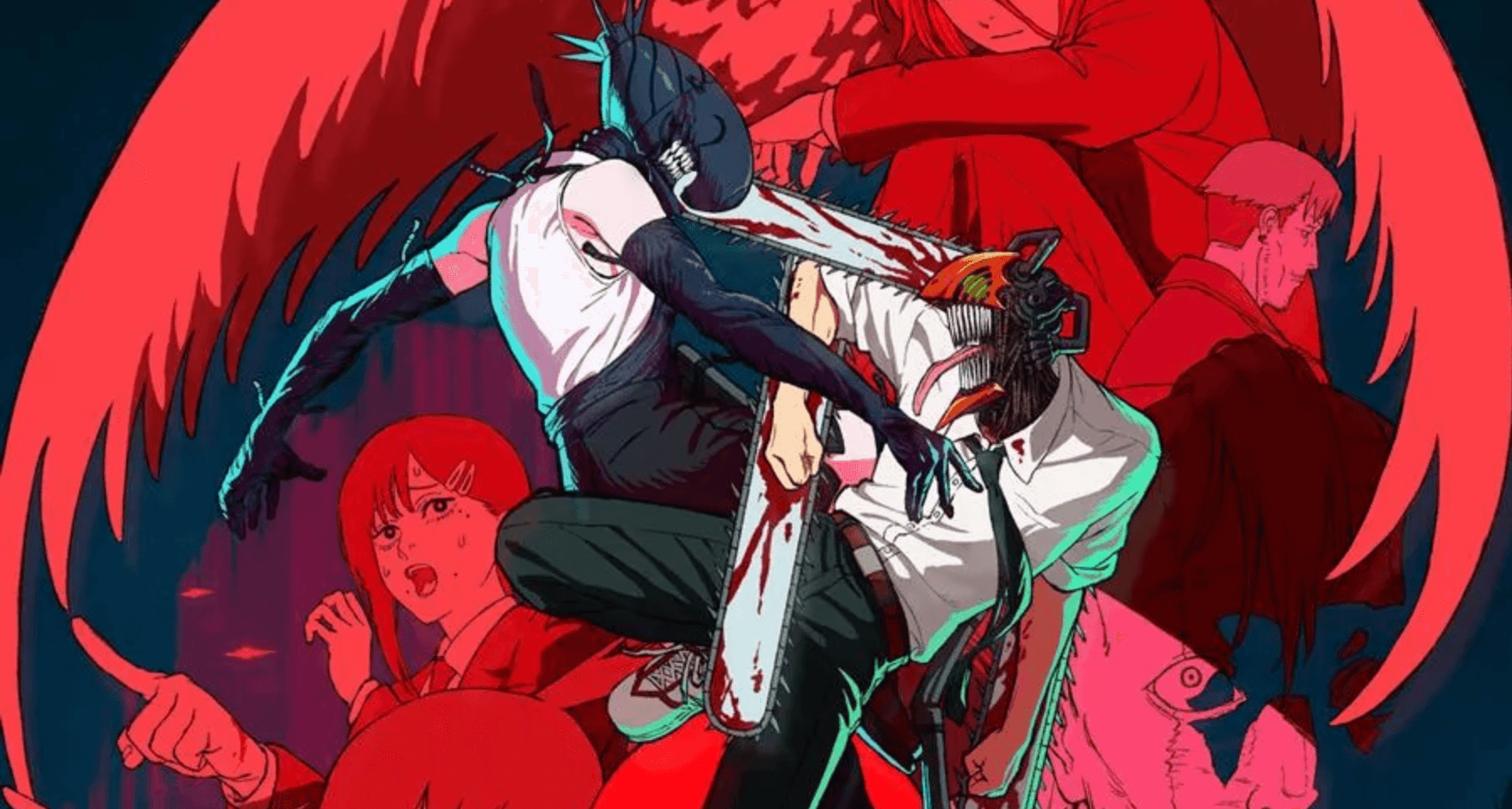
For two years in a row, I have had my heart ripped out and torn into a million pieces by two different anime film adaptations of Tatsuki Fujimoto’s work. Last year, that film was Look Back, a short yet poignant tale about the hardships that come with creating art and about how we must value those we love more than our ambitions and ego.
This year, Fujimoto broke my heart again with Chainsaw Man – The Movie: Reze Arc, a direct sequel to the first season of the anime and an adaptation of the fifth and sixth volumes of the Chainsaw Man manga. It may sound surprising or strange to say that I got emotional watching a movie that features a guy with chainsaws on his arms and head riding a shark while killing a giant Typhoon Devil, but frankly speaking, it would have been more shocking if that wasn’t the case.

This series has primarily been defined by its more overt attributes, such as its graphic and over-the-top violence, absurdist tone, dark sense of humor, and strong sexual nature. There’s certainly nothing wrong with these elements, as they very much contribute to my own love for Chainsaw Man and why I consider the anime and manga to be modern artistic masterpieces and future classics. However, there’s one crucial aspect about Chainsaw Man that I don’t think gets enough attention: Fujimoto’s ability to tell emotionally gripping narrative arcs about these characters who, at the end of the day, are damaged and traumatized people desperate to find some semblance of normality, love, and human connection.
With Chainsaw Man – The Movie: Reze Arc, Fujimoto’s masterful storytelling skills are in front and center, as by far the best aspect of this film is the incredibly well-written yet tragic romance between Denji and Reze. These characters have fantastic chemistry, and every scene where the two interact and engage in cute, romantic activities always left a smile on my face. In fact, it’s almost impossible not to, as the film does a fantastic job of making their relationship not just believable but spellbinding. Even though Reze reveals later that a lot of her affection and lovey-dovey gestures were just a facade she created to get close to Denji before killing him, their romance never comes across as artificial or hokey. If anything, that reveal makes their relationship so much more complex because even if Reze had ulterior motives, it’s apparent from the beginning that there was something real there between her and Denji.

If there hadn’t been, then Reze wouldn’t have taken the entire half of the movie to reveal her devil form and try to kill Denji, something Denji himself points out during their fight. That hesitation, the muddying of the line between duty and authenticity, is what makes Reze’s relationship with Denji so emotionally compelling. Even the simpler, quieter scenes, such as Denji and Reze getting coffee or going swimming together, are presented in a beautiful, gripping manner. From the way the characters smile and laugh at each other to how the lighting and music are utilized and how consistently beautiful the animation is, everything about these romantic scenes is so joyful to watch that I sometimes forget that I am watching a Chainsaw Man movie. These moments are especially what make the second half of Chainsaw Man – The Movie: Reze Arc so heartbreaking and difficult to watch because it’s essentially a breakup manifested as a 45-minute-long scene of gory violence and destruction.
That’s not to say that I didn’t enjoy watching the more action-packed second half; in fact, quite the opposite. The second half of Chainsaw Man – The Movie: Reze Arc is absolutely breathtaking to watch, as it’s nothing less than visual splendor after visual splendor. Every single one of these action scenes is so precisely animated, relying on a wide color palette range, dynamic camera movements, and complex coordination and set pieces to deliver some of the best fights I’ve ever seen in an anime film in quite a while. By far the most memorable moments —such as Denji riding on Beam to kill the Typhoon Devil or the final fight between Denji and Reze in the skyscraper and harbor —were especially astounding to watch on IMAX and will forever be etched in my memory.

MAPPA has consistently proven that they’re more than capable of animating a great fight scene, the most recent example of which being the Shibuya arc in Jujutsu KaisenSeason 2. However, they truly outdid themselves with Chainsaw Man – The Movie: Reze Arc, as this film, by far, has the best action I’ve ever seen in their entire catalogue. I would go so far as to say that this movie has some of the best action I’ve seen all year, animated or otherwise, and I can only imagine how huge the hurdle is for MAPPA to outdo the fantastic work they’ve done with this film in their next project. However, as visually stunning and engaging as the violence and gore are, they play a minimal role in why I adore this movie and are only as great as they are because of that incredibly well-written first half and what was set up there.
At the end of the day, when you peel away the action spectacle and body horror, we are left with a movie that, at its core, is a tragic romance between two characters who complete each other but cannot be together because of the terrible circumstances of their reality. The action is only exciting to watch because of that first half, when the audience invests in Denji and Reze as characters. In fact, all aspects of this film are entirely dependent on Denji and Reze’s relationship to be engaging and believable, because without that, everything else would completely fall apart. Luckily, MAPPA succeeded, and the result is a movie I am comfortable calling both the best anime film and one of the top five best movies of the year.
Chainsaw Man – The Movie: Reze Arc is a spectacular piece of art that exemplifies everything I love about anime as an art form, and by the time this review is published, I will have already seen it again.
Rating: 9/10