

The Avatar: The Last Airbender animated series has been celebrated as one of the most impactful and original stories. The show features extensive world-building, relevant themes, and characters that audiences have heavily invested in. Although the series was originally developed for younger audiences, the show matured with each season and has now found older viewers who have discovered it through streaming.
The prospect of a live-action version brought us one of the most regrettable and universally panned blockbuster adaptations in M. Night Shyamalan’s The Last Airbender. Since then, the idea of re-attempting a live-action remake has been met with extreme hesitation. However, Netflix felt that enough time had passed, and if they just got the blessing of the original creators, Bryan Konietzko and Michael Dante DiMartino, they could attempt to recreate the magic of the original show. Once they came on board, fans began to embrace the upcoming series as possibly being a good adaptation.
Ironically enough, though, Bryan and Michael ended up exiting the project due to creative differences, yet they asked fans not to prematurely judge the show and give it a fair chance as they left on good terms. Now, Netflix’s version is finally here and, unfortunately, it’s an inconsistent, aimless attempt at recreating the charm of an animated series.

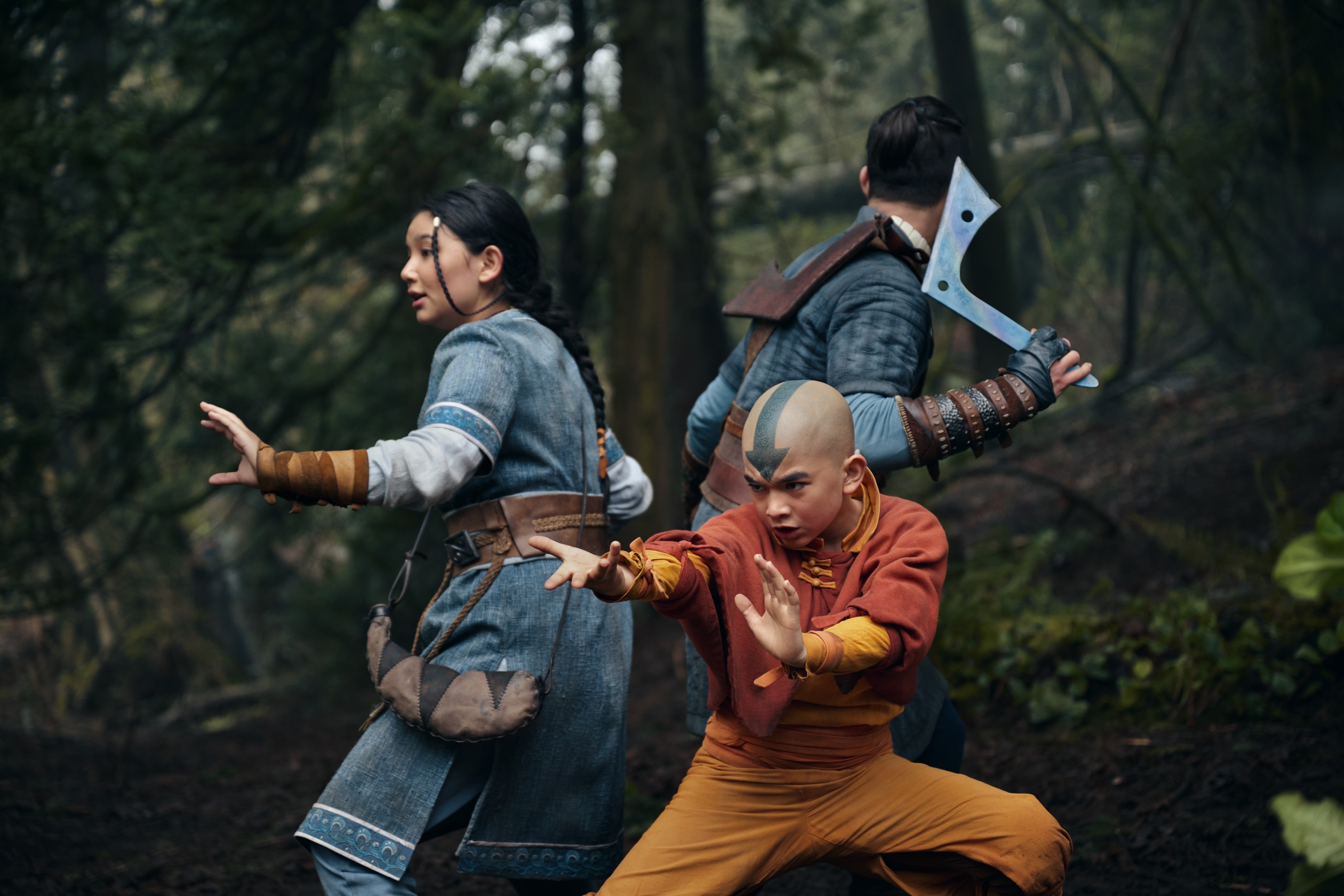
Avatar’s pilot strays from the original a bit, but the rest of the series follows the original accurately, yet with a serious lack of a voice behind the camera. The direction feels uninspired and small, in spite of the massive sets. The visuals also fail to present a lived-in, realistic world and instead, the surroundings look artificial. These are all noticeable details that are difficult to ignore when they go hand in hand with the simplistic direction and blocking that demonstrate mundane, lethargic camera work.
The visual effects, on the other hand, are all solid and flow well with the texture of the series. The set design, direction, costumes, and makeup are all crucial elements in creating a believable fantasy show and Avatar: The Last Airbender seems to have pushed through this portion of filmmaking in favor of other elements they’ve considered more important to the success of the series.
The stunts and fight choreography are clearly what the series was most excited to tackle. Fight instructor Alan Tang and stunt coordinator Alex Kyshkovych are both experienced experts in their field and appear to respect the original series’ dynamic fight sequences. Their work is most evident in the performance of Dallas Liu, in particular, who was especially impressive. Zuko has always been one of the best fighters, and seeing his skills, both with and without fire bending, was special, and he benefited from the live-action format.
Overall, the bending displays worked, and plenty of stunt performers gave their best to deliver stylistic and thrilling fight scenes. The martial arts aspect of the original show was always incredibly important, with life lessons, character arcs, and emotional conflicts being solved with martial arts terms and philosophy. I, for one, appreciate the care taken with this portion of the series.

The cast is the highlight of the series. They are able to deliver some truly special moments throughout the series. Gordon Cormier is as charming and lovable as Aang. Although, at times, the script struggles with how to frame Aang in difficult situations. In Book One, Aang had to balance the joys of being a child on an adventure with his friends while also having the weight of the world on his shoulders. The adaptation is afraid to show Aang’s flaws and anchors him as the unflappable heart of the team.
Kiawentiio is great as Katara, demonstrating her steadiness as the eager waterbender who has to carry the burden of witnessing her mother’s death. Ian Ousley’s Sokka has some fantastic moments highlighting his passion for creativity and ingenuity. However, Sokka, at times, gets forgotten throughout the course of the crew’s journey and is left on the sideline.
The previously mentioned Liu as Zuko is the standout, with a pitch-perfect, accurate portrayal of the jaded Fire Prince. From his needless, excessive outbursts of anger to his loyalty and respect for his Uncle, Dallas is able to balance the range of Book One Zuko quite well. Additionally, the writing for Zuko seems to be the one to translate the best to live-action. Zuko shines the most because, in general, there are moments where the dialogue holds the actors back and makes their work more difficult than it should be. This may seem like an issue with the cast, but it’s clear that the direction and script hindered them more than it should have.

Avatar: The Last Airbender is a heartfelt, well-intentioned attempt at re-creating the original magic of the animated series. It demonstrates that it clearly has a love for the original show with an emphasis on detailed martial arts sequences and an enthusiastic cast that holds the series together. However, the show is vapid and lacks any real spark.
The look and feel of the series contains very little texture which only exacerbates the lifelessness of the writing. Most notably, the direction is severely underwhelming and lacks the kinetic energy that made the animation so engaging. All this creates a lacklustre attempt at adapting an original story that is already immensely cinematic in its animated form.
At times, live-action adaptations can provide flare or character depth to animated properties, however, that is not the case with Avatar: The Last Airbender. The original is perfect in its own right, which is already an unfair disadvantage for the live-action series. There is very little elevation of the material, in spite of some good moments from the cast. Everything a viewer could want out of an epic fantasy show can be found in the animated series. Animation can stand independently, and this is one of the biggest examples of why.