

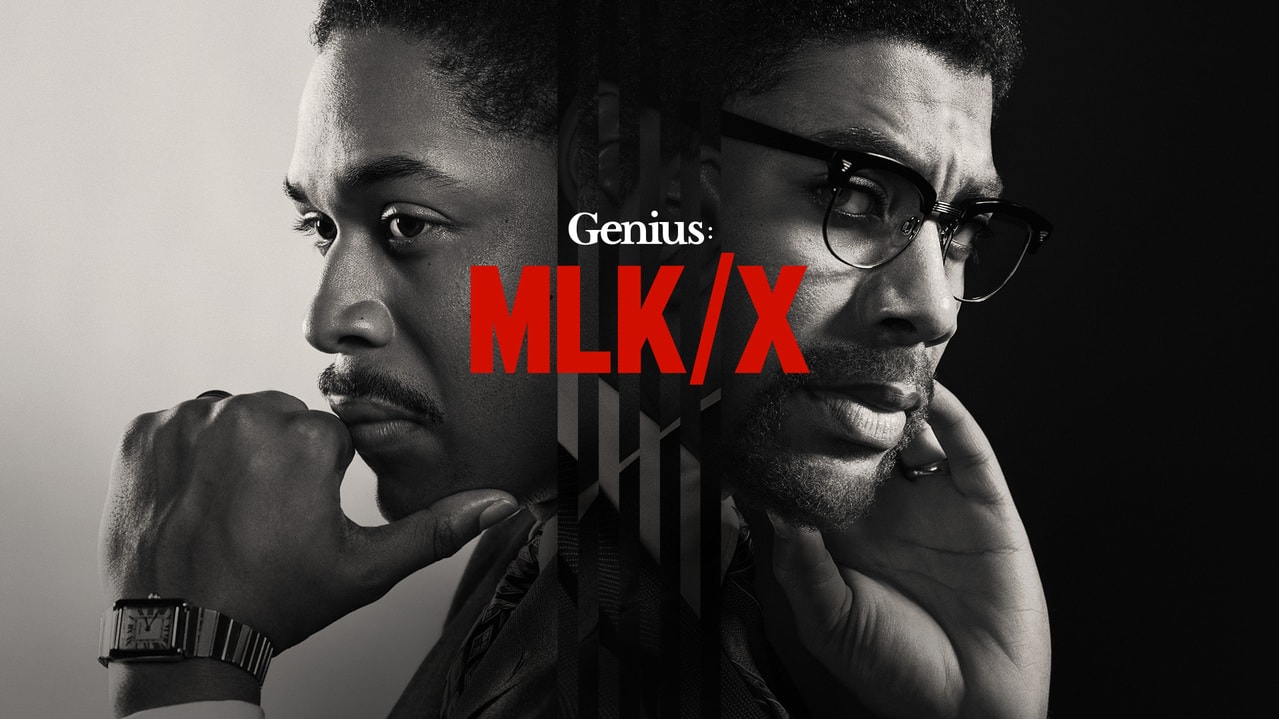
At the premiere of NatGeo’s Genius: MLK/X, writer Jeff Stetson – who penned the renowned stageplay “The Meeting” as well as the teleplay for the first episode of MLK/X – summed up the series with a profound quote. “No dreamer who wants justice doesn’t understand that it comes with a revolution. And no revolutionary can be a revolutionary without understanding the vision of the dream.”
That’s essentially the thesis of the fourth season of Genius, the National Geographic anthology series that dives deep into the lives of Martin Luther King Jr. and Malcolm X. Executive Produced by Gina Prince Bythewood and Reggie Rock Bythewood, the eight-episode miniseries from showrunners Damione Macedon and Raphael Jackson Jr. highlights many critical moments in the lives of the famed Civil Rights leaders that we haven’t seen on film.

In recent decades, several legendary actors and filmmakers have made biopics of the Civil Rights leaders. From Spike Lee’s magnum opus Malcolm X to Ava DuVernay’s Oscar-winning Selma, we’ve seen chunks of these men’s lives on the big screen. What distinguishes Genius: MLK/X is its comprehensive look at Martin and Malcolm as individuals instead of as historical figures.
As such, the series provides a myriad of moments that spotlight the mental health toll that these gentlemen endured as children and as adults. The show doesn’t shy away from demonstrating how Martin Luther King Jr. was suicidal in earlier stages of his life, not to mention the psychological toll of surviving multiple assassination attempts.
The first two episodes serve as an origin story highlighting how diametric each of their journeys to prominence was, where Martin discovers his purpose in the predominantly white Boston University while Malcolm finds his path in prison. The eight-episode format of Genius allows more time to draw parallels between MLK and Malcolm, like how they both enjoy ice cream, how much they actually agree with each other, or how many people were trying to murder them.
What also makes this NatGeo miniseries different is how prominently Coretta Scott King and Betty Shabazz are featured throughout MLK/X. While the story is still centered on the titular orators, it is clear that their presentation, personas, and legacies were built on the backs of their spouses. From the quiet opening sequence that crosscuts between Coretta and Betty fixing their husband’s ties to the powerful fifth episode titled “Matriarchs,” the wives are admirably elevated to co-lead status by showing how much influence they had on Malcolm and Martin. The weight of this season of Genius rests on all four leads, who thankfully all brought their A-game.

Starring Kelvin Harrison Jr. (Martin Luther King Jr.), Aaron Pierce (Malcolm X), Weruche Opia (Coretta Scott King), and Jayme Lawson (Betty Shabazz), the four performers excelled in representing the spirit and humanity of the Civil Rights icons. Mr. Pierce had the most oversized shoes to fill stepping into the role of Malcolm X. Denzel Washington’s monumental performance in the 1992 film still resonates with many as one of the most outstanding acting achievements of all time.
Pierce does a phenomenal job bringing a quieter, more introspective spin on portraying Malcolm that relies heavily on his piercing stare (no pun intended). Meanwhile, Kelvin Harrison Jr. adds a hint of joviality to Martin, especially when playing alongside the radiant Weruche Opia as Coretta. The standout for me was Jayme Lawson, who delivers an honest exploration of faith, strength, and sacrifice that unearths itself more as the series unfolds.

Beyond being a basic Black history biopic, Genius: MLK/X places the ideological differences between these figures at the forefront. But rather than pitting beliefs against each other, Genius showcases how much they inspired one another. Their philosophical unity somewhat crescendos towards the end of the series, as Malcolm becomes more open-minded and Martin becomes more comfortable strong-arming later in their respective lives. In the end, the evils of white supremacy and false prophets are what led to Martin and Malcolm’s unfortunate demise, rendering their unified stance for equality into a single photograph taken in the halls of Congress.
Genius: MLK/X is a detailed, intimate slice of history anchored by remarkable performances and thorough writing that provides the most holistic-feeling Civil Rights biography I’ve seen in a while. All four leads use humor and naturalism to embody the human side of these historical figures. The conflict driving Martin’s and Malcolm’s stories is enough to keep everyone entertained, regardless of whether you’re a history enthusiast or just a Disney+ subscriber looking for something to watch in February.