

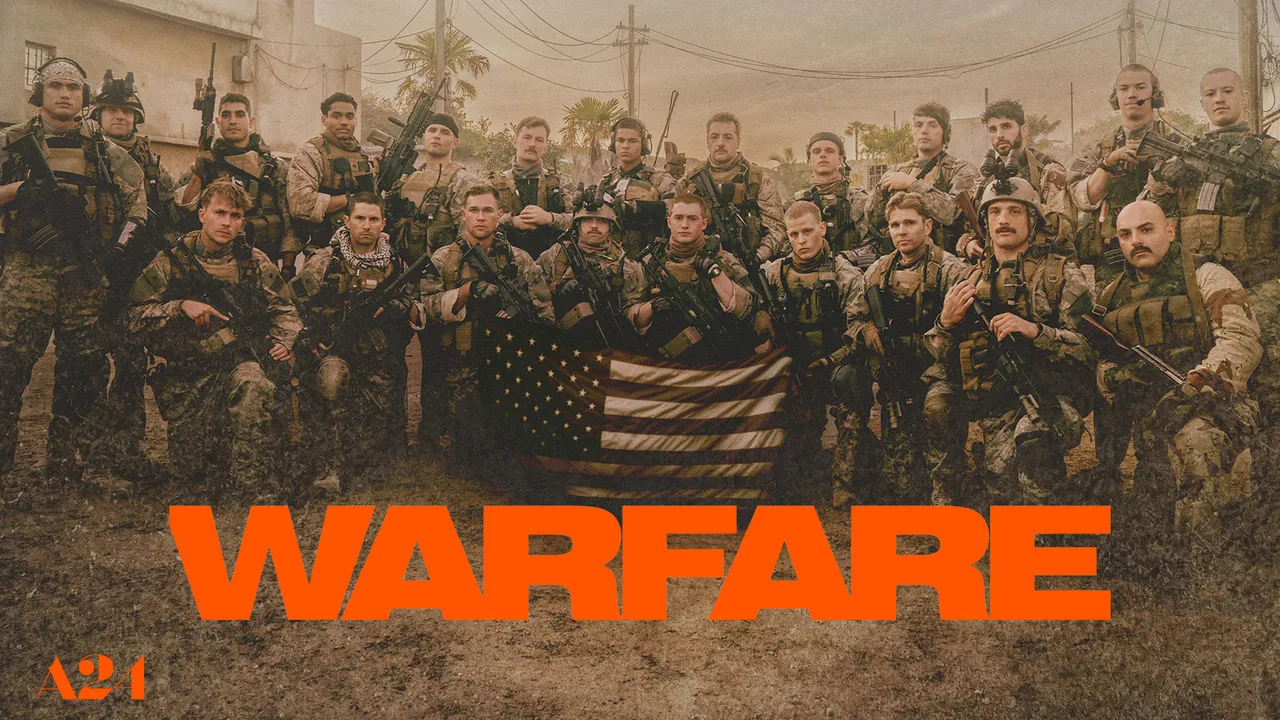
When the trailer for Warfare first dropped, it sparked a heated discussion on whether Alex Garland and Ray Mendoza’s A24 war action film is yet another pro-military propaganda piece in the vein of Clint Eastwood’s American Sniper or Mel Gibson’s Hacksaw Ridge or not.
The co-directors have remained adamant that the film is an anti-war picture because it authentically portrays the brutality and violence these soldiers experienced on the day this movie is set.

However, much like the Civil War, Warfare goes out of its way to avoid saying anything remotely meaningful aside from the most surface-level “war is bad” message, which is contradicted by its blatantly pro-military montage ending. For a film that is so committed to authenticity and historical accuracy, Warfare actively avoids delving into the greater context of the Iraq War, why these Navy SEALs were out on this mission in the first place, or even the consequences that followed both this event or the greater conflict in general.
Garland and Mendoza seem to loathe the idea of tackling even the most basic moral and ethical issues of the Iraq War because the film they’ve created isn’t really a movie; it’s essentially a 90-minute military ad that fetishizes and glorifies the Iraq War and the soldiers who fought in it. This film completely rejects character development, basic narrative structure, thematic statements, or any of the bare necessities to make a film like this work. Instead, it just starts; the soldiers shoot their guns for 90 minutes, some get wounded or traumatized throughout the runtime, and then it abruptly ends. How this is different from a Call of Duty campaign is really anyone’s guess.
In an interview with Empire magazine, Garland stated that his primary reason for making Warfare was because he was “interested in recreating something real as forensically as possible, and doing it in real-time.” Therefore, as frustrated as I am with how devoid this film is of substance, depth, or fully fleshed-out characters, I must recognize that these attributes were not Garland and Mendoza’s priorities. Their goal was to make a movie that is essentially a beat-for-beat recreation of what happened that day in the Battle of Ramadi based on Mendoza’s recollection and nothing more.

Aside from Warfare essentially being a $20 million historical re-enactment, Garland and Mendoza had a singular vision in mind that they sought to accomplish. They admittedly did succeed, at least from a purely technical level.
The best technical aspect of Warfare is undoubtedly the sound design. The sound that erupts whenever a soldier fires their weapon is so visceral and real that it’s almost as if I was in the firefight myself. While it’s not quite as impressive as a Michael Mann film like Heat or Collateral, the dedication to making the sound of the weapons firing or the explosions erupting feel as authentic as possible is an accomplishment worth applauding. On top of that, the film is decently shot and directed, and the actors do a competent job selling their characters’ fear and anxiety as they struggle to survive the firefight and witness their comrades screaming in pain from their wounds.
One scene that particularly stuck with me is when Michael Gandolfini’s character attempts to inject morphine into Cosmo Jarvis’s fatally wounded character but accidentally injects his own finger by mistake. In a movie with constant action and violence, small moments like this are the ones I remember the most because they do a better job of exploring the fear and humanity these soldiers had rather than all the glorified gore this film seems to revel in.

Regardless of how technically impressive Warfare may be, it still doesn’t answer the one lingering question that would not leave my mind the minute the credits rolled: so what? Garland and Mendoza were so committed to making a Hollywood-produced historical re-enactment that they never stopped thinking about why they were making this or what audiences were supposed to take away from it.
Suppose the entire point of Warfare as an artistic form of expression is to depict the extreme violence of war as authentically and accurately as possible to deliver some surface-level message about how war is bad. Hundreds of war movies made in the past have pursued and accomplished this same goal. The best ones, like Come and See, Paths of Glory, and Full Metal Jacket, go out of their way to make these incredibly profound, powerful, and psychologically scarring anti-war messages that Warfare tries but fails at attempting.

Garland and Mendoza expect the audience to sympathize and connect with these characters despite not bothering to give them a reason why they should, other than it’s because the soldiers are the “good guys.” No matter how gory the violence got in the film or how loud Joseph Quinn’s character screamed in pain after getting his legs blown off, I simply sat there in my seat with a blank look on my face. I should have felt anxious and terrified by all the carnage, but I was left feeling nothing and empty by the time the film ended.
The only time I felt even a morsel of emotion was in the very last scene of the film, in which the family that the Navy SEALs forced to remain silent and in place as they occupied their home slowly walked out of their bedroom to see all the destruction and mayhem that was left behind. Following that moment, we see the Iraqi fighters who shot at the SEALs throughout the film congregate in the street when they realize the Americans have left.

This scene is incredibly striking and provocative, especially considering how these moments are framed. I thought for a second I was finally going to get the movie I wanted so desperately, the one that would finally explore and analyze the consequences and ethical/moral questions that resulted from this conflict. I thought the movie would finally put the fetishization and glorification of war on hold for just a second to examine the real effects experienced by the people the Iraq War victimized.
Unfortunately, Warfare doesn’t do any of that. Instead, they just play a montage that praises the US military and showcases how brave and heroic the soldiers were that day. This montage ending snuffed out what little hope I had left for the film as it instead acted as a harsh reminder of what this movie is truly about: absolutely nothing that hasn’t already been said or done before and is better.
Rating: 4/10