

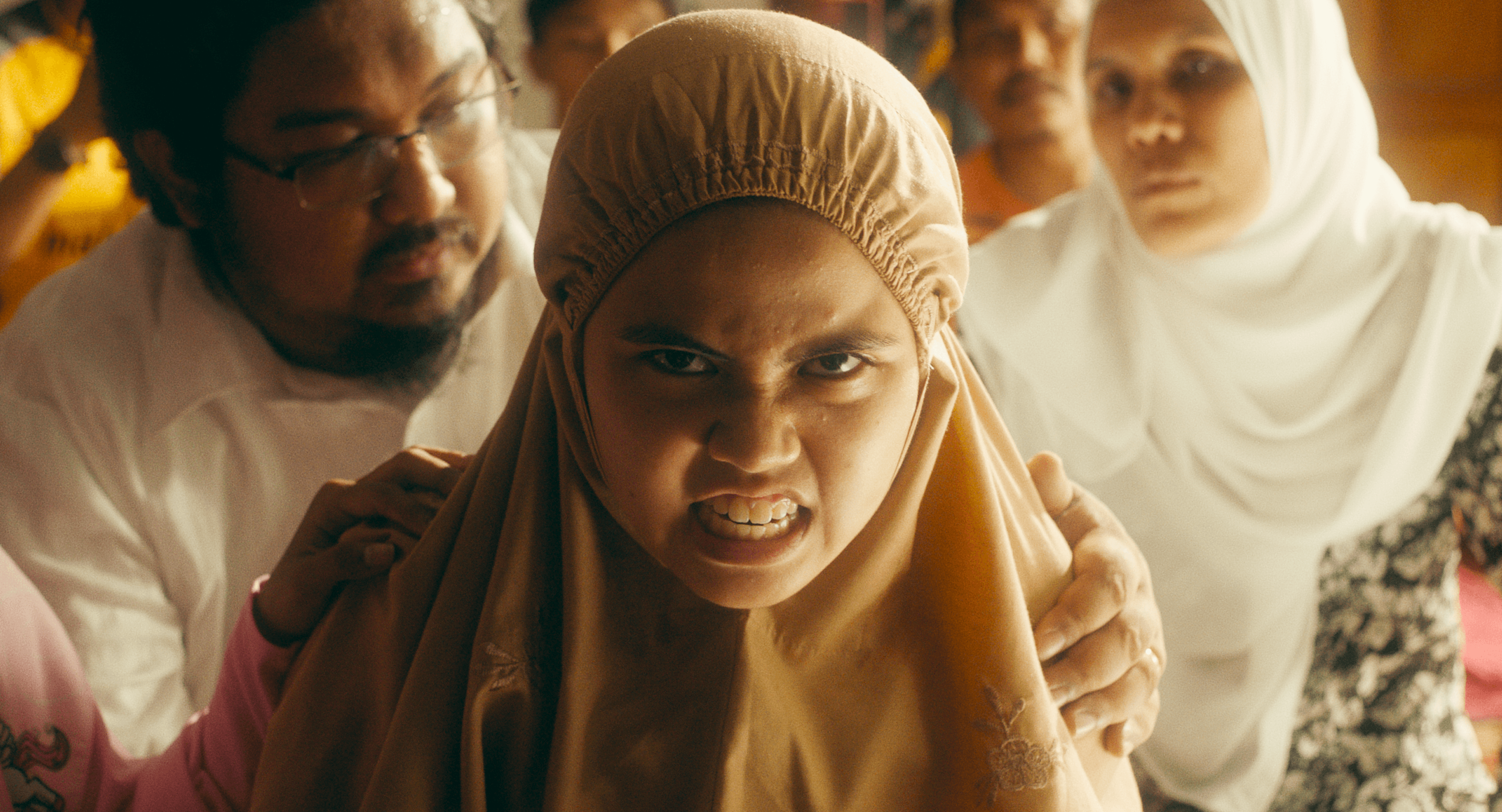
Growing up can be a monster. Amanda Nell Eu’s debut feature, Tiger Stripes, immerses you in a nightmare body horror fairytale of the awkward metamorphosis from adolescence to puberty.
This film follows 11-year-old Zaffan (Zefreen Zairizal), an outgoing, fierce senior at a religious primary school. She stands out amongst her peers by partaking in TikTok dance trends and wearing a bra under her school uniform. The other two in the trio of friends, Farrah (Deena Ezral) and Mariam (Piqa) are far more reserved, with Farrah being judgemental of Zaffan right off the bat, as Mariam is the one who tries to alleviate their differences and maintain the group’s friendship. Her school is strict, and her mother matches that energy at home. Zaffan’s spirit is constantly dimmed, while many find her joy and bold personality too much.

Zaffan begins menstruating, being the first in her school to do so. Since she and her friends do not know what to expect, they try to do their research. They discover “Ina’s” story- a tale of a woman who went mad during her period and now, as the story says, lives in the jungle. This reflects the feral, or “wild woman” trope- a woman ostracized by their communities, ones who can’t be tamed. Ina is someone to be feared. The friends scare each other in the forest, repeating that “Ina” is coming to get them as they play. Her friends find more tales of caution, like making sure you wash your pad correctly; otherwise, “demons will lick that blood and follow you around.”
Eu utilizes a blend of Malaysian folklore with body horror to exaggerate the frustrating reality of female puberty. This combination provides a fresh, literal take on the “wild woman” trope we’ve seen in Raw, Jennifer’s Body, and Ginger Snaps, with Ina’s story and the transformation we experience with Zaffan. As her body continues to change- her hair is becoming wild, she’s noticing new smells, and she struggles to handle her emotions. She’s taunted by her peers for these differences. Experiencing changes in your own body is terrifying enough, let alone feeling the weight of judgmental stares and mocks all around you.
In stark contrast to where we first met her, Zaffan starts to cover up her body to hide the physical changes, like wearing gloves to cover her hands that are beginning to mirror that of a tiger. The more she’s mocked, the more noticeable these become to everyone around her. As usual, Farrah and other students bully Zaffan in the girls’ restroom, but this one day turns out differently. Zaffan releases the animal inside of her, causing madness at the school. This leads to the third act filled with chaos, a failed “exorcism,” and Zaffan takes back her power. Her constant embarrassment and endless internal battle reach its boiling point, where she begins to accept the body that others are shaming her for.

Eu’s naturalistic camera work compliments her sharp script; the audience are flies on Zaffan’s wall, meditatively experiencing every moment of the transformation, like studying an animal you’re too afraid to get close to. She seamlessly blends humor into this script, capturing the essence of youth as she traverses through the themes from the young characters’ perspective. The fights between friends and her overbearing mother feel natural, paired with the TikTok dances and an ending that perfectly encapsulates Zaffan’s spirit. It’s evident that Eu took time to bring out those authentic performances from Zairizal and the other young actors, and Zairizal is electric as Zaffan. I enjoyed many aspects of the film, and Zaffan’s decision to free herself of shame and embarrassment brings catharsis to my awkward experiences growing up. Eu’s unique voice as a filmmaker shines through every second of Tiger Stripes, and I’m eagerly awaiting what story she decides to tackle next.
Tiger Stripes envelops you in the maddening metamorphosis of puberty. The fairytale-like structure juxtaposes the nightmare of inevitable transformation. Amanda Nell Eu debuts with an unapologetically confident feature that, like Zaffan, makes a mark. Amongst other films in the coming-of-age genre, this unique take provides a fresh perspective- making an already harrowing experience that much more haunting.