

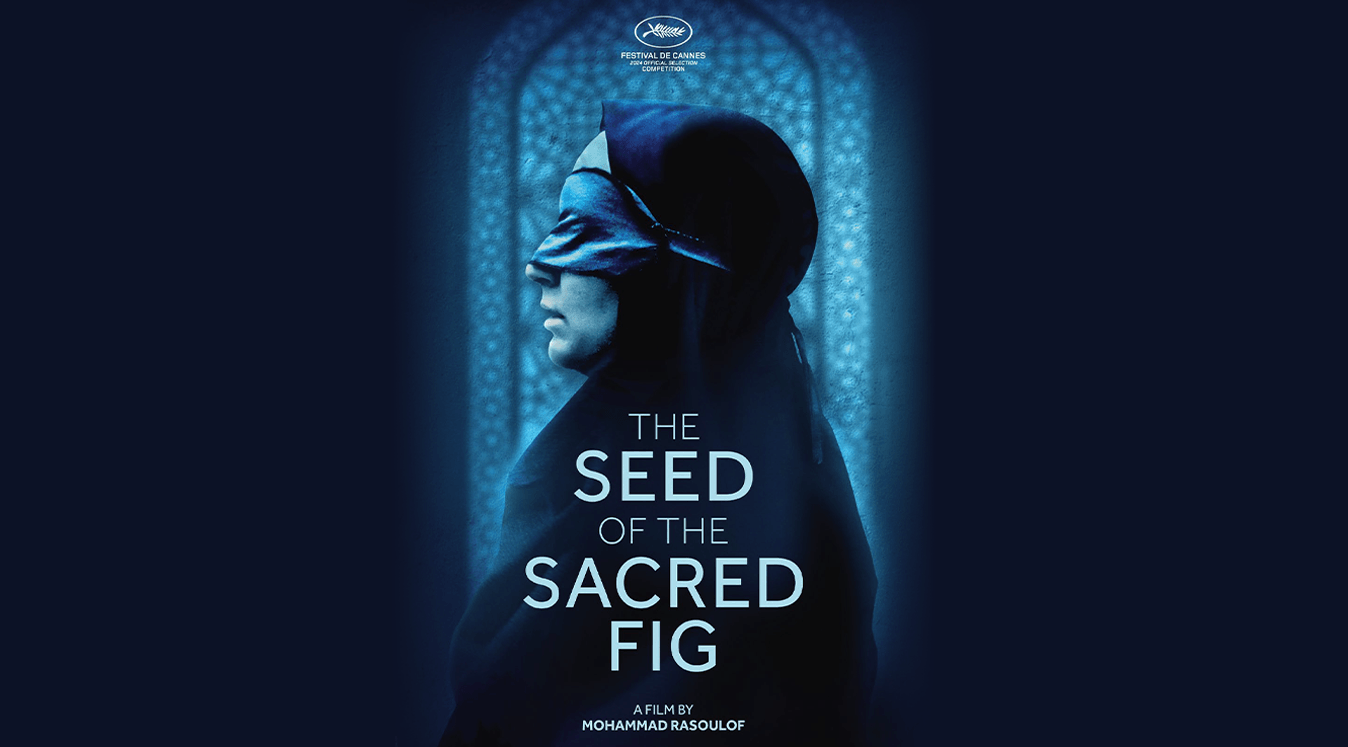
The journey to getting The Seed of the Sacred Fig made and released is just as politically charged and socially poignant as the film itself. Director Mohammad Rasoulof has long been labeled a “controversial” figure in Iranian cinema, though this label exists solely because the Iranian government has insisted on it. Rasoulof has been arrested multiple times and even had his passport confiscated, as his films have been deemed “propaganda against the system,” according to The Guardian.
When The Seed of the Sacred Fig was slated to premiere at Cannes, the cast and crew were interrogated by the Iranian government and banned from leaving Iran. Rasoulof himself was sentenced to 8 years in prison and subjected to flogging. Fortunately, Rasoulof managed to flee to a safe house in Germany, but the persecution faced by the director, cast, and crew highlights one crucial truth: the Iranian authorities feared the film’s truthful message about the government’s treatment of its people, particularly women.

The Seed of the Sacred Fig is, in essence, two films seamlessly merged into one. It’s a large-scale political film exploring the widespread protests that erupted after the death of 22-year-old Mahsa Amini, who was brutally beaten to death by the Guidance Patrol for allegedly not wearing her hijab correctly. Simultaneously, it’s an intimate, small-scale drama about the slow erosion of trust within a family, specifically between the father and his wife and daughters. On paper, these are two separate stories, but what makes the film so effective is how it bridges these two narratives.
At the film’s start, Iman (Missagh Zareh), the family patriarch, is promoted to investigative judge for the Revolutionary Court in Tehran. His main role is to issue punishments, including death sentences, against individuals the government deems criminals, without reviewing evidence. Though initially hesitant, Iman complies, enticed by the perks of his new position— a better home, higher salary, and a gun for protection. He also genuinely believes the government’s actions are justified.
His daughters, Rezvan (Mahsa Rostami) and Sana (Setareh Maleki), take an opposing stance. Unlike their father, who is entrenched in government propaganda, Rezvan and Sana witness the protests firsthand, either by scrolling through social media platforms like TikTok—scenes that the film integrates effectively—or by observing them in person. They understand the protestors’ motivations and, most significantly, are horrified by the brutal violence inflicted by the police and the Guidance Patrol on those fighting for women’s rights.

The government’s violent response to the protesters underscores why Rezvan and Sana ultimately side with them: these are people fighting for women’s rights, yet they are being denied those rights by an ultra-conservative, misogynistic government. The catalyst for the protests was the police brutally beating a woman who allegedly wasn’t wearing her hijab, and in a different reality, what happened to Mahsa Amini could have just as easily happened to Rezvan or Sana.
Unfortunately, these opposing political views lead to the collapse of Iman and his family. The turning point occurs during an intense dinner scene where Iman and Rezvan argue over the protests and their conflicting political beliefs. Iman can’t resist calling the protesters “radical feminists,” “sluts,” and other derogatory terms, but what enrages Rezvan is when Iman claims the protests are part of a conspiracy orchestrated by an “enemy” to destroy the Iranian government. When Rezvan repeatedly asks who this “enemy” is, Iman has no answer.
What should be a simple heated political debate at the dinner table quickly spirals into chaos when Iman realizes his gun is missing. Paranoid and convinced that one of the women in his family took it, he even accuses his wife Najmeh (Soheila Golestani), who has been nothing but loyal and supportive throughout his career. In his growing mistrust, Iman hires a colleague to interrogate all three women.

When that effort fails, coupled with his identity being leaked online, Iman takes his family to a remote home in the mountains, where he attempts to force confessions from them and subjects them to solitary confinement. The protests and the violent suppression of the protestors further strain Iman’s relationship with his family. Rasoulof’s ability to weave these two narratives together in a way that feels both organic and precise.
Without exaggeration, The Seed of the Sacred Fig is not only one of the best-written films at this year’s New York Film Festival but one of the best-written films of the year. The script expertly demonstrates how the conflict between the protestors and the government mirrors the conflict within Iman’s family. The dialogue throughout feels incredibly authentic.
Most importantly, the writing conveys Rasoulof’s anti-authoritarian, pro-feminist beliefs without coming across as preachy or condescending. Many poorly written political films often feel like the director is on a soapbox, shouting through a bullhorn rather than telling a story. However, in The Seed of the Sacred Fig, Rasoulof clearly supports the women and protestors, but his focus is on telling a compelling story first, using the narrative to expose the hypocrisy and brutality of the Iranian government.

While the writing is the film’s greatest strength, its directing and cinematography are equally impressive. This is a beautifully directed and visually stunning film, with almost every scene perfectly framed and immaculately presented, leaving a lasting impact even days after viewing.
One standout moment is when Najmeh stitches up Rezvan’s friend’s face after she’s struck by a shotgun blast during a protest. The scene unfolds in a single, continuous shot, never cutting away until the wound is fully patched. It’s both visually arresting and horrifying to watch. The film is filled with equally striking moments, and the fact that each scene is as memorable as the last is a testament to its craftsmanship.
Ultimately, The Seed of the Sacred Fig is not a great movie because of its important political message; it’s a great movie that happens to carry one, as all great political films do. Beautifully shot, directed, written, and acted, it’s a film that resonates with audiences, regardless of whether they are Iranian or not. Easily one of the best films of the year.
Rating: 9/10