

After co-starring in a courtside trinity with Timothée Chalamet and Ben Stiller during the New York Knicks’ heartbreaking playoff run, the prolific Spike Lee steps back behind the camera after a rare five year hiatus.
Fans waited patiently as Denzel Washington and Lee were spotted together multiple times, teasing a fifth collaboration could be in the works. But how could one of the world’s most recognizable movie directors up the ante from his 2020 epic Vietnam War drama Da 5 Bloods?

This time, teaming with A24 and Apple, Lee returns to big-scale storytelling with a remake of Akira Kurosawa’s beloved 1963 film High and Low. Still skeptical after the heavily studio-meddled 2013 Oldboy remake, cinephiles breathed a sigh of relief when not only Washington confirmed, but recent Oscar nominee Jeffrey Wright and She’s Gotta Have It breakout star Ilfenesh Hadera further made it onto the call sheet. I know I’ve had this date circled for a while, but was it worth the wait?
Highest 2 Lowest is everything we love and (slightly) loathe in a Spike Lee movie. The adjectives: brilliant, bold, poetic, irreverent, (a little) messy, and long-winded. Lee and crew cook up a compelling thriller as a satisfying entree, with commentary on class, culture, and the music industry served as finely crafted side dishes. While borrowing story beats and archetypes from the Kurosawa film, which is an adaptation of the 1959 novel King’s Ransom by Evan Hunter, Lee’s “reimagining” is equally interested in its rhythmically written dialogue about the “death of real hip-hop” as its central plot.

What is the central plot? Okay, skip the following two paragraphs if you want to know ABSOLUTELY NOTHING about this movie, because the setup is everything in a story like this. It’s also the same setup as the novel and the 1963 movie, but this is your last warning. In this reimagining, Washington plays David King, a music mogul who’s in the process of buying a major music label. Right before the deal goes through, a kidnapper snatches who they think is David’s son, but is the son of his loyal assistant, Paul (Wright). Just like in the novel and the Kurosawa film, David King grapples with paying a $17.5 million ransom for another man’s child.
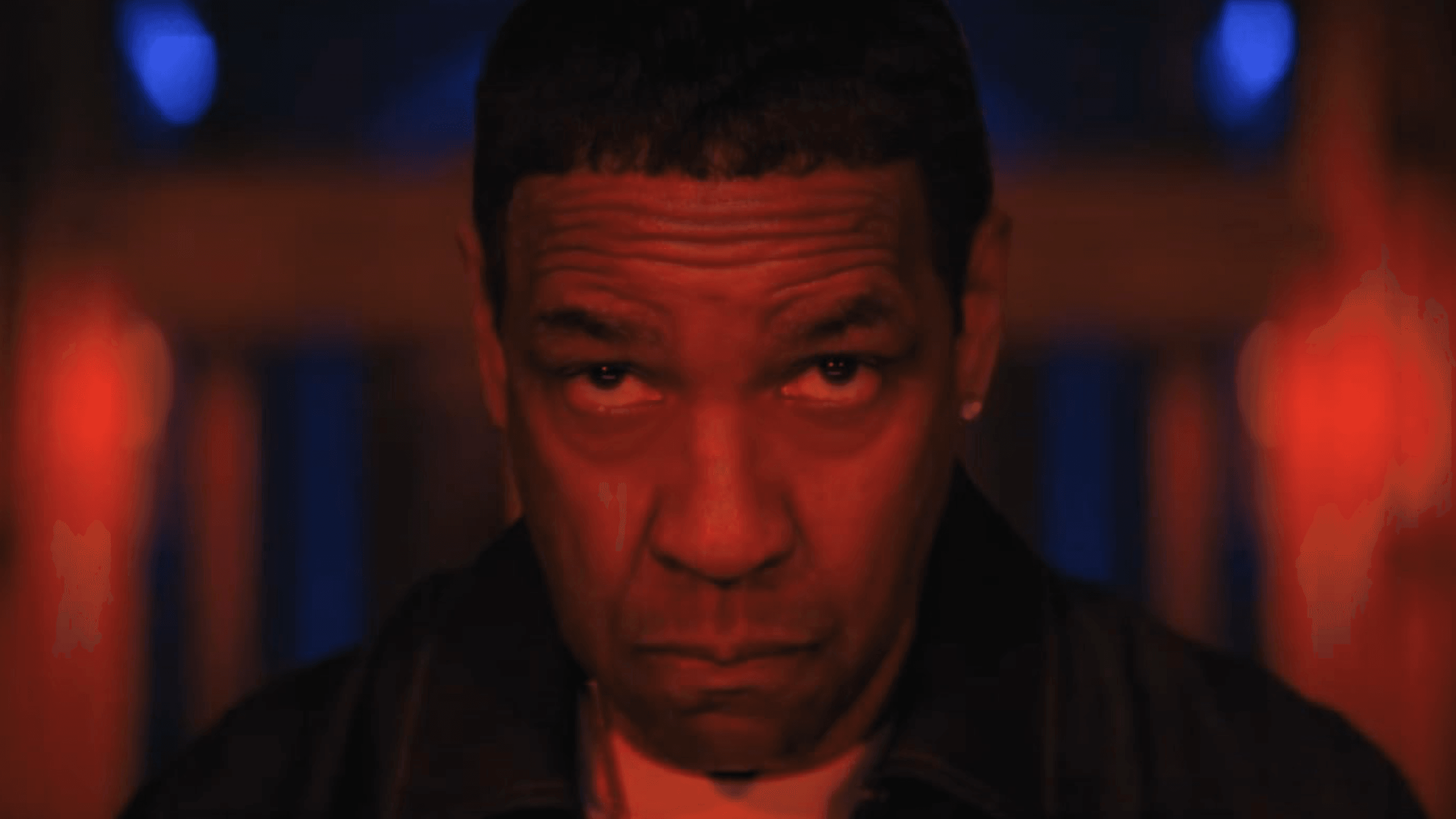
In classic Washington fashion, his character tethers between heroism and self-righteousness for the sake of his capitalistic ambitions. King is a complicated figure who presents himself with a lavish, suave exterior to conceal his cold-hearted interior. His questionable morality serves as a perfect foil to Wright’s Paul, who is a seemingly shady sidekick with a suspiciously checkered past. With the enormous wealth David owns, which was showcased elaborately by production designer Mark Friedberg, Paul’s comparatively peasant-like lifestyle doesn’t afford him negotiating power over the life of his son. In this role, Wright projects an authentic aura of masculinity, straddling the fine line between the “tough OG” and the “sensitive father” remarkably.

Ilfenesh Hadera does a good job as David’s wife, Pam King, but unfortunately, the script, penned by Alan Fox, doesn’t give her much to do. Washington is magnetic as always, but I was surprised watching actors like A$AP Rocky and Aubrey Joseph holding their own alongside arguably the greatest actor alive. Joseph played Washington’s son, sharing an intense long take scene with him that had me on the edge of my seat. A$AP Rocky stood firm in his role as Yung Felon, an aspiring hip-hop artist who looks up to King in ways you wouldn’t expect. He wisely taps into his rapping skills to keep up with the music-like rhythm of Lee’s dialogue.
The film also made me laugh a lot more than I expected, offering some genuinely hilarious moments of self-awareness that border on parody territory. From a different filmmaker, I would’ve disregarded these moments of levity as benign and unintentional. However, the funny thing about Lee is that they’re all 100% intentional. For example, Rick Fox plays…Rick Fox, but as a high school basketball coach. In one scene, the apartment number on the door read “a24”. The movie isn’t winking at us, it’s blinking furiously.

Three-time Oscar nominee Matthew Libatique shoots the movie with a glossy, utopian-like look at New York City, which later perfectly contrasts with the grimy underground of the kidnappers. He also does an impressive job framing complex subway-set action scenes. Although those scenes looked great, the musical score in some of these sequences undercut the adrenaline.
Speaking of the score, there is a lot of it throughout this movie, creeping up in almost every scene. It’s not bad, but it borders on distracting. I’m sure there’s a think piece somewhere arguing that because David King is a music guy, he’s thinking about or hearing music all the time. Still, the idea is better than the execution. Howard Drossin subs in for Lee’s longtime collaborator Terence Blanchard, and while Drossin’s composition was passable, I do feel Blanchard’s touch was sorely missed. That being said, the new A$AP Rocky song “Trunks” is a certified banger that I can’t wait to add to my playlist. In addition, Aiyana Lee’s closing track Highest 2 Lowest adds a heartfelt finale to the film.
Highest 2 Lowest is nothing short of undeniably bold choices. Many of these choices, such as the zany self-awareness and the lyric-like rhythm in the dialogue, elevate the film to one of Spike Lee’s finest works. Not everything is perfect, from the previously mentioned overused musical score to its distinct disregard for continuity in the editing. Nevertheless, Highest 2 Lowest is a funny, thrilling, soulful gem that deserves to be watched on the big screen.