

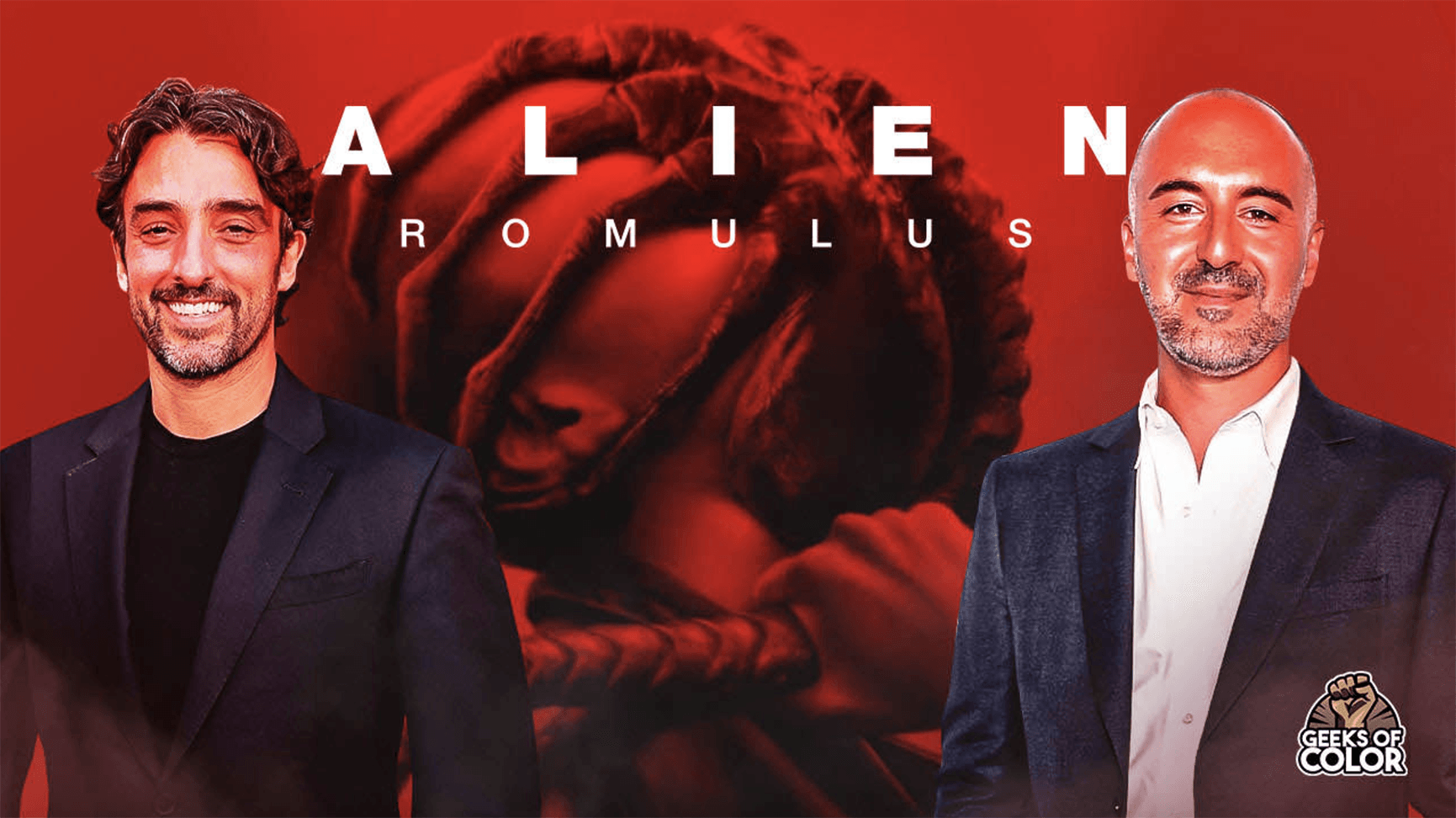
Alien: Romulus is in theaters now terrifying the box office with fantastic numbers.
One of the key portions of making the film work so well was the realistic costume design working in unison with the script. I had the chance to speak the with creators behind these two departments, Carlos Rosario (Costume Designer) and Rodolfo Sayagues (Co-Writer) to discuss the what goes into creating “realistic” designs, how to make it fit into the correct Alien timeline, and how a successful film is composed of all these departments working collectively.
Check out the full interview with Rodolfo Sayagues and Carlos Rosario below:
Firstly, I wanted to ask Rodolfo Sayagues, a longtime collaborator of Fede Álvarez, what was it like to be a first time screen writer and if these changing of hats as a creative is not as big of a jump as it may seem to the outside.
“For me, it’s always, whatever is needed to to make a movie happen and to make the best possible version of that movie,” Sayagues answered. “I really don’t care whether I’m sitting at directors, chair, writing, producing, the unique thing about what we do is that Fede and I work really, work together, really closely. The lines are blurry, you know, he is guiding the ship. He has the vision. He’s the captain of the ship, and I’m just helping him reach the destination in the best way possible, right? So whether that’s as a director, producer, writer, or doing everything at the same time. It doesn’t really matter. It doesn’t really matter what I’m all for making the best movies possible. And, making an Alien movie, I would jump into this, even if it I have to whatever, just sweep the floor, whatever. I’ll do it.”

For Rosario, nailing the setting of in between Alien and Aliens seemed to rely heavily on the costumes, I wanted to know what was the process of making sure his work made sense timeline wise.
Rosario responded, “I’ve already designed costumes for projects that are based on on books or other movies or other TV shows, and I usually don’t like to to take those as references. I think for me, I knew that Fede is a visionary, and he has a very specific vision. So my work is to support him, so I tried to actually erase everything around me and just focus on what he wants. That’s really my intention. And so we started talking about this project. Since we didn’t know who the cast was until about two or three weeks before shooting, we started designing the colony and all the different elements for all the different groups, the farmers, the miners. I did a lot of research that I presented to Fede, and so he guided me throughout that process.”
Lastly, I wanted to ask Sayagues, who is Uruguayan like Álvarez, what was it like to see all these Latino filmmakers supporting each other in the horror community and in the film industry in general.
“I think what you do as a filmmaker, is you bring your point of view on something, on the world, the unique way in which you see the world around you, right?” Sayagues answered. “That’s what you bring, your perspective. So it’s great that Hollywood is curious about different perspectives from different part of the world because we see the world in a different way, right? Therefore, we tell stories that, for some, there’s a lot of similarities, but there’s always a different angle, right? And that is refreshing. It makes everything better. I’m glad that it’s happening. It’s was overdue and I think it just makes filmmaking richer, right? And I hope it’s not just Latinos. I mean, I hope it’s just these filmmakers from all over the world that get the chance to make movies like this, and I think it’s happening, and it will continue to happen, because it just makes things better.”