

Palestine 36 is admittedly a bit difficult for me to approach. What I enjoy most about this film has less to do with the movie itself and more to do with its poignant and relevant socio-political messages about Palestinian statehood, struggles, and pride/identity, especially when examining them under the current political climate and the ongoing genocide Israel is committing in Gaza.
It is not lost on me that 2025 was a significant year for Palestinian cinema and filmmakers, as films like All That’s Left of You, Put Your Soul on Your Hand and Walk, and the Oscar-nominated The Voice of Hind Rajab have all made waves as must-see movies within the festival circuits and greater film communities. These movies are not just works of art but also powerful political statements in which the filmmakers use their artistic platforms to remind us of the horrors in Gaza and remind critics and audiences like me what’s at stake. Palestine 36 and its director, Annemarie Jacir, share the same goals as the other films I mentioned, so regardless of how I feel about this movie, the ambition to balance art and politics is commendable and worth praising.

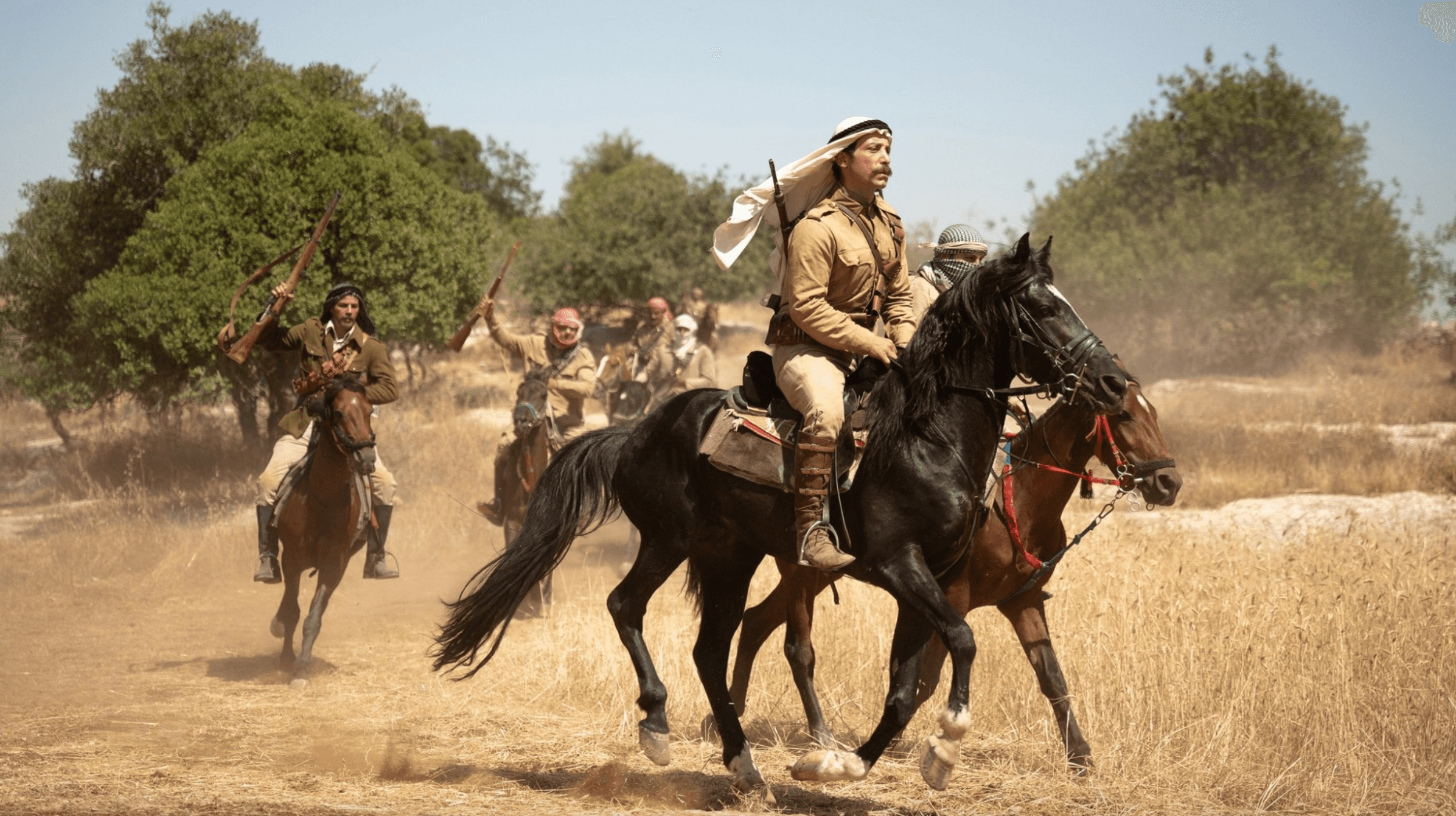
That being said, the film itself is just fine. It is a competently directed and decently shot historical drama with solid performances, writing, production design, and music. It’s clear that the main priority for Jacir and her team was to create a dramatized version of the 1936-1939 Arab revolt that not only feels historically grounded and dramatically weighty but is also presented in a way in which audiences can easily draw parallels between the events of the past and the current situation that’s occurring in Palestine today. Jacir is starkly reminding us that the brutality, violence, suppression, and cold indifference the Palestinians are experiencing right now are not new. The destruction of their homes, removal from their lands, and deaths of their people are issues that are just as pressing now as they were back when the region was still under British colonial rule. The fact that Jacir can communicate all these ideas and emotions so effectively without actually including modern news or documentary footage, a la Spike Lee, is commendable.
Additionally, while Palestine 36 is, at the end of the day, a pretty bog-standard historical drama, it does make some creatively bold choices that help it stand out. One of the most interesting aspects of Palestine 36 is how it integrates real archival footage — digitally restored and colorized — in between scenes. The film includes a wide range of archival footage, such as people walking down the street, boats arriving at shore, and Palestinian people demonstrating against British officers. The decision to include real history throughout this dramatized film is one I connected with because it effectively intertwined the past and art, reminding me that what I’m watching isn’t just dramatic storytelling but history brought to the forefront to draw parallels with today. I am not super knowledgeable about the history of British colonial rule in Palestine, so seeing these shots from the past does a great job of making me feel as if I’m watching something that properly reflects the Palestinian perspective at the time, even if the movie itself may not be 100% historically accurate.
Another artistic decision I admired about Palestine 36 was that it didn’t really have a central protagonist. Instead, it features a cast of different characters with their own storylines, obstacles, and motivations that drive them to revolt against the British and Zionists, a la similarly structured films like Magnolia or Nashville with multiple protagonists rather than one. This approach works in Palestine 36’s favor because, as grand-scale as the film feels, there aren’t many set pieces or war sequences. The film is very dialogue-heavy, with much of its runtime filled with people talking or interacting with one another. It actively avoids trying to be a David Lean-style historical action-adventure epic like Lawrence of Arabia, so that when violence or explosions do occur, they carry so much more weight and significance. There’s a sense of terror or horror to the violence, because it’s primarily from the lens of innocent people watching their homes/lands be burned or bombed, or freedom fighters getting gunned down or beaten in a pursuit for freedom and justice. Palestine 36 doesn’t have a central protagonist because it’s more interested in the cause and the many individuals who made up that movement than in any single person. On paper, that is an interesting approach.

However, in execution, it doesn’t leave me with many opportunities to get truly invested in the film, especially when Palestine 36 doesn’t offer many interesting stylistic choices to compensate for the lack of fully fleshed-out characters. While I understand the attempt to craft a Magnolia-style narrative in which multiple characters from different backgrounds come together under a single goal of Palestinian independence, that can only work if every character has enough depth. Unfortunately, as well-acted as the performances are, the characters themselves are blandly written and two-dimensional, as once their backstories and motivations are established, they quickly feel less like people and more like story devices to move the plot forward. This is especially the case with the villains, as every British character in this movie is either a mustache-twirling villain (like Robert Aramayo’s or Jeremy Irons’) or a painfully generic good-guy sympathizer (like Billy Howle’s character). There wasn’t a single character in the film I connected with, which is a shame because my enjoyment of Palestine 36 could have become even greater if the writing and narrative structure had been approached differently.
As it stands, Palestine 36 is a passive experience that I admire and respect more than I enjoy. Regardless of my own personal feelings about this movie, the fact that this even exists and is a major film production with such pro-Palestinian and anti-Zionist perspectives is a miracle. The fact that multiple countries, including the UK, came together to fund and produce this film, with a Palestinian director at the helm who shot it in Palestine, is an impressive accomplishment worth celebrating. While Palestine 36 may not be as compelling as other Palestinian movies released last year, like The Voice of Hind Rajab, it is nonetheless a movie I appreciate for existing, and that I recommend people seek out and watch.