

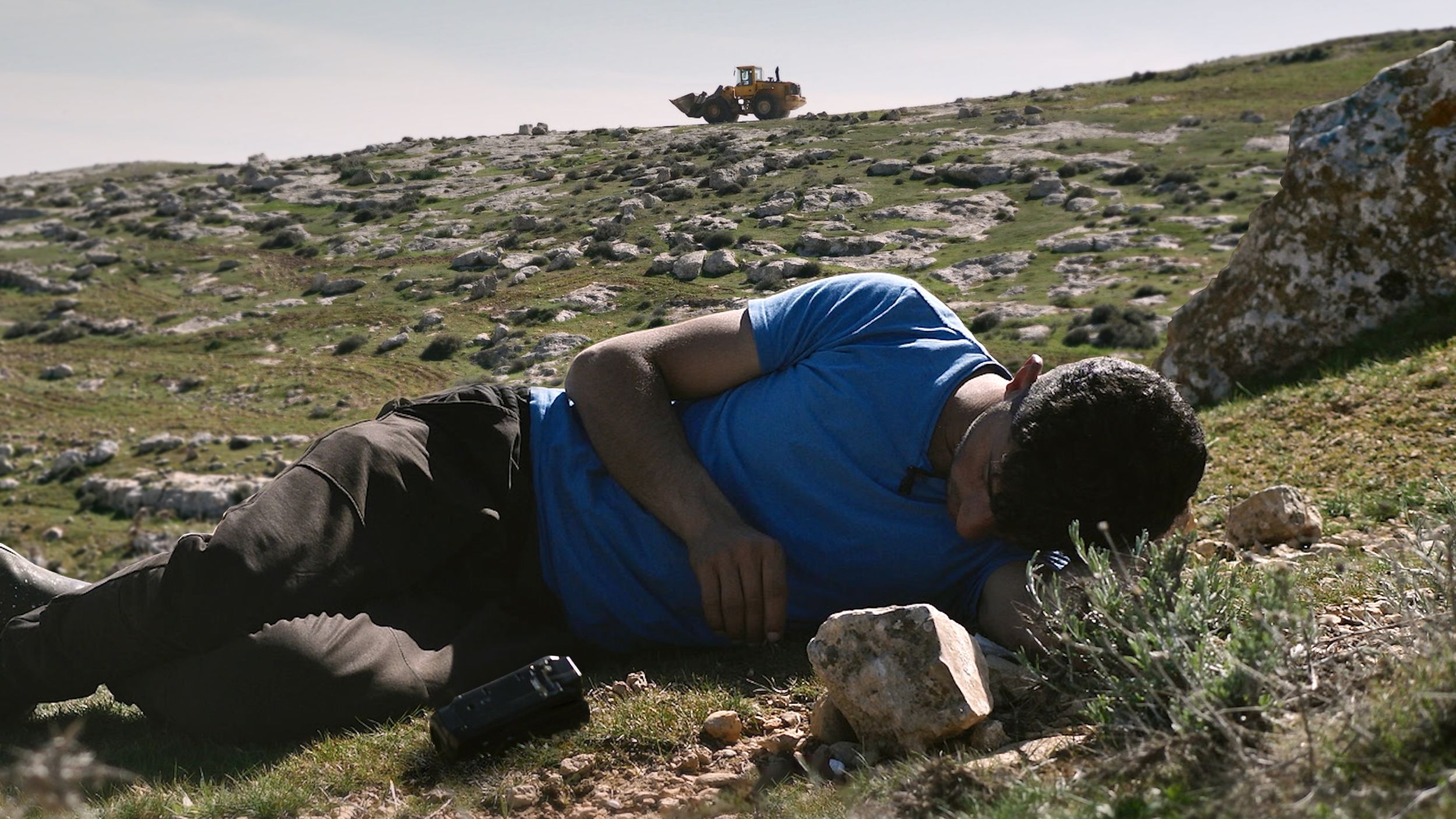
No Other Land began production in 2019 and wrapped up in October 2023, right before Hamas launched a surprise deadly attack on Israel. Despite the eerie timing of both the production and the release, No Other Land shines a spotlight on a situation that has long been in the works. It is a film that will constantly remind audiences that this is not a new reality.
Basel Adra, Hamdan Ballal, Yuval Abraham, and Rachel Szor banded together as an act of resistance to direct No Other Land. They might not have realized this at the time of development, but they created a documentary that is even more relevant now than they probably intended. On the other hand, the longstanding conflict incurred by Israel’s occupation of Palestine has been a reality for so long that documentaries like this are expected.

No Other Land is an incredible and emotionally heartbreaking piece of documentary filmmaking. It coincidentally comes out as the on-going conflict between Israel and Hamas grabs international headlines everywhere, making it a vital and relevant work to engage with.
The film features two main subjects: Basel Adra, a Palestinian villager and activist, and Yuval Abraham, an Israeli journalist. Despite being on “opposite sides” of the conflict, both Adra and Abraham are committed to stopping the forced displacement of Palestinian villagers perpetrated by the IDF (Israel Defense Forces) at the behest of the Israeli government. The documentary expertly showcases that the Palestinian people living in the village of Masafer Yatta (which is in the West Bank) are, at best, treated like second-class citizens whom the Israeli government and military have minimal sympathy for.

Throughout the film, we see Israeli soldiers and settlers tearing down Palestinian homes and ignoring the pleas and screams of the Palestinians, who are forced to watch their homes being torn to shreds. From the Israeli point-of-view, everything they’re doing is backed by the law and judicial system, so they see nothing wrong with what they’re doing. They don’t care about the Palestinians they’re displacing, and they only acknowledge them when activists like Adra record their crimes, to which they respond with threats and violence.
Most of the film consists of footage recorded by either Adra or Abraham that captures the Israelis committing all these atrocities. It doesn’t hesitate to showcase horror after horror, yet it never once feels repetitive. It’s overwhelming, for sure, but that’s exactly the point. By feeding you all these horrifying recordings repeatedly, it emphasizes the hellish cyclical cycle Adra and his fellow Palestinians face constantly throughout their lives. They didn’t do anything wrong. They’re just people trying to live their lives. Yet the IDF bulldozes their homes and replaces them with military bases. The people carrying out these orders don’t even have the decency to at least pretend to be remorseful about what they’re doing.
These moments are both frustrating and gut-wrenching to watch. You can’t help but sympathize with the Palestinians and hope something will happen that will prevent further Palestinian villages from being torn down. Unfortunately, while there are a few small victories here and there, no such event comes, and Adra and Abraham are just as infuriated and aggrieved as the audience is.

Throughout the film, Adra and Abraham consistently record and write about what the IDF is doing in Masafer Yatta with the hopes that their coverage of these crimes will get the attention of a major news outlet like CNN or the BBC, which would then pressure Israel to stop displacing Palestinians. Unfortunately, Adra and Abraham do not get the attention they hoped this story would bring.
They consistently mention how few views their social media posts or articles receive, with the peak being in the low thousands. They’re frustrated by the fact that the world doesn’t seem to care about what’s going on in the West Bank, and in turn, the audience feels just as frustrated as the documentary’s main subjects.
Yet despite everything that Adra, Abraham, and the Palestinians go through, despite everything the audience witnesses, the film makes it very clear that this is not a hopeless cause. Between all the violence and destruction are moments of quietness, reflection, and hope. Despite watching their homes destroyed and being beaten from protesting, these Palestinian families still have time to share a meal. They still make time to smile, laugh, share a smoke, and have a friendly conversation with each other.

In one scene, Abraham is subjected to criticism from Palestinians because of his Israeli citizenship and heritage. They point out that Abraham still has a home he can return to in Israel at the end of the day; the Palestinian struggle doesn’t stop when the sun sets. They make do with what they have left. Yet despite these arguments and disagreements, everyone recognizes that they’re in this together. They can only make meaningful change by sticking together.
The kernel of a moral lesson here is that it is not enough to simply sympathize with actions as an Israeli or outsider to the Palestinian struggle. Actions and sustaining meaningful relationships with the oppressed are instrumental in bringing effective change to the situation.
No Other Land is a necessary project to digest. It will leave audiences frustrated not just because it features an overwhelming amount of violence and a lack of care for basic human decency but because no one seems to care or do anything about these atrocious acts of destruction. However, No Other Land is a hopeful film. It is a reminder that no matter how dark a situation may be, meaningful change can and will happen as long as you keep fighting.
It might be naïve to say considering the film’s release coincides with the aftermath of October 7 and hope may be a warring thing, but these activists and filmmakers demand you not lose it. If Adra and Abraham can be hopeful for a brighter future and work together to make this documentary, I must also be optimistic.
Rating: 9/10
The doc had a limited theatrical release in New York City on January 31, 2025 at New York’s Film Forum, and in Los Angeles on February 7, 2025. The film is also available On Demand to rent or own.