

Every now and then, there comes a movie that went through such a hellish and nightmarish production that the artists behind the film had to fight tooth and nail to get it released. Monkey Man joins the likes Apocalypse Now, The Evil Dead, Fitzcarraldo, The Abyss, and Mad Max: Fury Road as notable examples of movies that were incredibly difficult to make. From extreme weather conditions destroying sets and props to cast and crew members getting injured while filming, all of which spiralled into more issues like delays and ballooned budgets, these movies had everything going against them.
Yet despite these challenges, the directors behind these movies trudged through the muck because they were committed to bringing their vision to light no matter the costs. No matter how difficult things got, their passion never waned, and the result is movies that might not always be great but will always be remembered as symbols of perseverance and artistic passion. This year, audiences saw another one of these symbols through Dev Patel’s directorial debut, Monkey Man.

Patel has been open about the many “catastrophes” he and his team faced while shooting Monkey Man. The film’s financier threatened to pull funding weeks before principal photography commenced. The COVID-19 pandemic prevented Patel from shooting the movie in India, costing him his original cinematographer and production designer. He lost many locations he had prepped for months at the last minute. Most equipment broke while in production, forcing Patel to shoot several scenes on his phone. Patel broke his hand while filming the first action scene. The movie even faced more obstacles after production as Netflix, who had previously purchased the film, almost pulled out of the movie.
Had Jordan Peele not signed on as a producer and convinced Universal to acquire the film, there was a real possibility that Monkey Man would never have seen the light of day. Yet, against all odds, the film not only got a theatrical release, and its release highlighted Patel’s unique voice as a filmmaker and the fact that this was someone with a bright future in directing that film fans should be aware of.

Monkey Man is not a perfect movie, nor one of the best action movies ever made. It is a flawed film that has issues like a very familiar story that has been told hundreds of times in other action and drama films, scenes that are so over-edited that it makes them very tiring and nauseating to watch (a notable example being a car chase that takes place in the middle of the film), and a stretched out runtime that made the pacing drag at times. However, despite these flaws, this movie is still worth watching because it very obviously comes from a place of passion in which Patel clearly cared about what he was making.
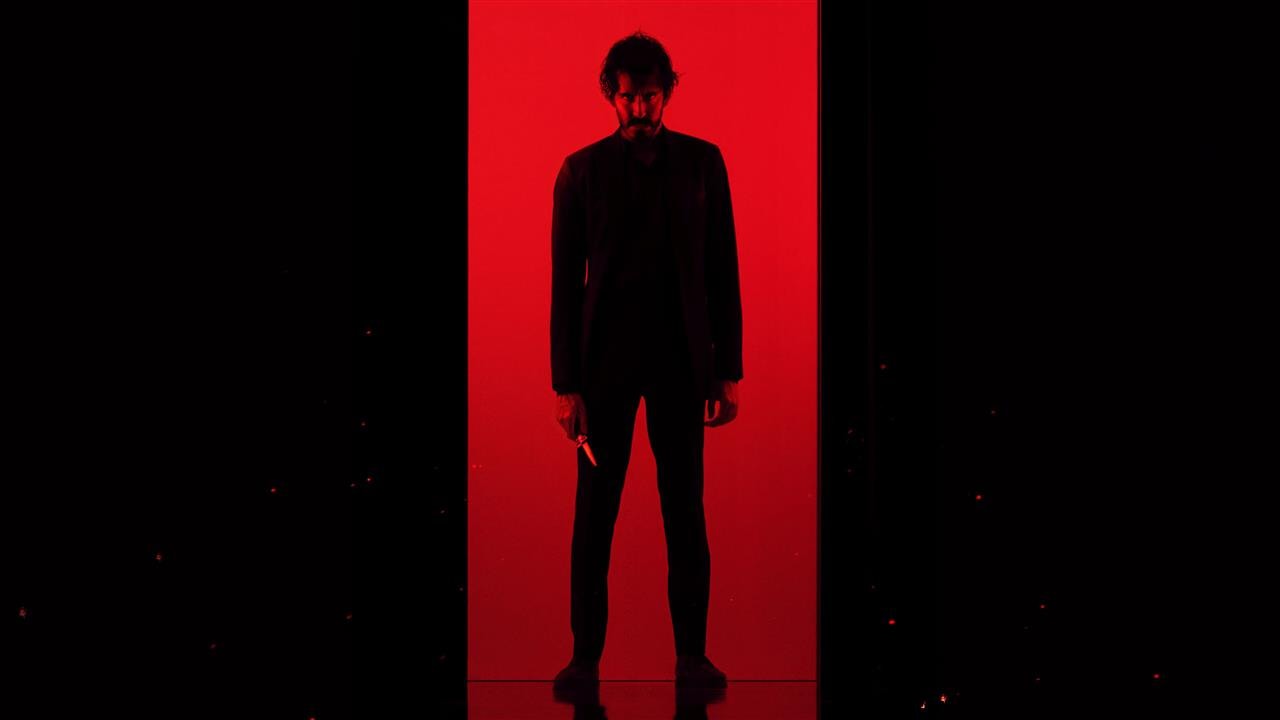
There is a lot of great filmmaking behind Monkey Man, as almost every scene throughout the film feels confidently presented by a director with a clear vision. The film’s use of colour, particularly red, is visually striking and enhances many of the movie’s action set pieces. The music is incorporated very well into the film, complementing many of the directing and editing choices.
One of the best examples of this is in the second half of the film, in which the beating of drums coincides with moments of Patel’s character, The Kid, punching a giant bag of rice acting. This scene was not only a technical marvel to watch, but it also does a great job of building upon the Kid’s character as well. The action scenes are incredibly well-coordinated, with lots of impressive stunts and great sound design that made every punch that was thrown feel just as impactful as the last.

However, my favourite aspect of Monkey Man was the inclusion of Hindu mythology, Indian culture, and politics. As someone unfamiliar with these topics, Monkey Man does a great job of presenting them in a digestible way and weaving them into the greater narrative. Not once does the inclusion of these elements feel like cheap gimmicks, as they are integral to the film’s overall story. For example, the Hijra, a community of transgender people in India, plays an indispensable role in the film. They aid the Kid’s mission in getting Kid’s revenge against the people who wronged him and act as a window into the real-life prejudice this community faces.
For a movie that is, on paper, a straightforward action revenge thriller, Monkey Man has much to say about current political issues India faces, like corruption, poverty, class discrimination, and prejudice. Yet not once does the movie feel like it’s lecturing its audiences as it always uses its action scenes to tell its story and communicate these complex political ideas.

Ultimately, Monkey Man, while flawed in certain aspects, is an incredibly well-made film that features an exciting narrative that touches on many political topics in India that viewers like me may not be familiar with. It is a movie that feels like only Dev Patel could have made, and he poured every ounce of his heart and soul into making the film he so desperately wanted to make.
While I might not necessarily consider it the best film of 2024, it is a movie that I don’t regret watching and will undoubtedly revisit at some point in the future. Patel has proven himself a capable action director, and I can’t wait to see what he’ll tackle next.