

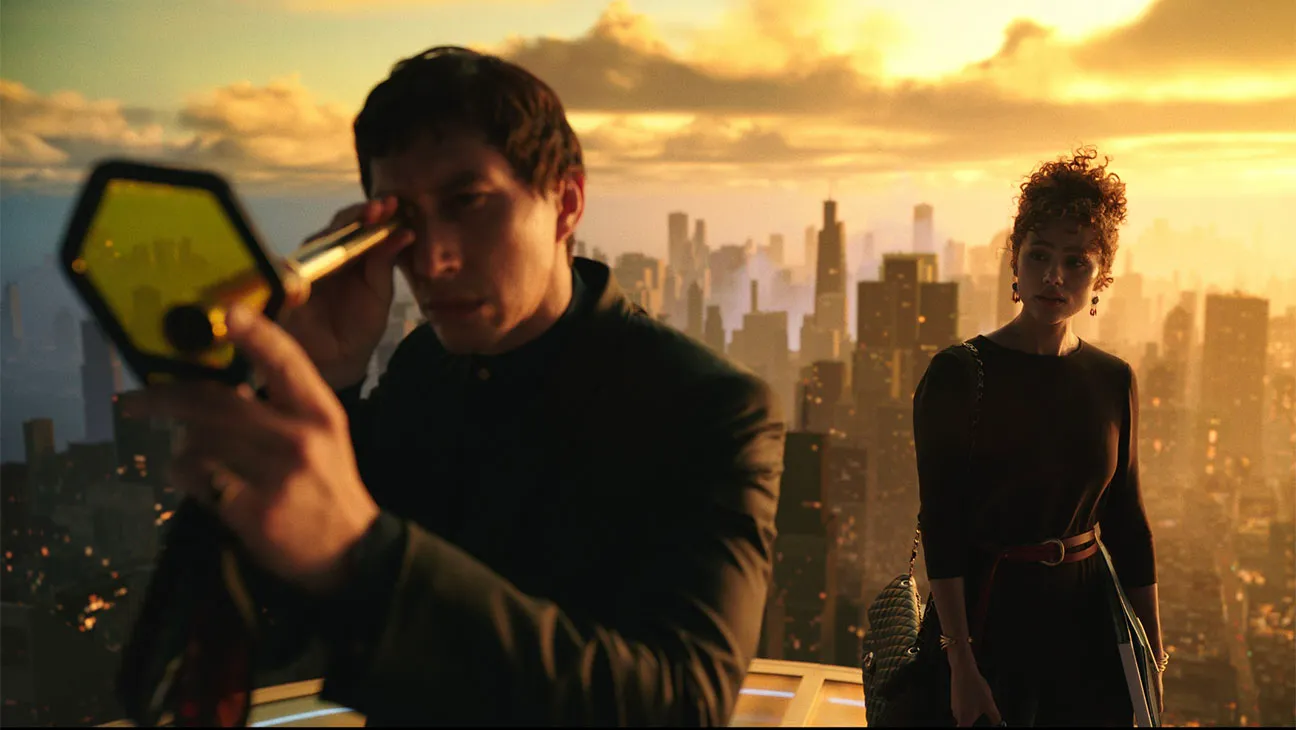
To state that Francis Ford Coppola’s Megalopolis is a divisive film would be a massive understatement. The movie has seemingly divided audiences into two groups. One firmly believes that Megalopolis is a genius, revolutionary piece of cinema that transcends all the rules of filmmaking and is a modern masterpiece made by an auteur unbound by the studio system.
The other adamantly believes it’s an overbearing, over-indulgent, pretentious, surface-level, jumbled mess that fails at accomplishing anything it aims to achieve. I do not belong to either of these extreme groups. Instead, I am subscribed to a third party that believes that Megalopolis is a laughably pathetic, so-bad-it’s-good disaster comparable to that of Birdemic, The Room, Battleship, and the entire filmography of Neil Breen.

One of the standout features of Megalopolis is just how visually ugly it looks; a big reason for that is its noticeably terrible special effects. Francis Ford Coppola has seemingly taken the M. Night Shyamalan approach to big-budget filmmaking because, just like The Last Airbender and After Earth, Megalopolis manages to have some of the most gaudy-looking CG and green screen effects despite having a budget of $120 million.
Throughout this film’s 2-hour and 18-minute runtime, there wasn’t a single green screen that looked visually appealing or adequately rendered. It would have helped the film if Coppola had masked these sub-par effects in darkness or toned down the lighting. However, because Coppola lights (almost) every scene so brightly, which makes most of the movie look like it is covered in this ethereal Snapchat filter, the jarring CG stands out even more.
Yet despite this seemingly amateurish approach to its special effects, I couldn’t help but smile and laugh at what I was looking at. The look of Megalopolis is so cartoonishly goofy that it wrapped back around to becoming a film I could see myself watching for the same reason I enjoy watching Sharkboy and Lavagirl or Spy Kids 3-D: to make fun of the visual aesthetic. It’s one thing for a studio corporate product like Madame Webor Borderlands to end up having some of the worst visual effects of this year. It’s quite another for an auteur passion project in which Coppola had complete creative control to end up with the same results.

However, the visuals and lighting are not the only technical attributes that were unintentionally amusing, as the editing was another aspect of the film that I found laughable. For whatever reason, Megalopolis is filled to the brim with fast cutting. In dialogue-heavy scenes, the film would often cut every two to three seconds to another person talking or some random out-of-place action between conversations. It’s incredibly unclear why Coppola chose to edit the film this way because it takes away any breathing room between conversations and unnecessarily makes the pacing very choppy.
Many scenes in Megalopolis that should have been easily presentable instead become an assault of bright lights and random images to my eyes and brain. While this approach to editing may work in a Neveldine/Taylor or Edgar Wright film, all it accomplishes in Megalopolis is making itself unnecessarily confusing and nauseating to follow.
Fortunately, the technical aspects of Megalopolis were not the only disastrous attributes, as a lot of the acting and writing in this movie were unintentionally amusing. On paper, Megalopolis boasts a cast of A-list star power who have all individually proven to be capable, if not great, actors. Yet somehow, Coppola managed to take these talented actors and got some of the most unhinged, bizarre, and downright laughable performances that are about on par with the ones in Fateful Findings or Twisted Pair.
Whether it’s Adam Driver’s iconic delivery of the sentence, “Go back to the clurb,” the scene in which Jon Voight’s character hides a bow and arrow under his pants to make it look like a boner, or pretty much every word that came out of Shia LaBeouf’s mouth, every single performance constantly left me in a state of utter amusement.

Part of what makes Megalopolis such an incredible so-bad-it’s-good film is not just the shoddy dialogue but also how that dialogue is presented. The way every actor delivers their lines and “embodies” their characters was so humorous to watch that I couldn’t help but compare their performances to the ones in Madame Web or The Last Airbender. Almost every choice the actors make left me asking, “Was that real?” so often that I hope Coppola releases some behind-the-scenes footage so that I can understand what precisely these actors were thinking and what exactly Coppola told them that led to them making these bizarre choices.
However, regardless of how much ironic enjoyment I got out of the film, at the end of the day, this is a film that I not only do not regret watching but also can’t help but admire. Ultimately, this is a lifelong passion project that Coppola has not only tried to get made for decades but also invested his own money into to maintain absolute creative control and directorial freedom.
Megalopolis is a ballsy, ambitious risk, and while I would argue that the risk didn’t pay off at all and ended up becoming essentially a big-budget Neil Breen film, Coppola got to make the film he always wanted to make. This film will surely develop a small yet passionate cult following in the same vein as films like Showgirls or Southland Tales, and while I will probably never be a part of that crowd, I am still very content that this film exists the way Coppola wanted.
Rating: 4/10