

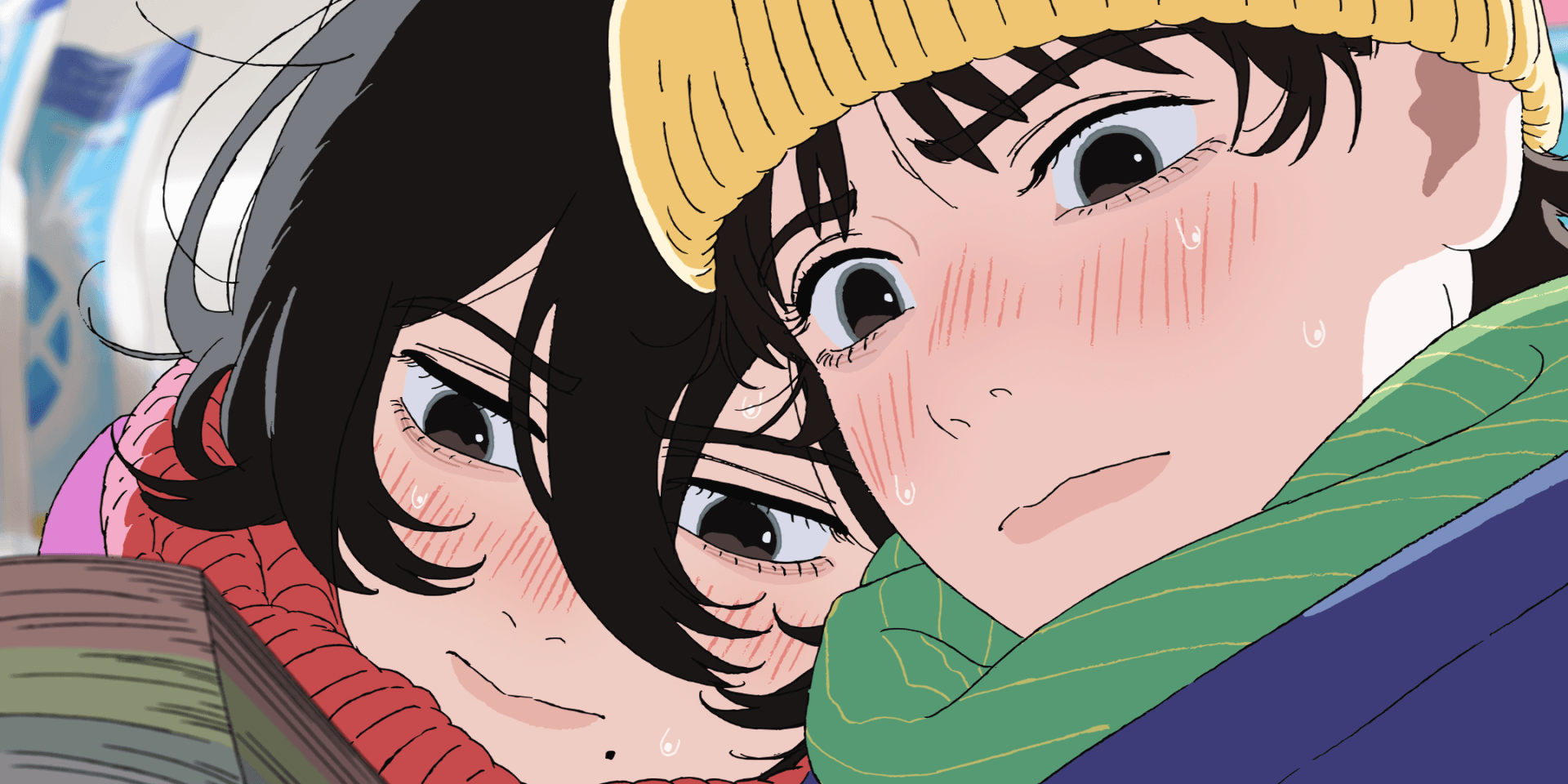
“Then why do you draw Fujino?” This is the last line in Look Back, the highly anticipated anime adaptation of the Tatsuki Fujimoto (Chainsaw Man, Fire Punch, Goodbye, Eri) manga of the same name, and it is arguably the most crucial line in the whole film. It’s a line that excellently summarizes the central plot and conflict of the film. It’s a sentence that perfectly defines Fujino’s character, desires, motivations, priorities, and, most importantly, her relationship with Kyomoto. Most importantly, it’s a question that Fujimoto seems to ask the character and the audience directly. Why does Fujino, and to an extent Kyomoto, draw?

Even if it’s not directly stated throughout the film, it is still a looming question constantly directed at Fujino. She certainly doesn’t draw for fame and attention. Perhaps at first, that was her main reason since she got praise from her classmates and her family for being a talented artist who could one day become a professional manga artist. But when she realized that Kyomoto’s manga panels made her look like chicken scratches by comparison and that she had spent years trying to improve her craft, only to be still surpassed by Kyomoto, she quickly gave up drawing to spend time with her friends and do other activities.
Additionally, back when Fujino was still dedicated to drawing manga, her friend asked her why she continued drawing because doing so at her age made her look like a lonely, friendless otaku. Fujino also doesn’t draw for the financial reward for creating a successful, long-running series either. Granted, the prize money she won after entering the manga competition with Kyomoto was so significant that she still had tons left after a full day of shopping. However, there’s no point in having all that money if Fujino rarely has time to spend, as most of her days involve drawing tirelessly at her desk and hitting deadlines.
Even Fujino herself tries to answer this question. She states that she secretly never liked drawing to begin with. She says it’s not fun and that the work process behind drawing manga is unglamorous and incredibly tedious, as she can never seem to make much progress even if she drew all day. She wished she had stuck to reading manga like everyone else instead of drawing…, but Fujino still doesn’t answer the question: “Then why do you draw Fujino?”
This is the last line of dialogue in the film, so Fujino never appropriately responds to this question. At the same time, though, she doesn’t need to. Instead, the audience is thrown into a whirlwind of beauty and emotions as the film introduces this montage of Fujino and Kyomoto drawing manga together, smiling and laughing with each other, and most importantly, spending every moment of their childhood and youth together, living their lives to the fullest. It’s a beautifully animated montage that’s accompanied by Look Back’s incredible soundtrack. Without needing to say another line of dialogue and relying only on visuals and music, Fujino (and, to an extent, the film) finally answers that central question.

Fujino is right when she says that being a mangaka is an underappreciated, unflattering, and strenuous job that takes a lot out of a person as she could draw for days and still be unable to hit her deadlines. Plus, because it’s primarily a solo job, she often has to draw alone with no one else around except for a few assistants (whom she fires off-screen). However, despite all these massive downsides, Fujino wouldn’t trade it in for anything else in the world because his job/passion brought her and Kyomoto together.
Fujino doesn’t regret anything because it was filled with precious and treasured memories she had with Kyomoto. Whether it’s them holding hands and running through the streets of Tokyo, sharing crepes, shopping at bookstores, or spending years in Fujino’s room drawing manga together, every moment was worth it because they were together.
Even after Fujino and Kyomoto split, Kyomoto never stopped thinking about or supporting her former senpai. When Fujino enters Kyomoto’s old room, she discovers a bookshelf filled with every volume of Fujino’s ongoing manga series, Shark Kick. She finds the old jacket Kyomoto asked Fujino to sign when they first met. Most importantly, she finds an old manga strip that Kyomoto drew about Fujino (that may or may not be accurate as it came from an alternative dream scenario/reality) in the same style as the old strips she used to draw for the elementary school newspaper.
When Fujino discovers all these old items, she breaks down crying. She can’t hold back her tears while reading a volume of Shark Week because she only just now realized how important Fujino was to Kyomoto and how important Kyomoto was to Fujino.

Fujino might not like to draw, but she realizes now her art means something. It meant everything to Kyomoto. Therefore, even if she’s dead, for Fujino to stop her manga series now would disrespect her memory and everything the duo worked so hard to achieve. With this newfound perspective on her career and life, Fujino returns to her desk and starts drawing panels for the next chapter of Shark Kick.
However, right before she gets back into the grind and restarts the arduous process, she tapes Kyomoto’s manga strip on her window to remind her why she made it this far in the first place and who she’s doing this for. Kyomoto may be gone, but her love and support will always be right next to her as she draws the next chapter of Shark Week.
Tatsuki Fujimoto is known for many things: bizarro characters, over-the-top gore/violence, subverting established shonen manga tropes, and surrealist imagery that blends reality and fantasy. However, one other thing this legendary mangaka should be known for that doesn’t get enough attention is to tell sweet yet emotionally heartbreaking stories. While this aspect of his storytelling approach is certainly present in Fire Punch and Chainsaw Man, a short-and-sweet one-shot manga like Look Back allows him to unleash his writing talents.
Look Back is an emotionally heartbreaking, gorgeously animated, wonderfully scored, incredibly well-written, and acted film that properly adapts its source material while carving out its own identity. Now that I’ve seen this wonderful little film, my only hope is that we get an anime film adaptation of Goodbye, Eri next, ideally one as good as Look Back.
Rating: 9/10