

Disney’s latest live-action remake, Lilo & Stitch, hits theaters this long weekend!
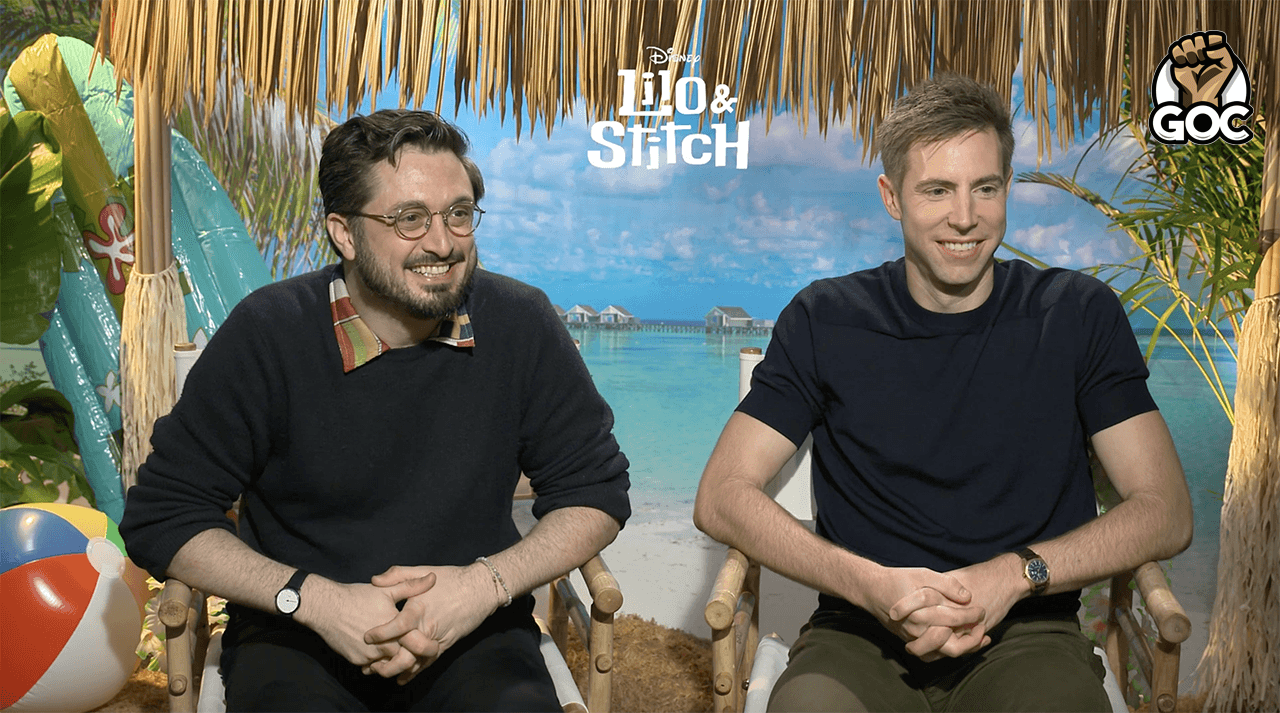
Before the film’s release, Geeks of Color chatted with director Dean Fleischer Camp and producer Jonathan Eirich about tackling such a beloved classic.
The animated Lilo & Stitch was released over 20 years ago, and while trying to recapture the magic of the original might be tough, Camp and Eirich were up to the task. The pair spoke to us about putting their stamp on this remake, celebrating Hawaiian culture and honoring that through shooting the film entirely in Hawaii, having Hawaiian cultural consultants, and the family dynamic of working on the film together.
Check out the full interview with Dean Fleischer Camp and Jonathan Eirich below:
With the animated version of the film so popular, we wondered how Camp brought his own creative vision to the live-action remake.
Camp said, “Yeah, I always thought – it’s always been one of my favorite animated Disney films, but I always thought that it presented a really unique opportunity, because in live-action, it just hits different if you see, for example, a six-year-old potentially being torn away from her sister/ caregiver. There is a translation process that happens, and live-action is better at certain things, and animation, obviously, as you mentioned, is better at other things. But this felt like a story that had so much emotional stuff in it that I was really excited about bringing that to audiences in a new way. As a live-action, I feel like when I first saw the original, I was blown away by it. It looks so different from other Disney films, and unlike almost every other Disney film of the time.”
Camp continued, “It’s not a fairy tale kingdom. It’s contemporary society, real humans going through some pretty real stuff that, you know, people everywhere go through every day. And so my mother is a social worker – was a social worker growing up. And so I felt like those stories are real, and I felt like this is a great opportunity to tell that with a little more verisimilitude and texture and depth than maybe you would, you would be granted an animated film.”

With the film set in Hawaii, it was important for the filmmakers to honor Hawaiian culture and authentically represent the culture in the film. Eirich said they did this by making sure to shoot on location in Hawaii, have Hawaiian crews, and have Hawaiian consultants for various aspects of the film, including hula dancing and food. They also had Hawaiian screenwriter Chris Kekaniokalani Bright work on this film.
Eirich said, “Yeah. I mean, I think it started with shooting 100% of the movie in Hawaii, which a lot of movies don’t do anymore. Now, a lot of times it would be, well, we’ll go there for two weeks, and then we’ll shoot our stage work somewhere else, or it’ll be cheaper somewhere else. But we really wanted to commit to shooting the entire movie there with Hawaiian crews and then also bringing as many partners as possible into the mix. So there were consultants for every single element of this film. There were consultants who consulted on the whole project, but also a hula consultant, and a food consultant, a pigeon consultant and everything along the way to make sure that you’re just talking to people who have actually experienced this, to make sure, are we getting it right.”
Regarding Bright’s work as the screenwriter, Eirich said, “And then we also had a Hawaiian screenwriter, Chris Bright come aboard, and not only could he sort of bring an authentic voice to it, but I think he was the one who came up with the idea for the character of Tutu, for instance. And his whole idea was that if this happened to two sisters in Hawaii. He’s like, they wouldn’t be abandoned. He’s like there’s such a strong community in Hawaii, there would be an option for help. And so we sort of shifted Nani a little bit in our movie, so her issue is more that she’s a bit stubborn and wants to prove that she can do this all on her own. And then by the end, she’s sort of accepting this wider Ohana and the help, so all of this came out of just talking to as many people as possible on the island, and everybody was so loving, and they all wanted us to get it right. You know, they were so willing to help and to pitch in, because, like you said, it means so much to them.”
Of course, you can’t have this film without the lovable, chaotic blue alien (or “dog”) known as Stitch. He was happy to talk with us about his work in the film, working with Maia and his love for Hawaii.
Check out the full interview with Stitch below:
Stitch gave us some of his time and shared that he’s a foodie who loves all the food, but especially SPAM. He told us that Nani taught him everything he needed to know about surfing, even if the water scares him, and why his co-star Maia Kealoha, is the perfect Lilo.