

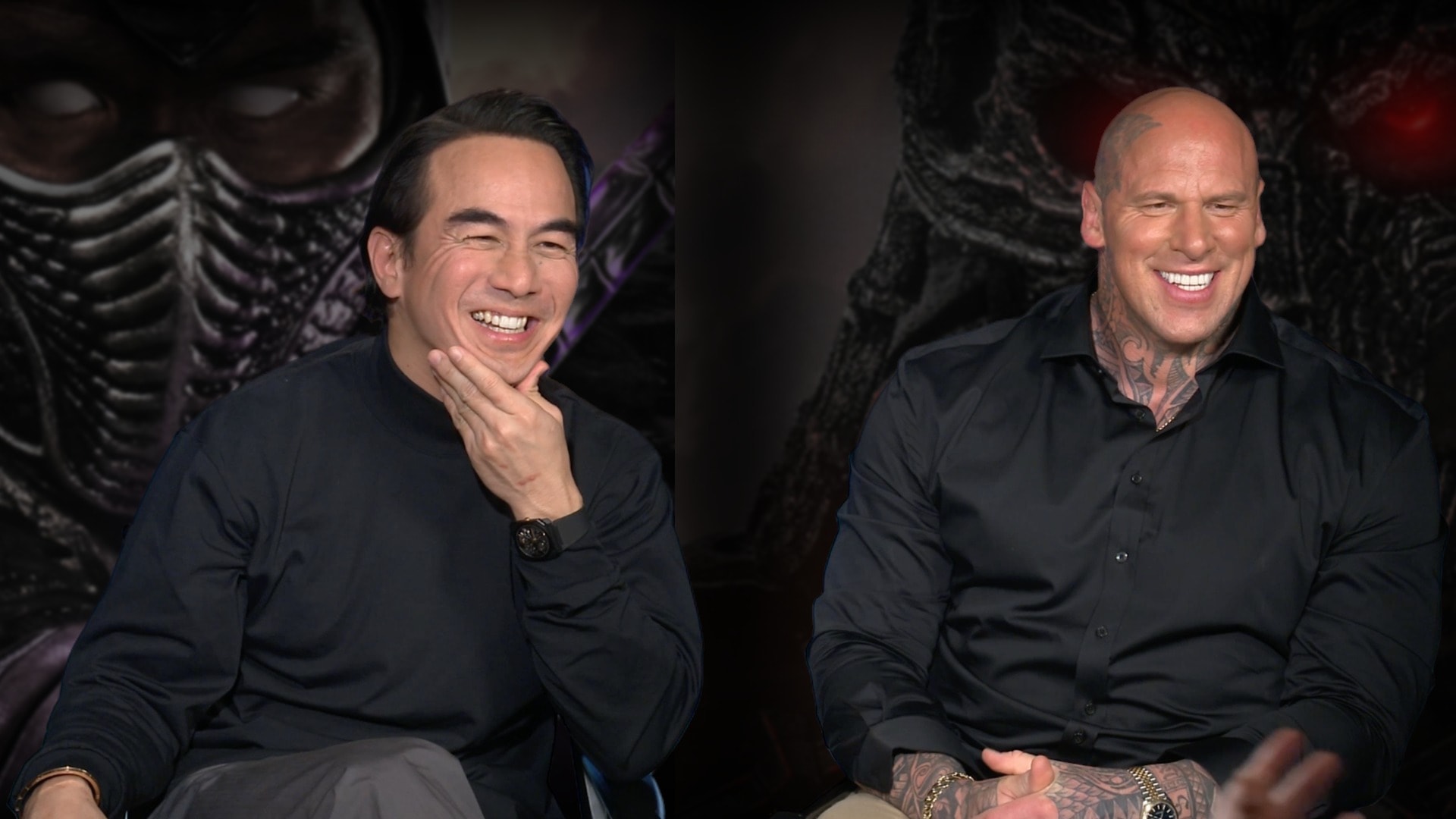
I auditioned for Shao Kahn. They told me to come back when I stopped looking like a twig. I never came back.
Martyn Ford did. He is 6-foot-8, and he fills the Shao Kahn suit the way the games drew it. He sat next to Joe Taslim at the
Mortal Kombat II press day, looked at me, and made sure I knew the right person got the part.
“You should be very grateful I came in the role,” Ford said. “You would have lost everything you had in that suit.
Lost. Everything.”

The first Mortal Kombat hit during the COVID era, premiering on HBO Max and in theaters simultaneously. Studios were experimenting, and fans were stuck at home looking for something loud.
The film delivered. Joe Taslim’s Sub-Zero became one of the biggest moments of that release window, and the franchise picked up the option for a sequel almost immediately.
Mortal Kombat II has now cleared $60 million worldwide in its opening run, with the conversation surrounding the movie only getting louder.
Taslim returns as Bi-Han, and this time he doubles up by carrying Noob Saibot in the same film. He did not even know he would be back for Mortal Kombat II until director Simon McQuoid called him directly.
For anybody who grew up running characters on Sega or PS1, the sequel reads like a speed run of a campaign. Cut scene. Dialogue. Fight. Tournament. The film respects what you came for.
Joe Taslim’s Mortal Kombat II Homework: Earn Noob Saibot

The first film passed the test. Sub-Zero fans signed off on Joe Taslim’s read of Bi-Han. Now he had to do it again, and on top of that, he had to introduce Noob Saibot to a global fan base in the same film.
“Sub-Zero fans approved the first one, so I think it’s a homework for me to deliver this one,” Taslim said. “I’m Noob Saibot now. I really hope when the movie releases, that Noob Saibot fans all over the world is gonna approve me as well.”
That is the difference between an actor playing a video game character and an actor who carries the weight of how that character is supposed to feel on screen. Taslim knows the difference. He is not playing Noob Saibot like a cosplay. He is auditioning for the fan base every time the camera rolls.
The Mortal Kombat II Crew Came Back Tighter
A lot of the crew that built the first film on the Gold Coast came back for the sequel. Taslim said that mattered. It is the kind of thing the audience never sees, but it completely changes a film’s feel. When the camera operator, the stunt coordinator, and the lead actor already speak the same shorthand, fight choreography moves faster and lands cleaner.
“Mostly same team for the first one,” Taslim said. “We got more connected.”
That is how you get a sequel that feels like it grew out of the first film rather than being bolted onto it.
What Mortal Kombat II‘s Shao Kahn Cost Martyn Ford
Ford was honest about what the role asked of him. The character work was one thing. Sitting in a makeup chair at 2 a.m. was another.
“Stepping into the role of one of the most iconic villains in MK history, it was hard,” he said. “The intensity of the shoot was incredible. Some of the days, the amount of sweat and dehydration from the fight scenes were absolutely phenomenal.”

The early call times were the part he was happy to leave behind.
“It was one of those characters that I absolutely love to hate,” Ford said. “Loved what we created. I hated the 2 a.m. call times in makeup. It was tough physically, but incredible what we created. I’d go through it all again for sure.”
You can feel the difference on screen. The film treats Shao Kahn the way the games treat him. A threat that does not need to be explained.
Why Mortal Kombat II‘s Fight Scenes Are Slower Than You Think
Both Taslim and Ford broke down something that the first film already taught the crew. Speed is not the point. Storytelling is. Taslim came in as a martial artist who is fast enough to make the camera struggle to keep up. The fight team had to slow him down so the action could read.
“It’s not about being too fast. It’s about being effective and efficient,” Taslim said. “There is storytelling involved in the fight scenes. If you lose the details in storytelling, sometimes a little bit of gesture shows the condition of the character in the fight scene. You don’t want to lose that.”
Ford agreed.
“Sometimes it can look too perfect. Too predictable,” Ford said. “A little bit of messiness actually makes it more real. It helps sell the performance.”
That is the difference between a fight built for a highlight reel and a fight built for a movie. Mortal Kombat II is full of the second one.
The Tournament Delivers

I told both of them what the film actually felt like watching it. The action intensity reads like a speed run of the games. Cut scene, dialogue, fight. Cut scene, dialogue, fight. Tournament. Mortal Kombat II respects what you came for.
Taslim and Ford both clocked the comparison and pointed at the tournament structure. That is the joke and the thesis at the same time. The film does not bury what it is.
Where to Watch
Warner Bros. Pictures released the movie on May 8, after the world premiere at the TCL Chinese Theatre on April 27. Catch it in theaters now!