

Pixar is in its “Millennials healing from generational and societal trauma” era, and I, for one, am loving it. Recent films like Elemental, Turning Red, and Coco confront wounds that many of our own families won’t address. It’s refreshing to see Disney release films that are about more than funny animals and the magic inside us leading to happily ever after.
Unfortunately, be it poor advertising, the pandemic, people waiting to stream new releases on Disney+, or a whole host of other factors, these same recent films have not been the most commercially successful for the company, possibly causing company leadership to rethink their strategy. In light of that, Pixar’s latest film, Inside Out 2, represents the company’s last attempt to recapture its previous commercial and critical success before resorting to a more drastic shift in strategy.

Inside Out 2 finds Riley (Kensington Tallman), now 13 years old and on top of the world: successful, happy, loved by her parents, and confident that she is a good person. She and her best friends Bree and Grace (Summayah Nuriddin-Green and Grace Lu, respectively) are the stars of their hockey team. They are invited by a local high school coach to participate in a weekend intensive training camp, setting them up to potentially play on the varsity team as a freshman and guarantee their high social standing.
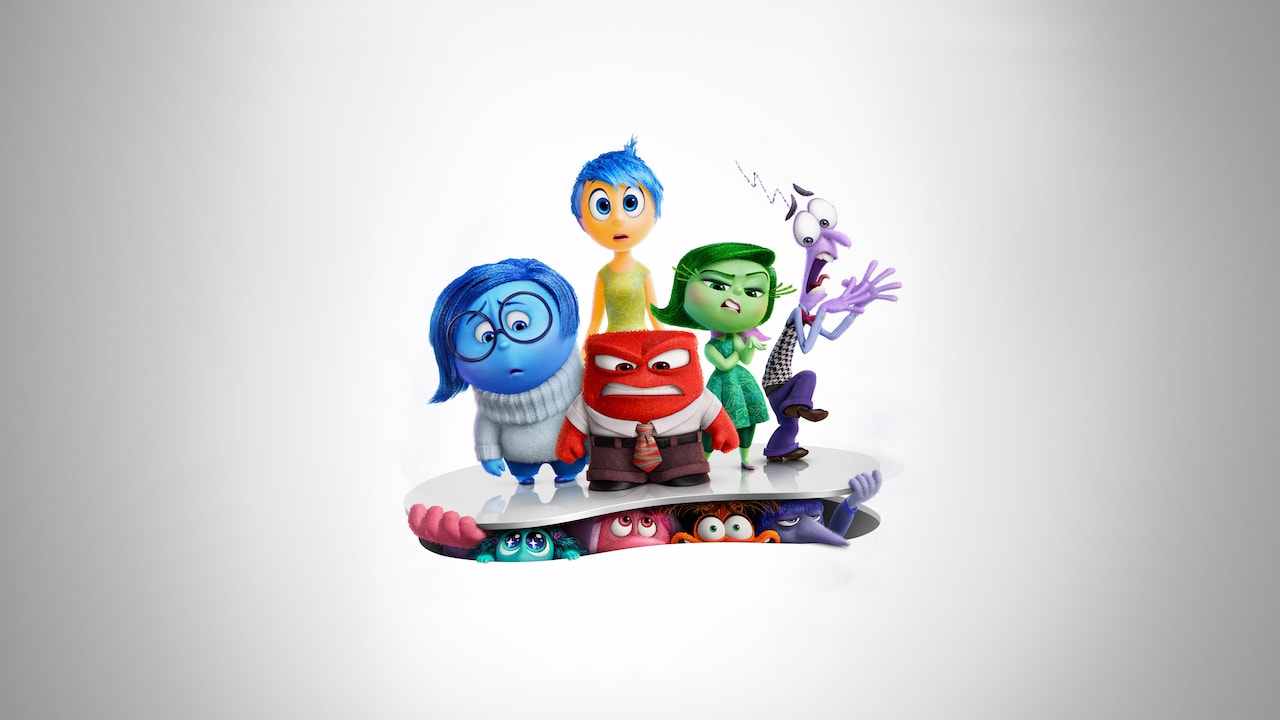
Inside her head, Joy (Amy Poehler), Sadness (Phyllis Smith), Anger (Lewis Black), Fear (Tony Hale), and Disgust (Liza Lapira) have nailed Riley’s emotional processing and regulation down to a science. Life is good.
While life seems on the up and up, it must also come down, and Riley’s perfect weekend with her friends hits a bump before it even starts when Riley learns that her Grace and Bree will be going to a different high school and play on a different team in the coming year. To make matters worse, this is the moment that Riley begins puberty, and a new group of emotions move into her head: Anxiety (Maya Hawke), Envy (Any Edebiri), Embarrassment (Paul Walter Hauser) and Ennui (Adèle Exarchopoulos).

As Riley struggles with the dilemma of hanging out with her friends or trying to impress the older girls, Joy and her friends jostle for control against the new emotions as both groups seek to shape the girl Riley becomes.
To paraphrase another Disney property, if I had a nickel for every time Pixar made a movie about a young girl going through puberty and learning to control her emotions that also includes a reference to a fictional boy band; I’d have two nickels, which isn’t a lot but, weirdly, it happened twice. (4*Town for life!)
Pixar has a mixed track record regarding sequels, ranging from what I regard as stumbling misfires that feel the smell of cash grab like Cars 2 to touching works of art that elevate and possibly even surpass the original films like Toy Story 3. Inside Out 2 is thankfully in the latter category. It’s a fun, thought-provoking, heart-stirring story that builds upon the ideas of its predecessor without spreading itself too thin and losing its focus and charm. The creative team of returning writer Meg LeFauve, new writer Dave Holstein, and director Kelsey Mann clearly understand what worked about the original Inside Out, and I give them my kudos for not messing with a working formula.
In addition to Memories, Core Memories, and the Islands of Personality, Inside Out 2 introduces Beliefs that sprout from deep within a person’s subconscious and weave themselves into one’s Sense of Self. I particularly liked this innovation as it gives us just enough to explore what’s new in Pixar’s vision of the subconscious without overstuffing the movie with ideas. It’s worldbuilding done right.

Admittedly, there is one giant plot hole caused by the new film. Why is Riley the only one with more than five emotions? The rest of the characters only have the five basic emotions from the first movie, but surely Riley isn’t the only person in the world to feel anxiety or embarrassment. While it isn’t a deal-breaking factor, it is one area that seemed like it could have used a little more thoughtfulness. While the characters from the first film, like Riley’s parents, might still be primarily governed by Joy, Anger, Fear, Sadness and Disgust, we could have seen some new humans with a different mix of emotions at the controls.
The first Inside Out was largely notable for its handling of the often complex topic of how we feel and for the deep and (for lack of a better word) emotional impact, it had on its audiences. I still count Bing Bong’s sacrifice as one of the saddest cinematic moments. While Inside Out 2 is a very moving film, it doesn’t have that same emotional gut punch.
However, I don’t think it’s trying to, nor does it need to, though I did hear plenty of sniffling in my screening, and two scenes almost succeeded in drawing tears from me. Both films tread similar paths, with Joy venturing through the expanses and corridors of Riley’s mind to try to return a piece of her personality to headquarters and avert disaster, but the context of the stories is different.
Inside Out 2 remains as relatable as its predecessor but expands into more complex concepts like anxiety attacks, social acceptance, self-doubt and identity crises. Where the first film was about the acknowledgement and importance of each of our emotions, the sequel deals with what happens when our emotions come into conflict. With Inside Out 2 seemingly not concerned about making its audience bawl ugly tears through the last act, it felt like there was more room for jokes and visual gags, making it the more fun of the two films.

I especially appreciate the refreshing variation in character design, like some 2D animated characters and one designed to look like an early 2000s video game character. The Pixar style of animation is always gorgeous, but it has become almost boringly consistent, and adding little touches like this shows that the studio still has an innovative stylistic trick or two up its sleeves.
The original 2015 film was heavily focused on Joy, Sadness and Riley, while the other emotions had a decent amount of screen time but no opportunities to shine or connect with audiences. Despite adding even more characters, Inside Out 2 manages to more evenly balance out the screen time of its roster and allow each emotion to feel equally significant. Joy is still lead, of course, and as the semi-antagonist, Anxiety also gets a heftier serving of lines; however, this time around, the whole cast feels more developed and impactful to the story. For example, Anger doesn’t just lash out with fiery rage but is channelled into Riley’s hockey prowess and helps Joy devise plans.
Overall, the characters are distinct and fleshed out in their dialogue, design and actions. Anxiety’s goofy, unhinged appearance perfectly suits her frantic, upbeat energy. Ennui is French for “boredom,” and the emotion perfectly suits the stereotypical French accent and aloofness she is portrayed with. Most of Embarrassment’s characterization comes from the character’s physical reactions to unfortunate situations, and things like withdrawing deep inside his drawstring hoodie or splaying out across the control console perfectly encapsulated the secondhand humiliation I felt for Riley.

The only character I felt was poorly defined was Envy. As Merriam-Webster describes it, envy is a “painful or resentful awareness of an advantage enjoyed by another joined with a desire to possess the same advantage,” the character is portrayed as a tiny child with big, bright eyes. While I understand that the creative team was most likely avoiding vilifying the character by not going with a more traditional deadly sin depiction of the emotion, I didn’t feel like the character was ever particularly envious or greedy. She just seemed easily influenced.
Sure, at some points, she remarks about how Riley should copy another character’s cool hairstyle, but that felt more motivated by a desire to be cool or to fit in with the popular crowd. Perhaps I just misunderstood what envy is, or too many other pop culture representations have coloured my expectation of the character, but this is the one character I never felt encapsulated the essence of the emotion as the others did.
One improvement I felt the creative team made in the sequel was how the film handled anxiety. Though there isn’t a true villain antagonist in that none of the emotions are acting out of malice, Anxiety is the closest thing to a pseudo-antagonist in this film, much like how Sadness’s actions instigated most of the problems in the first movie. For most of the first Inside Out, Sadness is portrayed as bumbling, burdensome and willfully disobedient for no particular reason, and to me, her redemption seemed abrupt, and the character herself didn’t so much do anything to earn it as Joy just kind of decided to include her.
I appreciate how the sequel portrays Anxiety as impressively competent and only operating out of the best interest of Riley’s future. Her actions are well-intentioned but misguided, and Anxiety is forced to confront the consequences of her decisions in a way that I think Sadness did not. It’s a shared journey this time, and Joy and Anxiety both have satisfying growth by the end.

Both the returning voice cast and the newcomers performed their roles flawlessly. Amy Poehler once again lends her signature sunny personality to Joy, and it just filled me with happiness to hear her talk about how proud she is of Riley. Lewis Black and Phyllis Smith also reprise their roles, with Black bringing back the hilarious grumpiness to Anger and Sadness, being just as adorably melancholic as I remember her. Though Bill Hader and Mindy Kaling did not return due to alleged pay disputes, their replacements, Tony Hale and Liza Lapira as Fear and Disgust, are almost indistinguishable from the original actors.
Maya Hawke is exceptionally good at Anxiety, blending a sense of earnestness with a slight edge of panic in her delivery. Despite my earlier criticisms of Envy, Ayo Edebiri is endearing and enjoyable in the role. She gives her character a wide-eyed naivete and youthful energy unique from the other emotions portrayed by adults. Adèle Exarchopoulos’ hilarious deadpan as Ennui was one of my favourite parts of the film.
Kensington Tallman had an advantage playing the teenage Riley in that she is a teenage girl herself, but that doesn’t diminish how impressive her performance is. Tallman had the challenge of portraying Riley’s lines such that all nine of her emotions are distinct and easily recognizable, and she succeeds with flying colors. Riley comes across as a real teenage girl struggling with the pressures of fitting in and discovering who she is, and it brought back memories of my awkward high school years.
When the news broke in the recent Bloomberg article that Pixar would dedicate more of its attention to sequels rather than original stories, I was worried that the studio’s films would become lazy and derivative, like what happened to the Cars franchise with the weird Planes and Fire Rescue films. But my fears seem unfounded, Inside Out 2 is a good indicator of what Pixar is still capable of and hopefully intends to continue delivering.
Inside Out 2 may not be quite the tearjerker its predecessor was; however, it more than delivers in its humour and heart through its writing and visual gags. The original gang of emotions is charming as ever, while its new cast of characters is fun and relatable.
Rating: 7/10