

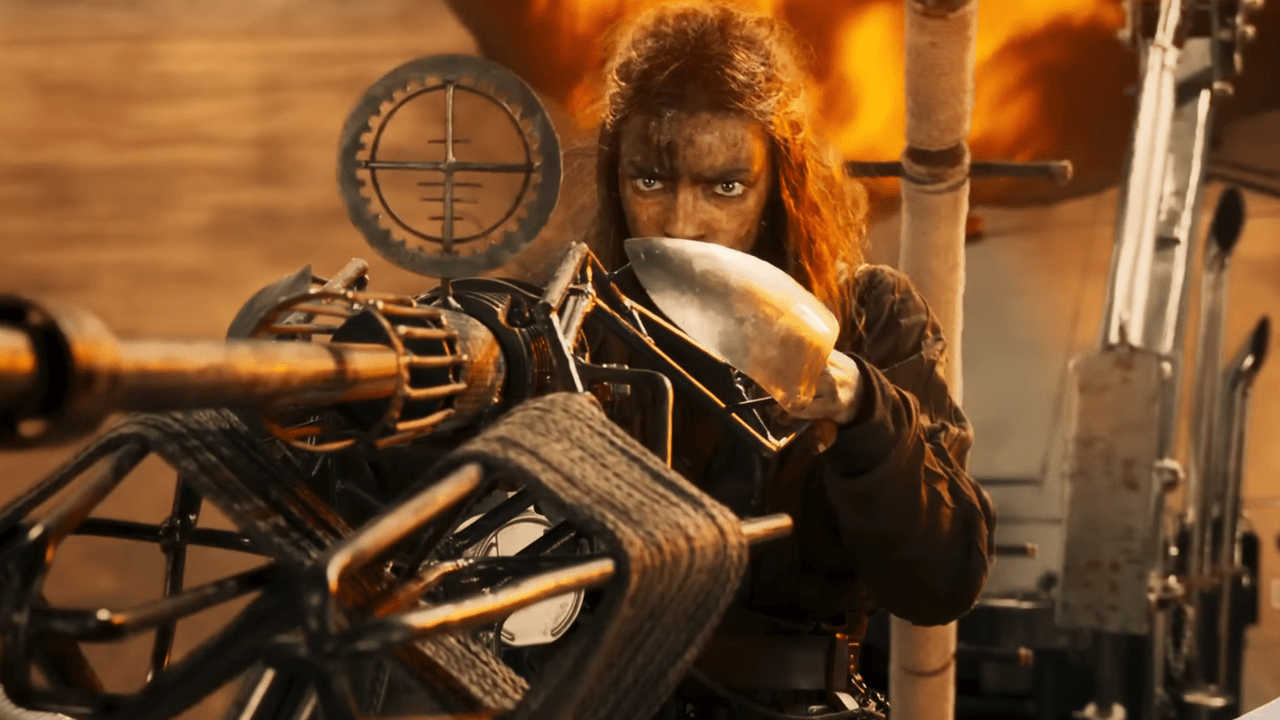
In 2015, Mad Max: Fury Road roared into theatres to tremendous acclaim, introducing a new generation to writer and director George Miller’s post-apocalyptic Australia, full of vehicular violence, of chrome-toothed War Boys whose glorious deaths demanded witnesses and of unconquerable badasses like the Imperator Furiosa.
Miller’s latest entry in the series,Furiosa: A Mad Max Saga, drops audiences right back into the perpetually dusty Wasteland 18 years before the events of Fury Road. As the title suggests, Furiosa (Anya Taylor-Joy) is the focus of this film, chronicling her abduction as a young girl and transformation to a battle-hardened road warrior through her unflappable survival instinct and an unquenchable thirst for revenge against her captor, Dr. Dementus (Chris Hemsworth).
Furiosa is a direct prequel to Fury Road and features many of the same characters and locations. In fact, according to Miller, Furiosa was written as a companion piece before Fury Road even started filming to provide context and character information for the actors. It’s hard to think about the new film without the context of the other. Both films are strong enough to stand on their own, but I think the best experience of Furiosa is with an understanding and appreciation of the previous film.

Furiosa doesn’t capture the same nonstop full-throttle energy, but it’s not trying to. Don’t worry; there’s plenty of metal-crunching, flesh-rending action. But Furiosa changes the tempo, adding some breathing room to simmer in her rage, reflect on her evolution as a character, and gain our bearings within the different primary locations of the twisted world.
For fans who may have been expecting the same unrelenting adrenaline rush, I think the greater focus on developing the characters and the world makes Furiosa stand out and makes it a stronger film. Even with the precious little we learn about her in Fury Road, Furiosa is a captivating character, and the prequel enriches and elevates her story by providing further stakes and motivation behind her future rebellion against Immortan Joe.
Where the first film’s events moved at a breakneck pace over three days, Furiosa’s solo tale is a sprawling epic that rewards us by shining a light on her relationships with familiar characters without ever ruining that sense of mystery by spoon-feeding too much exposition. Like a guzzle to a war rig, Miller has calculated the precise amount of backstory necessary to power the plot and refused to give a drop more.

While there are fewer action scenes, there are still plenty of explosions, chases and battles to satisfy even the most bloodthirsty War Boys. What the film may lack in many action scenes, it more than makes up for in precision and imagination. These scenes are hefty sequences lasting several minutes that showcase an expertise in planning and choreography. Furiosa even improves upon the car battles of its predecessor with even more outrageous and imposing vehicle designs. These new war machines still have that look of being cobbled together from junkyard scraps while also retaining a ridiculous level of plausibility.
Taking the driver’s seat from Charlize Theron, Anya Taylor-Joy embodies a younger, untested Furiosa. Unlike her older counterpart, who is responsible for much of Fury Road’s exposition and dialogue, this iteration of the heroine is much more reticent, relying upon silence as a survival tactic. Taylor-Joy’s body language does the heavy lifting. There’s a marked difference in posture and energy when Furiosa tries to remain inconspicuous as one of Immortan Joe’s underlings rather than the calm and determined authority she exudes as a respected Imperator.
The most impressive aspect of Taylor-Joy’s performance is her eyes. If the eyes are the windows to the soul, then Taylor-Joy gives Furiosa a soul full of fury, caution, savagery, and an indomitable will to survive. Despite being so different, Theron and Taylor-Joy’s performances complement each other and fit the natural progression of the character, a testament to each actress’s skill and Miller’s directorial prowess.

Audiences most familiar with Chris Hemsworth’s boisterous, himbo portrayal of the superhero Thor will find something familiar yet starkly different in his portrayal of Dementus, the leader of the biker horde that kidnaps Furiosa and plunges the delicate balance of the Wasteland into (even more) violence and chaos. Hemsworth takes the charismatic oafishness he is known for and perverts it, substituting warm heroism and a sense of justice for imaginative cruelty and a lust for power. Even just visually, Dementus cuts a striking figure, his cape, beard and relatively clean visage setting him apart from the dirty and deformed residents of the Wasteland. It’s a masterful, even hypnotic performance.
Furiosa and Dementus work perfectly as foils. She is silent and focused, scrapping to survive and always working towards a clear goal. He is all bluster and bombast, spinning his wheels towards an almost intangible goal of power and control. As her legend grows, his starts to crumble. Choosing which character is more compelling to watch is hard, but I’d go with Dementus if forced to choose. Hemsworth’s portrayal is just so entertainingly, well, demented.
Many prequels feel like soulless and unnecessary cash grabs that fail to establish any stakes or sense of urgency outside of the money the studios stand to gain or lose. Fortunately, Furiosa: A Mad Max Saga bucks that trend, instead solidifying its place as essential viewing for devotees of the series and general fans of action films. Furiosa continues its predecessor’s legacy of motorized mayhem and gloriously wacky characters while thoughtfully expanding our understanding of the sandbox it plays in.
Oh, what another lovely day in the Wasteland!
Rating: 8/10