

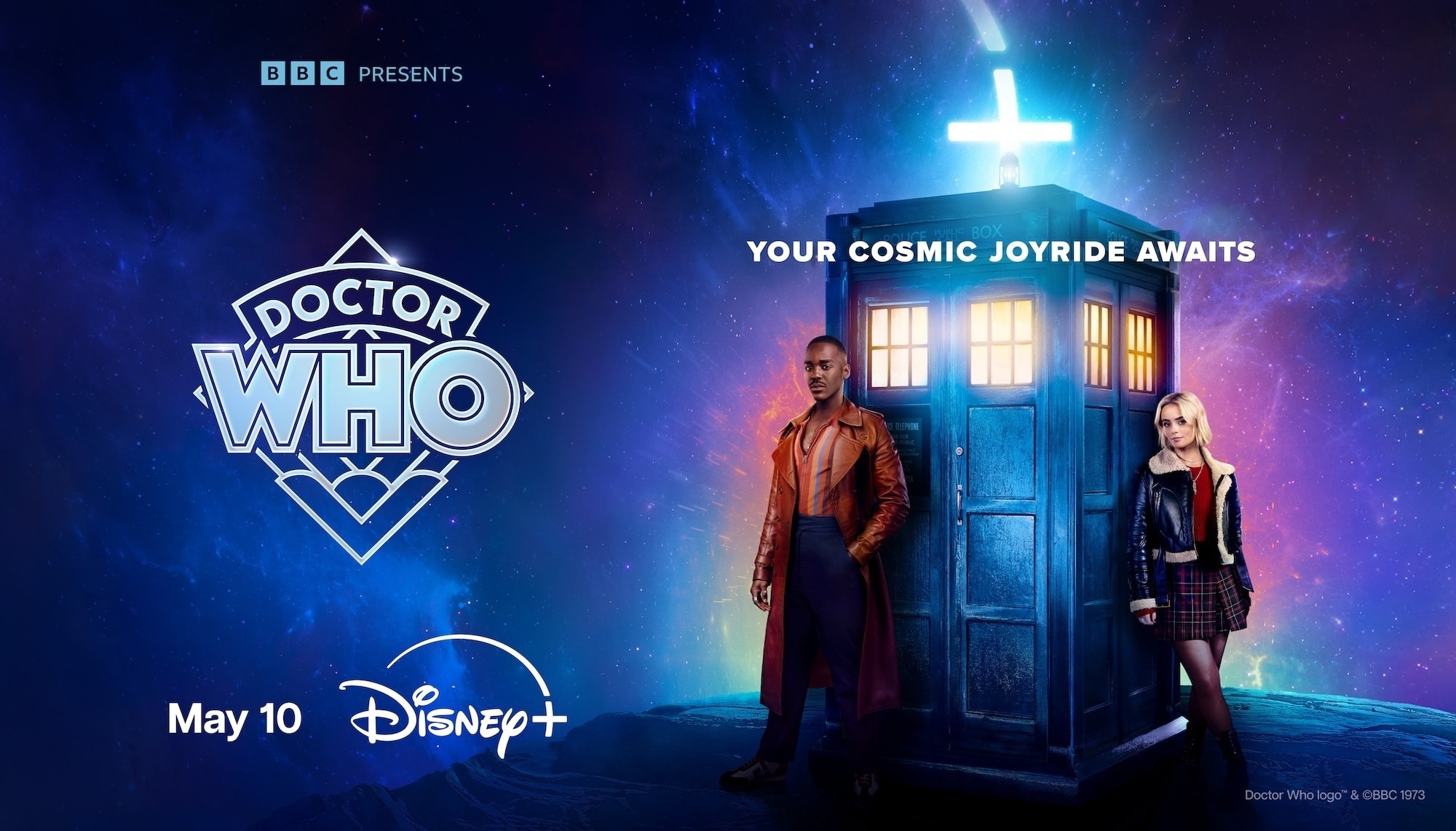
Going to high school and college in the 2010s, I remember the pop culture scene dominated mainly by the amalgamated SuperWhoLock fandom. Fast forward to today, and out of Supernatural, Doctor Who, and Sherlock, only the good Doctor remains standing to give its fans new episodes.
Confession time: before writing this review, I had never seen an episode of Doctor Who. But, through cultural osmosis, I learned specific details about the world, like the TARDIS is bigger on the inside, a sonic screwdriver is a wonder tool that somehow doesn’t work on wood. Time is more wibbly-wobbly than a strict progression of cause and effect. Luckily for people like me who still need to take the plunge into the sci-fi world of the Gallifreyan Time Lord, Ncuti Gatwa’s turn as the Fifteenth Doctor presents a new jumping-off point in the show’s fourteenth series.

The first three episodes of the newest series of Doctor Who provided for review included the previously aired Christmas special “The Church on Ruby Road” and the upcoming episodes “Space Babies” and “The Devil’s Chord,” which see the Doctor exploring and solving problems throughout space and time. Tagging along for the ride is plucky young orphan Ruby Sunday (Millie Gibson), who is on a quest to discover her birth parents.
As a novice and first-time explorer of the Doctor Who universe, I can easily see why the series has captivated audiences for decades. The world of the Doctor is so vivid and grand, full of magic and sci-fi. From sky goblins to dinosaurs to talking infant astronauts and a literal boogeyman, the variety of beings showcased across time and space in the first three episodes alone made me excited for the scope and possibilities for the rest of the series.
In addition to the fun of getting lost in the story of each episode, everything looks gorgeous. The CGI characters are life-like and convincing, while the sets and props create a distinct sense of time, place and culture in each location. For example, visiting Ruby’s apartment in modern-day London has a very different vibe than stowing away in the wood and rope goblin skyship mere moments later, and stepping back to London in the 1960s has a vintage grooviness that isn’t found in 2023. Details like children’s scribbles graffitiing the halls of a space station grant a delightful paradox that makes it all seem lived-in and plausible.

Eye-catching as it is, only some things the show attempts pay off as well as I’d like. For example, while I appreciate using real children rather than entirely relying on CGI in the “Space Babies” episode, the special effects required to make their mouths match their dialogue is less than convincing. It’s somewhat disconcerting in an uncanny valley way. While in line with the wackiness of the episode, a pre-dinner concert before the Goblin King starts gobbling up a baby still feels abrupt and out of place. Like the creative team said, “Might as well,” and included it to pad the run time and show off the goblin CGI. However, that might just be how British TV is.
Sci-fi often requires a significant suspension of disbelief, but some of the show’s logic and explanations come across as overly complicated gibberish. Episode 1 is the worst offender of the three episodes I reviewed, centering around the goblins “riding time waves” and causing lousy luck and coincidences to “weave you in” the tapestry of time to make the babies they abduct taste even better; if you say so, Doctor.
These are minor gripes, however; in the grand scheme of things, they didn’t really diminish my enjoyment of the show. The self-contained adventures within each episode were whimsical and imaginative. Though I knew that the Doctor and Ruby would inevitably triumph in under an hour, there was enough at stake and plenty of danger to keep me engaged. In the first three episodes, the underlying series-long plot surrounding Ruby’s parentage did little to capture my attention since most of that story is revealed in tiny crumbs. However, certain events in the episode “The Devil’s Chord” indicate that there is more to the girl than being a simple orphan, and I’m curious to see where Ruby’s story leads.

The diversity of the cast and its portrayal of underrepresented lifestyles and people is another of the show’s strengths. Ncuti Gatwa is the first man of color to portray the Doctor. Ruby is an orphan who went through the foster care system before being adopted by her Black foster mother. Jamaican-born actor Angela Wynter plays Ruby’s adoptive grandmother, and the family occasionally speaks in Jamaican Patois. Ruby’s friend Trudy and episode 3’s antagonist Maestro are played by transgender actor Mary Malone and trans-femme actor Jinkx Monsoon, respectively. Though displayed in the show, the diversity doesn’t ever seem forced but unobtrusive and natural to the world of the show.
Thankfully, the cast’s diversity isn’t their only strength, and their performances are entertaining, compelling and often profoundly moving. As the Doctor, Gatwa flows through space and time with an infectious joy and charisma, such that no one could blame Ruby for roaming around with a stranger spouting outlandish tales of time travel. Key to Gatwa’s performance is the sense that the character genuinely wants nothing more than to help others while satisfying his curiosity about the world around him. From moments of childlike giddiness and selfless heroism to more subtle beats of loneliness and despair, Gatwa runs through an impressive range of emotions and energies in just three episodes. As a newbie to the world of Doctor Who, I unfortunately cannot compare his performance to those who have previously carried the mantle. However, as an isolated performance, I find him an engaging lead who propels the show forward with his can-do attitude and zeal for exploration.
As this series’ companion, Ruby Sunday is a likable parallel to the Doctor. She shares his background as an orphan, and Gibson lends her character a similar adventurous vitality that makes it easy for the characters to connect and for the audience to buy into their immediate friendship. Again, there is still a lot of groundwork that needs to be laid for Ruby’s parentage storyline. Still, it does give her character some necessary depth and intrigue while also making her sympathetic and relatable. The love Gibson portrays towards Ruby’s adoptive family is pure and joyful, while her innate longing to understand her roots and history is raw and human.

The supporting cast also packs some powerful performances. Michelle Greenridge’s performance as two versions of Ruby’s adoptive mother from different timelines are as different as night and day. One is warm, fulfilled and full of love, while the other is cold, bitter and full of regret, a contrast that is heartbreaking in the context of the episode. As the only antagonist with any real character in the episodes I reviewed, drag star Jinkx Monsoon’s Maestro dominates every scene with a bold swagger and delightful devilishness. Monsoon’s performance is grand and theatrical without going over the top and maintains a real sense of danger and menace.
After witnessing the scope and passion of the Doctor Who fandom for so many years, I had high expectations from the first three episodes of my Whovian experience. I’m pleased to say that Series 14 absolutely met them. Some plot threads were overly convoluted and confusing, and some of the CGI could have used a little more polish, yet the show’s overall experience is pure fun. The visuals are striking and immersive. The characters and performances are lovable and expertly crafted. The storylines are imaginative and full of wonder.
My only question is where will the TARDIS take us next?
Rating: 8.5/10