

The year 2008 still feels so fresh in my mind. Despite being 16 years old, I can still clearly remember going to class, hanging out with my friends, and struggling to navigate between the Filipino culture my parents kept at home and the American culture everywhere else I desperately wanted to be part of.
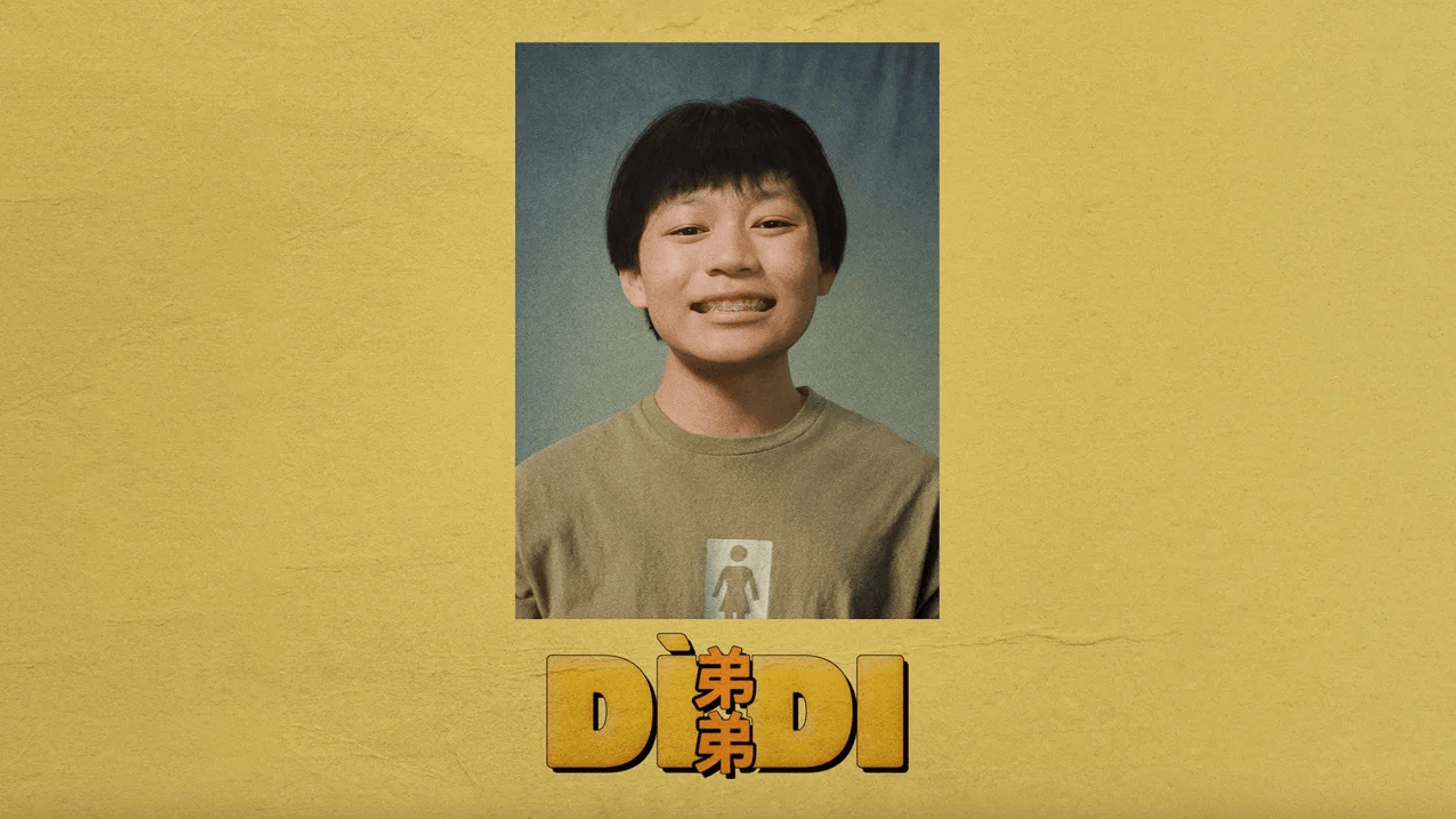
Sean Wang’s first feature narrative film Dìdi (弟弟), which he wrote and produced, is a semi-autobiographical look at life at the beginning of the social media age. In the month before starting high school, 13-year-old Chris Wang (Izaac Wang) stumbles his way through teen romance, fitting in with his friends and the cool skater kids, fights with his sister and his strained relationship with his mother (Joan Chen).

Dídi (弟弟) is pure Millennial nostalgia. In 2008, I was only a year younger than Chris would have been. I distinctly remember so much of that period of American culture, and what I didn’t remember, like the look and layout of early YouTube and Myspace, came flooding back to me. From skate culture to alternative hits to obsessing over our phone ringtones, Sean Wang has created a cinematic time capsule to a simpler era.

Another strength of Dídi (弟弟) is that it’s always interesting to look at. Though it’s not a new technique that has been seen in films like Searching and Unfriended, Sean Wang’s use of internet webpages to tell its story effectively adds variety to its storytelling techniques, showing rather than telling Chris’ mental and emotional states. The aforementioned use of the old YouTube format and early instant messenger windows grounds the story in the era, as do the grainy camcorder clips and skate videos. Throw in a couple of dream sequences, drug-induced hallucinations, and the familiar and endearingly low quality of old home movies, and there’s always something new and fun to look at. Though many of the same techniques are revisited and recycled throughout the film, they’re used sparingly enough that they never get old.
The true power of Dídi(弟弟) is in its story and characters. Even with the recent increase of Asian American stories in cinema, it still feels rare and remarkable for a film to focus on the struggles of first-generation children, and downright miraculous when a film captures the liminal frustrations as well as Wang does. Chris’ frustration and shame at being different, his desperation to fit in, and his shame at not living up to expectations are among the many poignant and powerful ideas and experiences explored in the film. Though Chris’ older sister Vivian (Shirley Chen) has limited screen time, we see her do the emotional dance of the older sibling, viewing her younger brother as the most annoying person on the planet but at the same time being fiercely protective of him. While Chris may view his mother as an annoyance and, at times, even a villain, Sean Wang does a delicate job of crafting Chungsing as a hardworking, loving mother doing her best in less-than-ideal circumstances while at the same time never entirely invalidating Chris’ resentment. Coming-of-age films often limit their portrayal of parents to their interactions with the children and as an obstacle to the good times that await, but including Chungsing’s grief, longing, and hope makes the story so much richer and painful.

Izaac Wang delivers an astounding performance full of nuance and range. The sixteen-year-old actor juggles Chris’ mischievous youthfulness with teenage awkwardness, a boy who wants to be the life of the party but would still end up alone in a crowded room. Wang’s ability to emote and deliver as much of the story through his silences as when he speaks indicates his skill as an actor and his understanding of the character. He makes us love Chris just as much as we want to shake him and stop him from making many stupid mistakes. Wang was growing tired of acting before booking Dìdi (弟弟),and thank the acting gods he did because he nails it.
As much as Dìdi (弟弟) is a story about Chris finding his place in the world, it’s also about him and his mother, and Joan Chen delivers a heartbreakingly good performance. Chungsing never explicitly tells her son that she loves him, but that devotion is evident in every look and word she gives him. She’s a woman out of her depth trying to raise two kids alone in America but carries a weary determination to keep on fighting and believing that maybe her dreams are still within reach. She has high expectations of her son but also struggles to meet the expectations of those around her. Joan Chen is so tragic and lovable in this role. The product of immigrant parents myself, I would venture to say that Chen’s performance is a testament, validation and vindication of immigrant parents whose struggles and sacrifices are often overlooked and unrecognized by society and even their own families.
The chemistry between the two leads is spellbinding. At times, they are reactive and angry. Other moments are quiet and tender. Individually, their performances are some of the best I’ve seen all year, and together, they only serve to elevate each other.

In a statement, Sean Wang stated that Dìdi (弟弟) is a film defined by shame. It’s not the neat, conventional teenage drama where the outcast kid becomes a local hero and rides into the sunset with the popular girl on his arm. It’s not a film where the bullies get their comeuppance, everyone learns a valuable lesson, and the gang has a swell time leading into the credits. It’s a film about growing pains, the awkwardness of growing up, the reluctance to accept who we are and the uncertainty of who we want to be. Though he clashes with almost everyone around him, Chris is the villain of his own story. His shame regarding his heritage or his social status leads him to act out, which in turn causes his mother to be ashamed of him and the trouble he gets in. He’s self-destructive, and he knows it. Is it still a coming-of-age film if the lead still has some growing up to do by the end?
With Dìdi (弟弟), Sean Wang has crafted a beautiful, emotional time machine. A powerhouse of a cast bolsters the solid writing and visual fun. Though it may seem like a love letter to the 2000s, its references are never overly indulgent. It flawlessly incorporates the culture and technology of the day into the story and intertwines a culture coming to grips with the new age of social media and the life of a boy learning who he is.
Rating: 9/10