

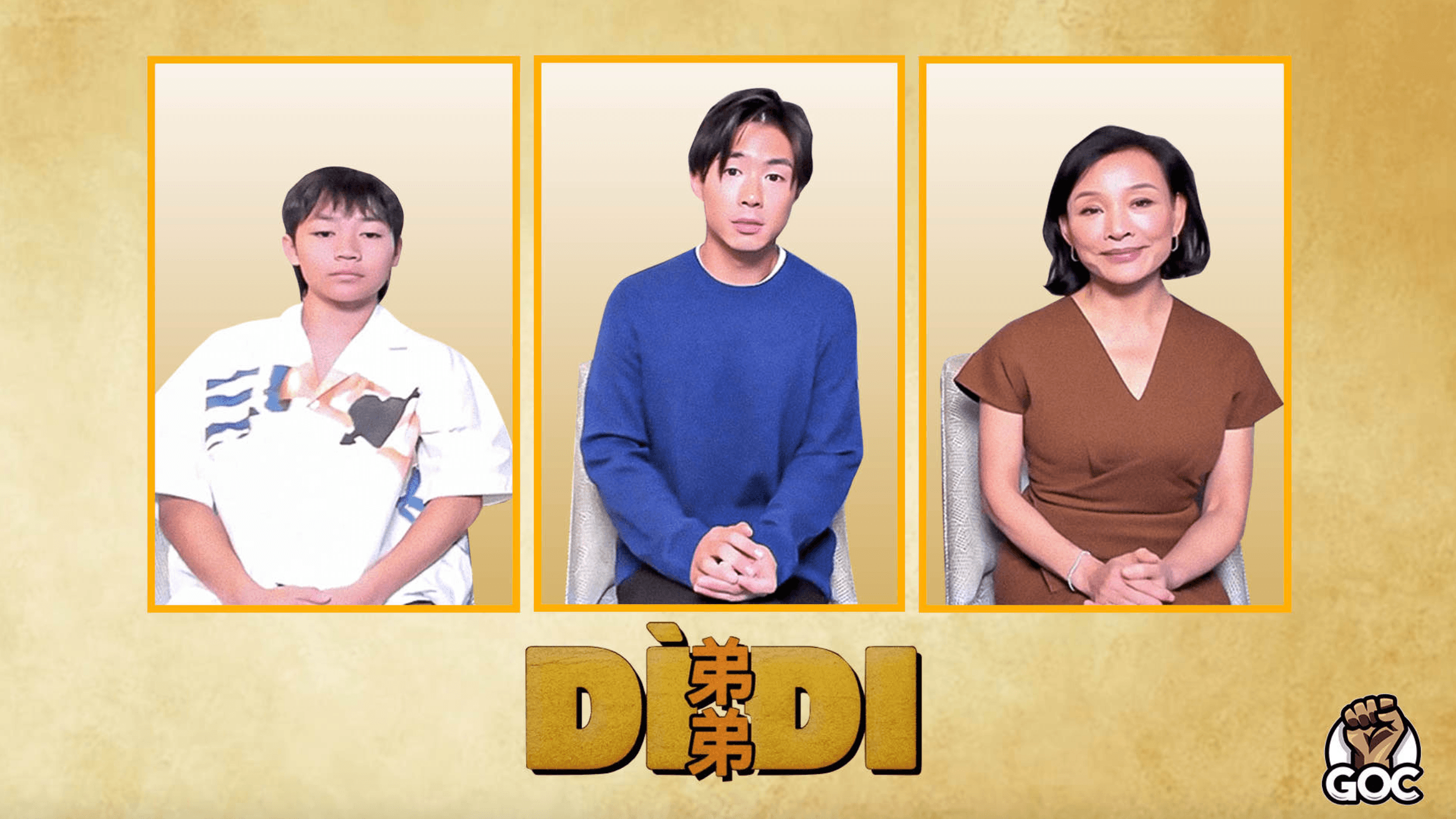
Being a teenager is hard. The difficulty curve increases exponentially when you throw in being a first generation American, not being one of the cool kids and contending with society during a cultural and technological revolution. While I could easily be talking about my own youth on the cusp of the social media explosion in the late 2000s, I’m actually referring to some of the struggles faced by 13-year-old Chris Wang in Sean Wang’s semi-autobiographical film Dìdi (弟弟).
In the film, Chris (Izaac Wang) spends the summer of 2008 preparing for his freshman year of high school while the navigating normal teenage drama of crushes, fitting in with new social groups and getting invited to parties while at the same time being trapped between his Asian and American identities.
While there are countless films about angsty, misunderstood teenagers coming of age and Asian-American are becoming more common, one reason Dìdi (弟弟) stands out to me is that it highlights the often unrecognized perspective of the first generation citizen whose struggles are different from those of immigrants or children from multigenerational American families.
“It’s a very personal perspective, I’m gonna write a personal story,” Sean said. “It’s impossible to write it from a different perspective. It would be weird to be like ‘this is a very personal story,’ and then it was like a blonde, white kid or something. By writing this story and having it be inspired by my family, it was, I think, inherently going to be through like a first gen Asian American perspective.”
“This story was pretty personal to Sean because it was a personal story and I think it would be kind of weird if this personal story was acted by a blonde, white kid,” Izaac said, jokingly reinforcing the point.
While Chris often sees his mother Chungsing (Joan Chen) as a villain and treats her harshly, the film also explores the pain she experiences and validates her sacrifices and concern for her son.

“It is not easy,” Chen said. “I mean, you have to have uprooted yourself moving into a completely strange world and having left behind all your friendship, love, tradition, language, everything, and come here and raise American children. It is exceedingly difficult, and people often don’t think about it.”
Chen said that Chungsing’s struggles are very Asian, stemming from a culture of multiple generations of family living together and contending with the lofty expectations of her mother-in-law, her absent husband and demanding children.
“The character is stuck in the middle, just being considered an inadequate daughter in law, and trying so hard to be a good mother, but really clueless sometimes,” she said. “She simply doesn’t know. She’s unsure of the ground under her feet. But the fierce love comes through. In the end, it’s there. I love it. Between Chris and mom, we never even said, ‘I love you.’ But in the end you feel it’s there.”
As central as the family’s immigrant experience is, Dìdi (弟弟) is also largely informed by the early internet, social media culture and technology of the 2000s. Much of the story involves and is told through YouTube videos, MySpace and instant messenger. While access to the internet does help Chris foster connections with his peers, it’s also a double edged sword that contributes to his isolation and feelings of inadequacy.
“Kids act a lot differently than they do now than they did before, but I think down at the core, there’s still the same insecurity, the same need to fit in and same like, ‘Oh, wow, if I if I can’t like be the cool kid and like, what’s going to happen to me?'” Izaac said. “That’s still something that’s pretty commonly found in most teenagers. And the only difference is really the technology you know, and the media that we consume and the media that we put up. That’s the only thing that’s really changing our behaviors and how we talk and how we act.”