

When faced with the impending end of the world, what does a boring person do with the remaining time they have left? Cut loose and give in to their base animal instincts? Seek adventure and self-actualization?
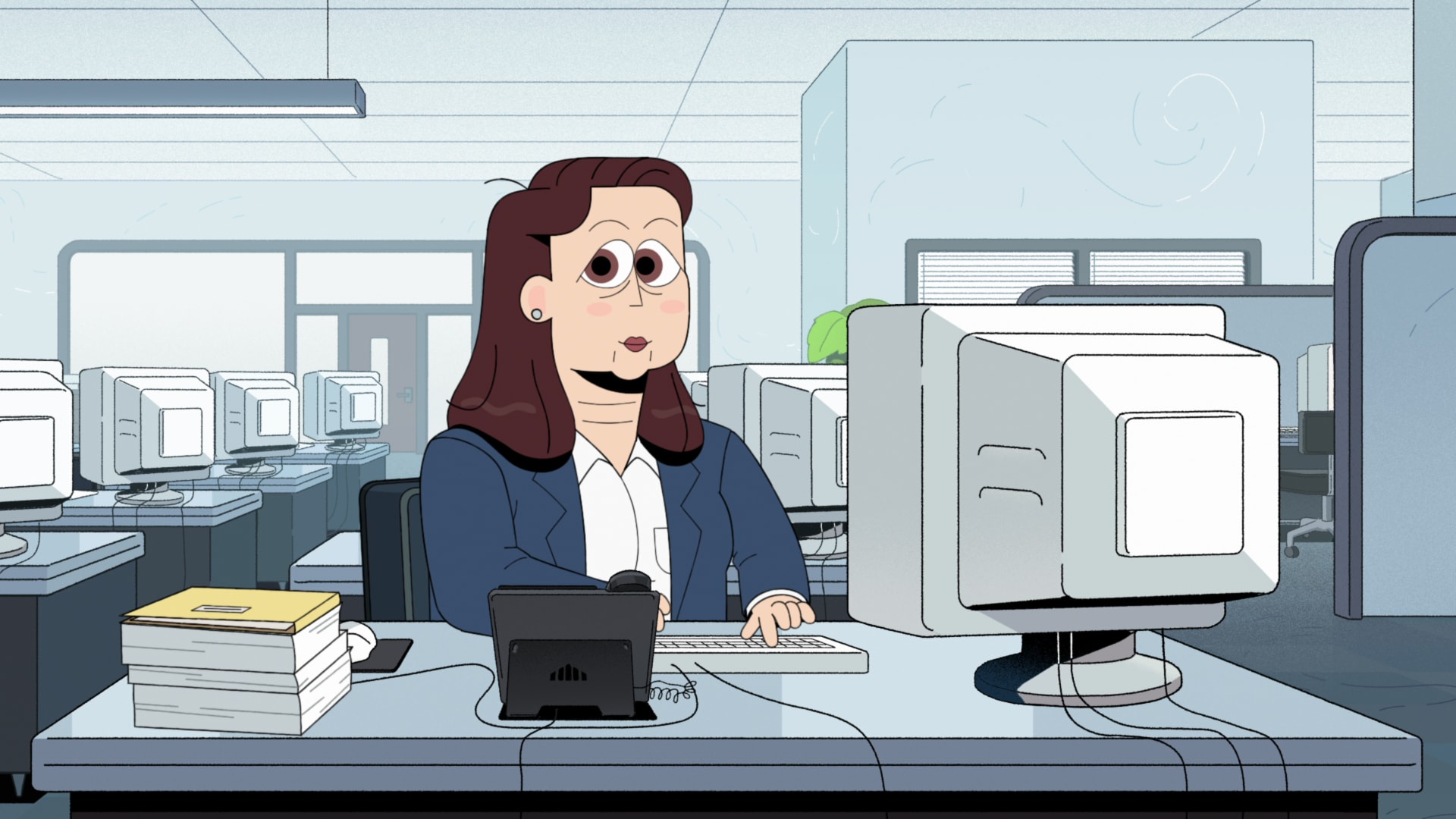
Carol & The End of the World says if you’re Carol Kohl, you get an executive assistant job in an accounting department.

Created and penned by Rick and Morty writer Dan Guterman, Netflix’s new adult animated series Carol & the End of the World follows its titular protagonist as she navigates the final days of life before the apocalypse. As Earth is on an unavoidable collision course with the planet Keppler 9C, humanity collectively decides to seek joy and fulfillment with the remaining seven months left. As those around her travel, seek spiritual enlightenment, embrace a nudist lifestyle and otherwise give into hedonism, Carol (Martha Kelly) instead seeks some semblance of normalcy and the life she once knew, opting to sit in an abandoned Applebee’s restaurant and work in the accounting department of a fake company known as The Distraction.
The opening episode is, at best, okay. Visually, it is indistinguishable from current and recent animated fare. Its character design falls squarely in line with the big-eyed, bean-shaped “CalArts style.” However, the inviting backgrounds and bright, pastel color palette are pretty to look at and occasionally have fun details like skydivers or uplifting graffiti. The show’s comedic nudity and certain plot elements, like Carol’s parents being in a throuple with her father’s caretaker, are on par with what we would expect from a Rick and Morty writer. It is made painfully and overbearingly clear that Carol is a boring person. Guterman is desperate for us to know that Carol is dull.
Thankfully, things quickly pick up. Carol’s blandness soon becomes a welcome counterpoint to the bolder lives led by her parents and sister. And even then, her days are far from boring. While taking a job in accounting may seem like the least interesting way to spend the last months of your life, she quickly proves us wrong, embarking on epic quests like scouring the local abandoned Office Depot stores for printer toner via motorcycle.
The world of The Distraction becomes one of intrigue and mystery, and we can’t help but care for Carol’s coworkers because she can’t help but care for them. The more time we spend with Carol, the more we realize that despite her seemingly milquetoast personality, she is a loving, caring and inspiring woman who goes out of her way to see the humanity, goodness and worth in other people.

And that’s what I think makes Carol & The End of the World such a damn good show. It’s a story about seeing the value of people, looking beyond first impressions and finding meaning in our lives. Each episode is filled with enough pithy philosophical one-liners that border on cliche to give even the most wistful, wise old grandparent a run for their money. It’s a welcome reflection of the anxieties and uncertainties that seem to characteristically define Millennials and Gen Z.
Instead of brooding about whether or not life has meaning, Carol & The End of the World cheerfully asks us to consider what we feel makes our own lives worth living. Rather than explore the cynical side of humanity in the face of adversity and tragedy, the show firmly takes the stance that even the most seemingly minor people we pass on the street or in the office have value. They have complex lives and histories, and we can all come together for the better with a bit of kindness.
Part of what makes the story feel so genuine and heartfelt is the work of its voice cast. The initial impressions we get give way to a much more layered personality. Martha Kelly’s monotone performance fits Carol’s mild-mannered life perfectly. It serves as a baseline to amplify the quirks of everyone else in Carol’s life, though the comedy of it all soon gives way to her earnestness, genuine care for others, and consistency. Though we initially see Carol’s coworker Donna as tough and no-nonsense, as she and Carol develop a friendship, actor Kimberly Herbert Gregory builds a character full of dry wit and wisdom, but at the same time plagued with weariness and regret.
Mel Rodriguez builds his character of Luis up as more than just the energetic gay Latino coworker with an underlying loneliness and longing for the community he finds with Donna and Carol. Though most background characters don’t get more than a few lines, their deliveries are unique enough to convey a sense of life and individuality.

Furthermore, the show is so wonderfully subversive. While so many stories about the apocalypse go down a Mad Max/ Lord of the Flies-esque path of cynicism and carnage, Guterman dares to imagine a world of hedonistic positivity. With less than a year to live, everyone can live their best life without resorting to making others miserable.
The cheerful, bright colors of the show stand apart from other end-of-the-world shows that bathe every scene in a violent orange filter or emphasize the emotional turmoil of it all with depressingly muted hues. The woman first presented to us as a buzzkill turns out to be a wellspring of kindness and someone to rally around. Even in the face of oblivion, people can still find community, meaning and joy.
It feels strange to say that a story centered around the destruction of all life on Earth is a ‘feel-good show,” but that’s what it is. Carol & The End of the World asks us to contemplate big questions about existence and the meaning of humanity, but makes us feel happy while we do it. The show doesn’t break any ground regarding its animation, but it doesn’t need to. Its optimistic view of the apocalypse and genuine charm make it well worth the time it takes to get to know Carol Kohl and her coworkers.