

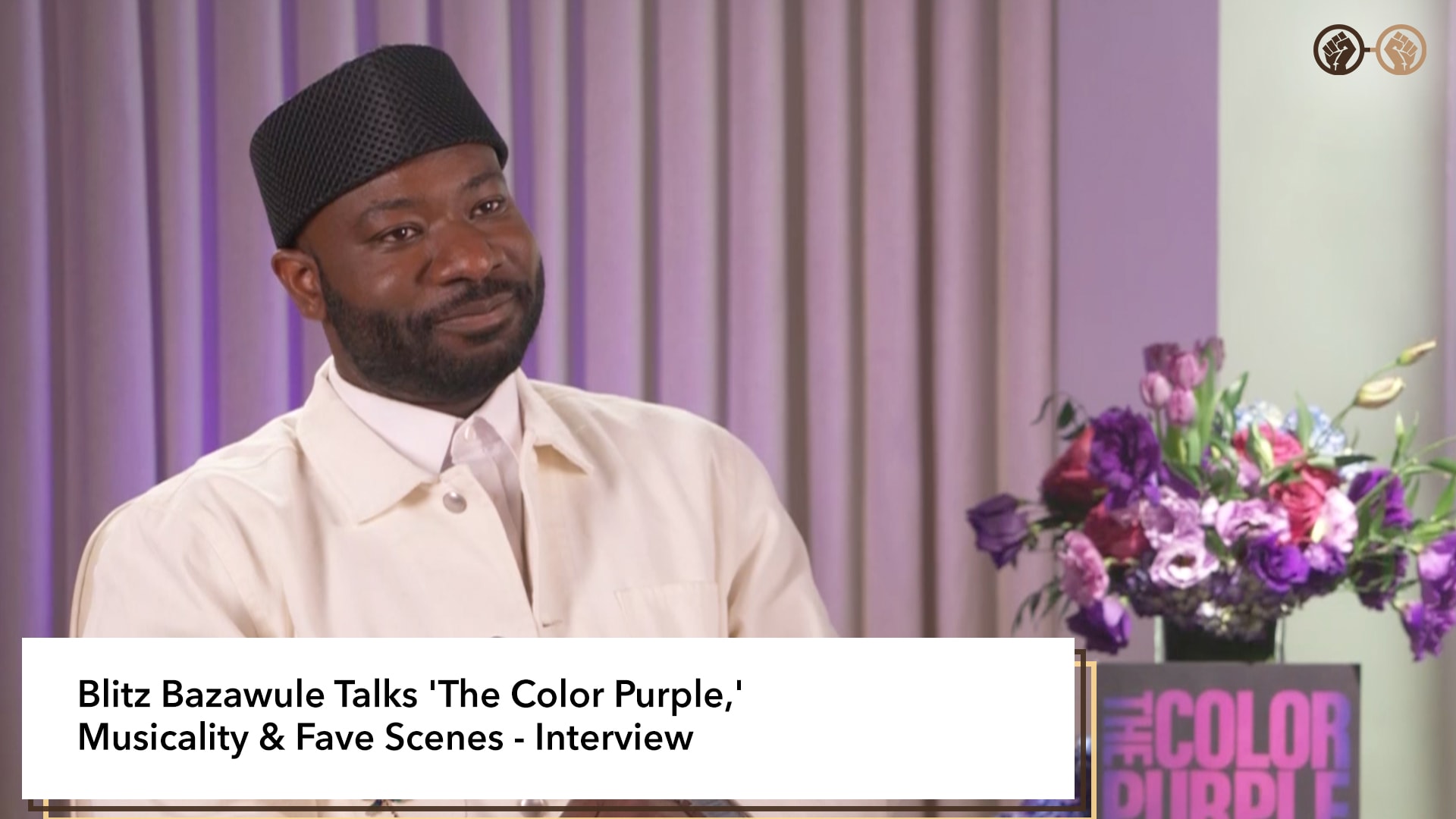
The Color Purple is Blitz Bazawule’s third feature film, following his turns behind the camera for The Burial of Kojo and Black is King, and I had the opportunity to sit down with the director to chat with him about his latest directorial work.
As a musician himself, Bazawule brought all he learned from touring with a band to his work on various musical-themed projects to the forefront for his direction of this new reimagining of The Color Purple.
Check out the full interview with Blitz Bazawule below:
In reference to this, Bazawule said, “I’ve had the great privilege of touring with a band for over a decade. And, when you play with a band and play that many shows, you really understand how to tell a story through a set. You know, what song do you open with, what song do you close with? You know, those become kind of your arc of musical storytelling. So, when I got this job, I thought about it the same exact way.”
As the film has so many standout moments from all of the characters in the film, and although it was difficult to choose, Bazawule shared with me what moment “wowed” him from behind the camera.

Bazawule said, “It was the Easter dinner. I mean, many things wowed me for a fact. But the Easter dinner was a masterclass of watching actors at the top of their game trade off, and I would pay good money to see that live again. You know, it was just incredible and it’s still probably one – you know, dinner scenes are probably one of the most difficult to shoot because it’s just people seated, there’s no real movements so the camera has to do all the work. This was incredible to see and the finale of it, when everyone leaves the table and we just linger on Mister on one side and Old Mister on the other side, and it encapsulates what our whole movie is about – generational trauma and how it’s passed down.”
The Color Purple is such an iconic and beloved story, and while this musical film is a reimagined version, I asked Bazawule how he navigated the process of keeping the spirit of Alice Walker’s original novel while still bringing his touches to the film.
In relation to this, Bazawule told me, “Yes, you’re right. I mean, Alice Walker’s brilliant Pulitzer Prize-winning book is the source material. That’s what we all give reverence to. My job was really to ask myself, ‘What can we contribute?’ And I think the biggest thing was giving Celie an imagination; a sprawling imagination where, for once, we could see the machinations of her liberate herself.”