

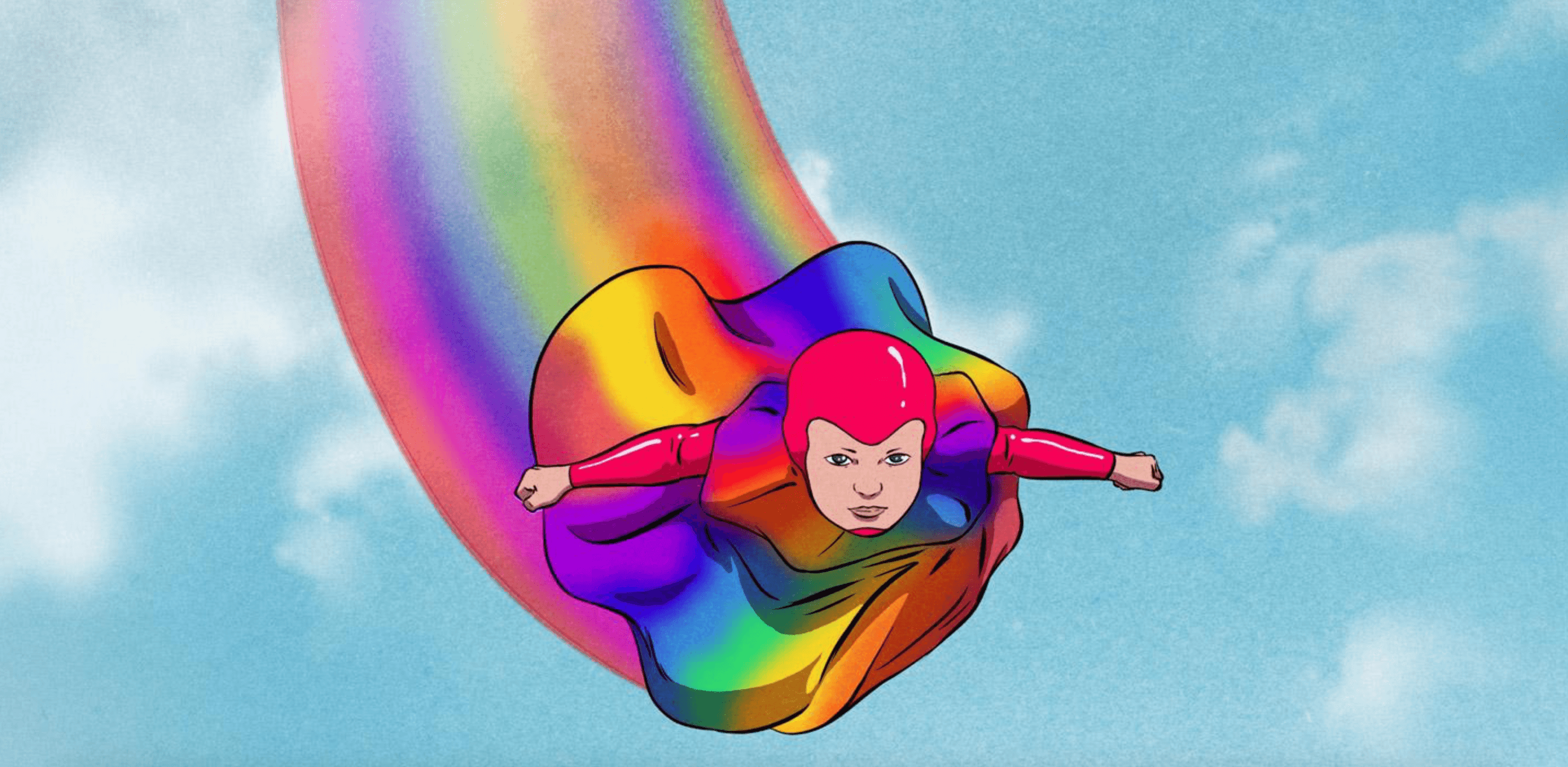
I’ve made no secret of my respect and admiration for legendary Japanese filmmaker Hayao Miyazaki, a director I consider one of my all-time favorites. His movies bring a sense of childlike wonder, empathy, boundless imagination, and mature storytelling that I rarely see in most other films made for families, much less animated ones. Unfortunately, there is only one Hayao Miyazaki in this world, and no matter how hard his admirers and imitators try to replicate or recreate his style, they always fail to capture the magic found in every one of Miyazaki’s films.
Whether it’s one of the directors at Studio Ghibli who isn’t the late Isao Takahata or even his own son, Goro Miyazaki, every one of these directors has failed to make a film of equal quality. I’ve been disappointed so often that I am convinced there will never be a Miyazaki-inspired movie of similar quality or emotional resonance throughout the rest of my life. Thankfully, at the Toronto International Film Festival (TIFF), I was proven wrong when I watched a French animated film called Arco.

The feature-length directorial debut of French director, animator, and comic book artist Ugo Bienvenu, Arco follows the titular young boy (Oscar Tresanini) from the year 3000, who steals his sister’s rainbow-colored cap to use it to go back in time to see the dinosaurs despite not being of legal age to do so. However, his attempt takes a significant detour when he accidentally time-travels to the year 2075, where the world looks vaguely similar to our own but has become more futuristic thanks to fully functioning robots, hover scooters, projection holograms of people, and giant barriers that protect communities from extreme natural disasters. Desperate to return to his timeline and reunite with his family, Arco and a young girl named Iris go on a grand adventure to get Arco back to the future, pun intended, while also evading a trio of men in brightly colored clothes who are hunting down the young boy for mysterious reasons.
As far as animated adventure movies with fantastical elements featuring children as the main characters go, Arco’s story is as streamlined and straightforward as it gets, as many of its plot elements remind me of similar films that Miyazaki developed in this genre, especially Spirited Away, Castle in the Sky, and Ponyo. In addition to its simple yet purposeful storytelling approach and structure, many other elements of Bienvenu’s film reminded me of Miyazaki, like the whimsical tone and the score that felt reminiscent of Joe Hisaishi’s scores for the Japanese filmmaker’s filmography. Yet despite these obvious influences, there was never a single point where I felt Arco was a derivative or rip-off of Miyazaki’s work in the same way non-Miyazaki Ghibli movies not directed by Takahata are.
Arco embraces its Studio Ghibli influences, but rather than relying so heavily on them, it instead uses them as a jumping-off point to create its own artistic style and identity. This results in a movie that feels warm and nostalgic while also being a fresh and unique take on a family-friendly animated adventure that reminded me of why I fell in love with animation in the first place.

Two particular elements caught my attention while watching this film: its art style and surprisingly subtle approach to worldbuilding. Arco is a visually stunning film, with each frame bursting with color and vividness. Whether it’s a piece of fruit that’s plucked from a plant or a massive forest fire that the characters run through, every tiny detail is given so much attention that it makes every element of this world not only believable but also alive.
That’s not to say Arco has a realistic art style; everything about this film’s world feels fantastical. Yet what makes the film’s animation so alluring and immersive are the little details given to all the characters and environments, such as the types of clothes they wear or the specific colors and shapes each robot possesses. Every aspect of Arco’spresentation and animation is given so much purpose that it feels as if I’m glimpsing through a whole new world that is just as beautiful as our own.

I particularly loved the film’s character design and use of color. In a Q&A after the film ended, Bienvenu discussed how growing up in various countries influenced his art style, taking just as much inspiration from anime like Princess Mononoke and Dragon Ball Z as from non-Japanese animated films and TV shows, and this influence is apparent in how the characters are drawn. While there is undoubtedly an anime influence in how all the human characters are presented and animated, especially the trio of men following Iris and Arco, they never feel like full-on anime characters due to the other influences and art styles Bienvenu incorporated into their appearance. Additionally, I appreciate how color is used throughout this film, particularly in conveying tone. A brighter and more expressive color palette typically indicates a happy or hopeful tone, while more saturated and muted colors suggest a darker tone. While it’s a small detail, I appreciate seeing it.
My favorite element of Arco is its approach to worldbuilding and how it uses visual storytelling to express so much about its setting. Iris inhabits a world that feels lived-in and real because it manages to establish a wealth of lore without feeling the need to dump unnecessary exposition. When Iris explains some lore elements to Arco, she only delves into ones that a general person would already know, like generators and telephone wires. Yet Iris still needs to explain these familiar bits of technology to Arco because, in his time, they have long been outdated in the year 3000. Yet when it comes to the pieces of sci-fi tech unique to this universe, Bienvenu wisely uses visual storytelling to subtly yet clearly communicate to the audience not only what they’re used for but also the underlying thematic elements connected to them.
For example, at the beginning of Arco, Bienvenu introduces giant, transparent barriers that protect various families from a heavy thunderstorm. This is a subtle yet effective way of communicating that climate change has become such a major problem that shields have been created to protect the world, allowing it to remain habitable for humans. Additionally, various positions, such as teachers, construction workers, and police officers, have been replaced by artificially intelligent robots. The film doesn’t bring a lot of focus to this, but it’s still such a poignant comment by the film to infer how AI could potentially become so advanced that it may soon take up vital positions that we never thought would be taken from humans.

It’s clear from all these bits of worldbuilding that there are a lot of concerns on Bienvenu’s mind when developing this film. He’s concerned that we may be too late or incapable of addressing climate change, so we’ll have to resort to extreme methods to combat extreme weather. Bienvenu clearly sees a lot of good in new and emerging technology, but is concerned about how much of ourselves we lose as more modern gadgets and robotics become commonplace. These are frightening topics for a film to explore, especially for children. However, like Hayao Miyazaki, Bienvenu takes the good with the bad and is betting his chips on humanity to overcome these issues and thrive.
Like Miyazaki, the Arco director is hopeful that we will live to see another beautiful day, where the next generation will improve upon what our current one creates. That’s not to say that there won’t be hardships, but that’s just life, and I respect that Bienvenu is upfront about that with Arco’s bittersweet ending that includes a surprising amount of heartbreaking moments. Without spoiling, the film’s ending showcases that there are consequences to Arco and Iris’ actions, but it’s how they grapple with them that truly makes them compelling characters. Arco may be a movie geared towards a younger demographic. However, its thematic messaging, art style, universe creation, and narrative approach are attributes that everyone can and should grapple with.
Rating: 9/10