

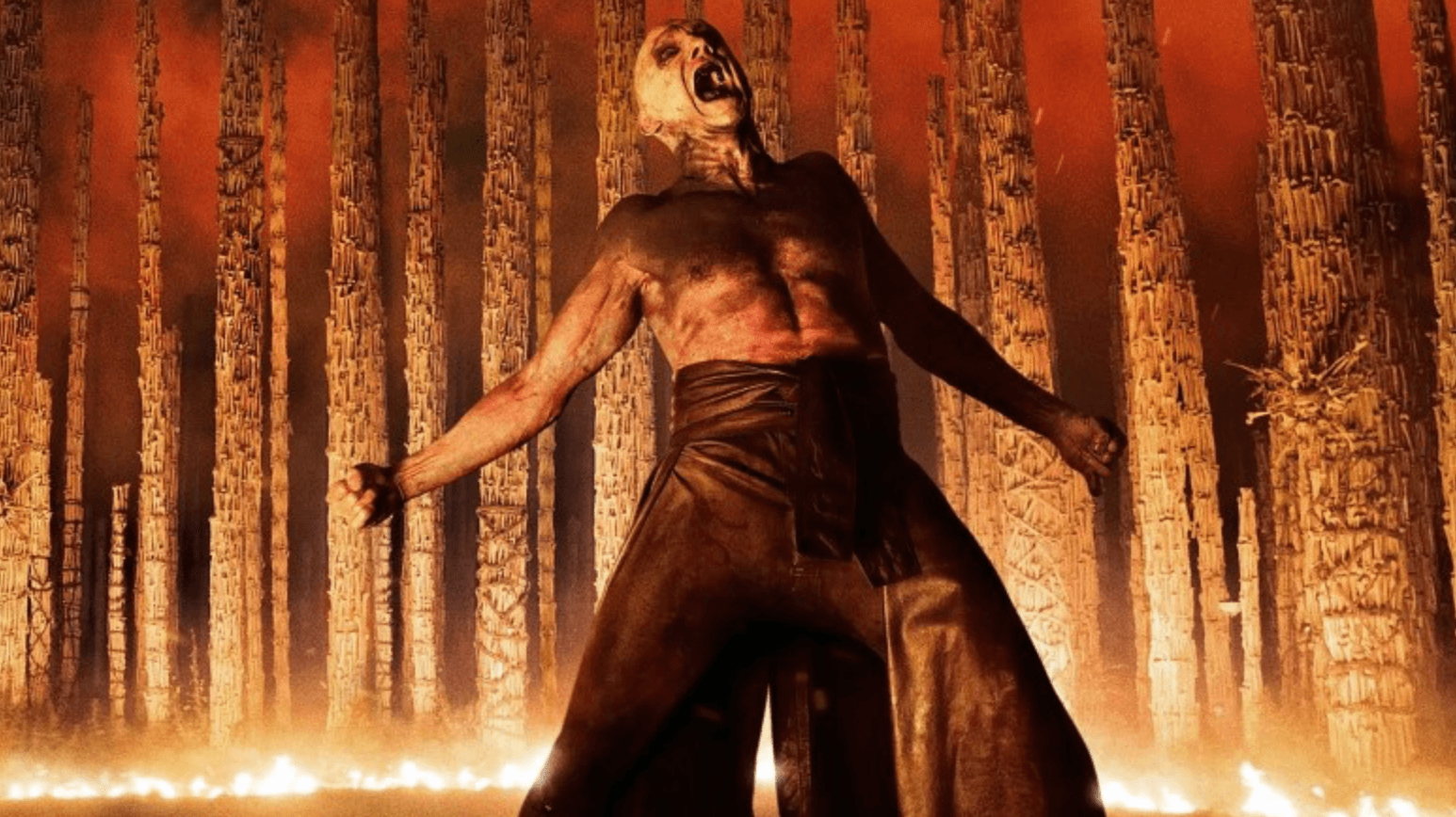
The middle sections of three-part narrative trilogies are often among the hardest to make, because, at the end of the day, they are the second act of a three-act structure. They are neither the beginning nor the conclusion, so they have the uniquely challenging task of feeling like their own self-contained stories with satisfying setups and payoffs while also bridging the gap between the first and third films. That’s not to say that making these types of films is impossible, as some of the most beloved movies of all time, such as The Dark Knight and Spider-Man 2, are the second entries of their respective trilogies.
However, for every The Empire Strikes Back and The Two Towers, there’s an Attack of the Clones and Desolation of Smaug that usually follow afterwards. Luckily, 28 Years Later: The Bone Temple comfortably sits on the good side of middle-chapter films because, despite the change in directors from Danny Boyle of the first film to Nia DaCosta of this latest one, the result is a thrilling and engaging experience that I enjoyed from beginning to end.

It should be noted that despite being made back-to-back and directly tied to each other, 28 Years Later and 28 Years Later: The Bone Temple are stylistically distinct films. One of the strongest elements of 28 Years Later is its distinct and inventive approach to directing and cinematography, as the iPhone shoot lent itself to many interesting shots and camera angles. This resulted in the movie having a very grounded, visceral, and chaotic presentation style, with one of the signature filmmaking elements being the inclusion of the “poor man’s” bullet-time effect in many of the horror/action sequences. In addition to its unique look, the film also felt experimental in its editing, as some of its best sequences mixed World War I footage with fantasy sequences featuring King Arthur and Camelot, along with other elements that gave the film a uniquely English vibe. Danny Boyle used the fact that 28 Years Later was a sequel to an iconic horror classic as an excuse to be bold and innovative in terms of its filmmaking. Unfortunately, this sequel lacks that sense of experimentation.
That’s not to say that 28 Years Later: The Bone Temple is poorly directed; far from it. This is a great-looking film that is not only filled with beautiful shots and excellently directed sequences but also very much feels like a DaCosta film through and through. The worst decision DaCosta could have made with this sequel was to attempt (and fail) to mimic the style Boyle created in the first film. Therefore, rather than imitating what came before, she stuck to her guns and made a movie that reflected her approach to horror and filmmaking sensibilities, resulting in a sequel that is just as confident in its presentation as the previous entry. Some of the best moments, from a visual and horror perspective, are scenes in which the camera lingers on the violence and gore long enough to maximize their impact, leaving the audience feeling as uncomfortable and terrified as possible. When a person is screaming in agony or pain or suffering a horrendous death, the camera hyperfocuses on these moments to sell the brutality of the world the characters live in.
However, as effectively directed as 28 Years Later: The Bone Temple is, it is nonetheless shot in a much more conventional way than the first movie. While there’s nothing inherently wrong with that, I can’t help but feel this sequel is visually lacking compared to 28 Years Later, which had such a memorable, frenetic feel in its directing and cinematography. The bullet-time effects and wild camera movements are what drew me into the first movie, and seeing these filmmaking elements absent in this sequel made me miss them.

Speaking of missing attributes from the first movie that aren’t in the sequel, the score in this film is a step down from 28 Years Later, as itis neither particularly strong nor memorable. The music is an integral part of both 28 Days Later and 28 Years Later, as it not only establishes the tone of each film but also creates an immersive environment that allows the audience to feel the same cathartic emotions the characters are experiencing. Whenever I think about the scene in 28 Days Later where Jim (Cillian Murphy) walks through an empty London or the scene in 28 Years Later where Jamie (Aaron Taylor-Johnson) and Spike (Alfie Williams) leave their village while the Boots poem plays in the background, I almost always think of the John Murphy and Young Fathers scores, respectively. The score for this sequel is fine for what it is and effective at creating a creepy tone for the horror sequences, but ultimately falls short of the quality of the previous entries.
However, where 28 Years Later: The Bone Temple lacks in directing, cinematography, and score, it makes up for it with an incredibly gripping story that I found myself invested in from beginning to end. Out of all the entries in this franchise, this one has surprisingly the most interesting and complex narrative, and a big reason for that stems from what this film explores and how it chooses to tackle its characters and themes. One of my biggest fears going into this film was that it would turn into a 28 Weeks Later, where it does the typical sequel thing of just being the first film again, but with bigger explosions, even more gore, and none of the charm or nuance of the original. I was concerned that it would take a page from The Last of Us Season 2, indulging in mindless zombie action and amping up the scale and spectacle of what came before. Luckily, my fears were tempered: instead of the typical sequel, I saw a contemplative, melancholic film that asks how one copes in a cruel, forsaken world with little hope and much violence.

28 Years Later: The Bone Temple answers that question through its two central characters: Dr. Ian Kelson (Ralph Fiennes) and Sir Lord Jimmy Crystal (Jack O’Connell), both of whom are incredibly well-written, well-acted, and complex characters that I could not keep my eyes off of. This sequel makes a bold choice to create a dual narrative that mirrors the journeys of the two characters. For example, they’re both people who use their respective fields (science for Kelson and religion for Jimmy) to explain to themselves why their lives have gone the way they have, and fall back on their love of pop culture to cope with the horrors of their reality (music for Kelson and TV/Jimmy Savile for Jimmy). However, where the two characters diametrically oppose is how they choose to live in this chaotic and unforgiving world, and the people they become as a result of their decisions. Jimmy is a cruel, sadistic, and gleefully violent man who uses religion and pop culture to realize that nothing truly matters except fear and brutality. As long as he constantly puts on an act that he’s the baddest and most unhinged person, he can keep control of his “family” of Jimmies while also never being put in the same vulnerable position he was in as a child in the opening of 28 Years Later.
Kelson, on the other hand, takes an antithetical approach, using compassion and empathy as his main tools for navigating life. He even applies this mindset to the infected, whom he sees not as mindless and savage animals but as innocent people suffering from a disease. He’s a doctor after all, and since this zombie outbreak happened because of a virus, it’s only natural that he approaches this issue from a medical perspective, not a combative one. His unique approach to the infected leads to one of the film’s most memorable and emotionally tender plotlines: the relationship between Kelson and a hulking Alpha zombie he names Samson (Chi Lewis-Parry).
As someone who has consumed a lot of zombie media throughout my life, I have never seen anything like this in any piece of fiction in this genre. Zombies have consistently been portrayed as a threat and nothing more, so to see a storyline involving Kelson and Samson essentially getting high on morphine and babbling about life (or at least, Kelson does most of the talking) like two stoner college roommates is such a refreshing new idea in a genre that feels so played out and stale. These quieter moments of solitude and peace, where Kelson and Samson sit around, high as a kite, while the doctor explains his ethics and duties as a medical professional, serve as welcome breaks from a film otherwise filled with nonstop brutality.

I was genuinely surprised by how restrained 28 Years Later: The Bone Temple was in avoiding expansion in scope and scale. It instead picks up where the first film left off and takes a more introspective approach, drawing on the zombie genre and its tropes to ponder questions of hope, nihilism, religion, and humanity. This film is so thematically rich and narratively detailed that, at a certain point, I stopped thinking about the directorial style of the first film and instead became laser-focused on the story of this sequel.
There is so much about 28 Years Later: The Bone Temple that I adored, and my attachment to the events of this film has only made me more excited for the next installment. In an ideal world, the perfect version of this trilogy capper would combine the experimental filmmaking of the first movie with the sequel’s thematic depth and narrative richness. However, until then, the next best thing for me is to watch the first two over and over while patiently waiting for the next movie to be released.
Rating: 7/10