

Exit 8

I went into Exit 8knowing it was an adaptation of a game and familiar with its premise and gameplay mechanics. However, even without this knowledge, I could have identified the video game influences in this film simply by examining its structure and presentation. Similar to the game, the film employs a straightforward, practical poster guide to outline the rules of its universe: avoid any anomalies; if you encounter any, turn back immediately; if not, proceed without turning back, and exit at Exit 8. It’s a fairly simple premise, and the way director Genki Kawamura executes it leads to positive and negative effects.
As far as positives go, the production design and cinematography are easily the best aspects of Exit 8, making the film visually stunning. The team behind this film is clearly passionate about the original game, as they go to great lengths to recreate the look and feel of the hallway the characters repeatedly walk through. From the gleaming white walls/floor to the precise placement of the various posters and doors, every aspect of this movie’s continuous set is a replica of what was initially presented in the game. Additionally, because most of this movie takes place in a single location, Kawamura incorporates many oners that often last for minutes before a cut is made. I love that the director made this decision because all these long takes are not only visually engrossing but also serve as a clever callback to the game, where everything happens in real time with no cutscenes, to the endless loop the players attempt to break.
However, if Exit 8, as an adaptation of a game, draws on its best elements, it is also responsible for its worst aspects. Exit 8 is a relatively short game, with completion times ranging from 15 minutes to a single hour. Due to its incredibly short length, the film adaptation often resorts to the most egregiously artificial methods to stretch out the runtime. One of the worst ones is when the characters make the most blatantly absurd decisions for no discernible reason, like not turning away when an alarm goes off (an obvious anomaly) or running up a set of stairs that is clearly not an exit, especially when they haven’t reached Exit 8. Another method involves the film indulging in the laziest horror clichés, such as a character tripping while escaping danger or slowly creeping towards something that is visibly dangerous.
It’s disappointing that Exit 8 has these glaring flaws because had it actually respected the audience’s intelligence and let the characters act like real people, then there would have been enough great material for an effective 30-minute short. I would have preferred Exit 8 to be a short film anyway, as it would have forced the filmmakers to cut out all the unnecessary fat and create a tighter, more streamlined horror experience like the original game. While I still enjoy this movie overall and don’t regret watching it, I can’t help but think an even more terrifying version is somewhere on the cutting room floor.
Rating: 6/10
Hamnet

Admittedly, I was a bit skeptical when going into Hamnet, as I wasn’t the biggest fan of Chloé Zhao’s Best Picture winner, Nomadland. It’s a movie with a stellar performance from Frances McDormand and visually breathtaking visuals, but it left me feeling cold, detached, and overall bored. Therefore, I was taken by surprise not only by how much I ended up loving Hamnet but also by how much warmer and more emotionally powerful this film is compared to Zhao’s previous indie cinema.
The best thing I can say about this movie is that it successfully tugs at my heartstrings without resorting to cheap, manipulative tricks or gimmicks to evoke tears or devastation. The film earns every attack to my heart, especially in the last 10 minutes, which was such a satisfying payoff to all the highs and lows throughout the movie. Everything about this movie exudes genuineness and love, and a big part of how I connected with Hamnet so deeply stems from its two biggest strengths: the cinematography and the acting.
While Nomadland takes a very documentary, detached approach to its subject matter, Hamnet employs a more varied range of shot compositions. Some are medium shots that are detached from the drama; some are close-up shots that really get in the characters’ faces and capture the expressive emotions spelled out on their faces; and some are wide shots that bask in the environment the characters find themselves in. There’s so much detail and purpose behind every shot, and they all enhance the core emotional drama that drives this story and its characters’ motivations.
Speaking of which, the acting is nothing short of phenomenal, with everyone delivering Oscar-worthy performances, particularly Paul Mescal and Jessie Buckley. While Mescal is excellent as always and has consistently proven to be a competent actor, Buckley is the real star of the show, as she is, by far, the standout actor in the film. Buckley’s character is more or less the protagonist, so the audience gets to spend a lot of time with her, seeing her showcase a broad range of emotions, from solemnly quiet to devastatingly loud and in tears.
If I have one major flaw with this film, it’s how it utilizes music. While the actual composition isn’t bad, the problem is that the score is often used unnecessarily to make scenes more dramatic than they need to be. The scenes, on their own, are already sad and emotionally resonant because the writing, acting, and directing sell those moments; they don’t need this overly dramatic, sentimental score to communicate what’s already been clearly stated. While I gradually got used to how the music was used, it remained a persistent issue I couldn’t ignore, and I wondered how much more effective Hamnet would have been if it had cut out most of the score.
Despite this major flaw, Hament is still an incredible movie that I thoroughly enjoyed from beginning to end. I wouldn’t be surprised if this becomes a crowd-pleasing favorite when it eventually arrives during award season.
Rating: 8/10
It Was Just an Accident

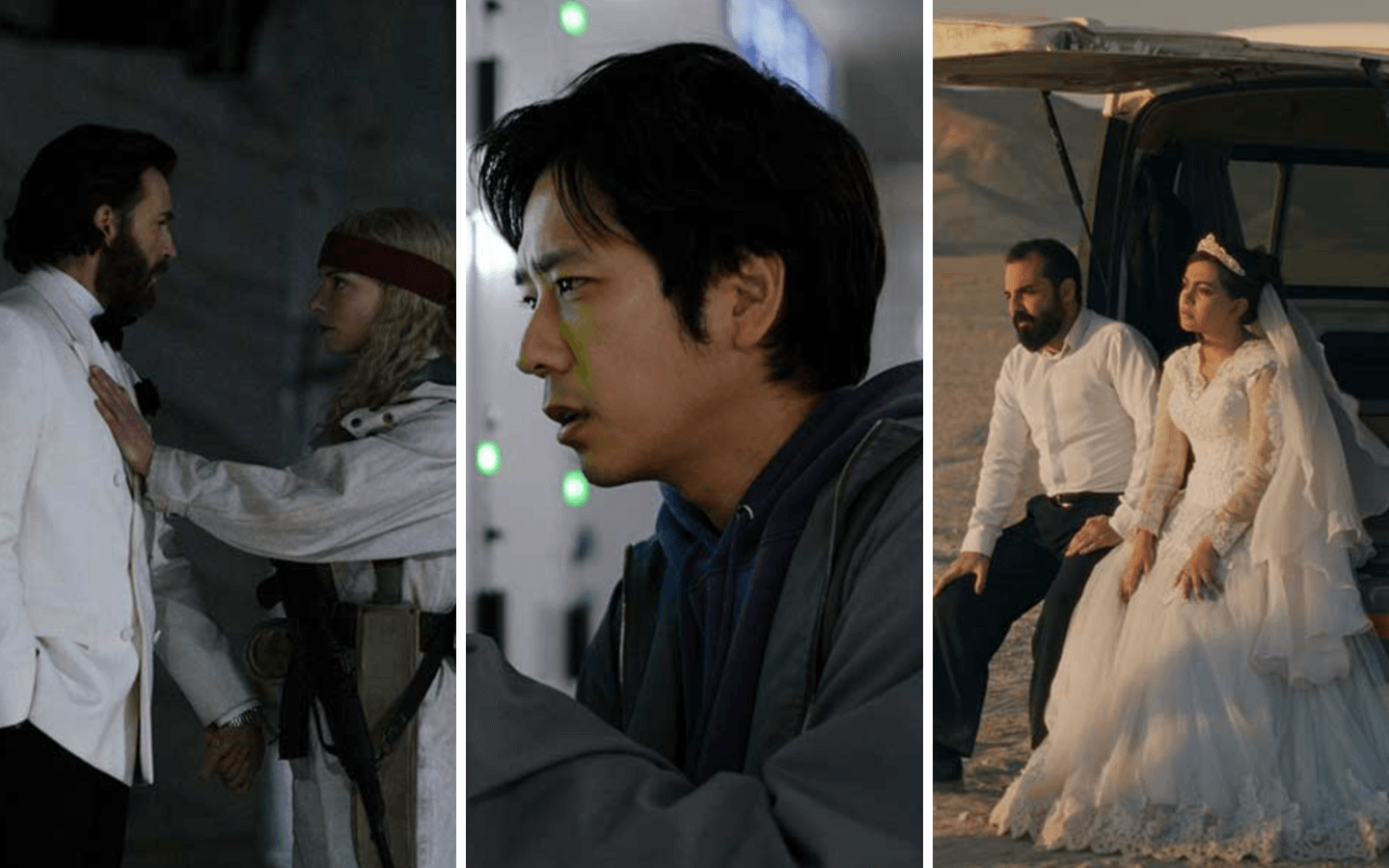
Despite not being familiar with Jafar Panahi’s work, I was excited to check out his latest film, It Was Just an Accident, because it won the Palme d’Or at the Cannes Film Festival. I’m not really the type of person to seek out a film purely because of what or how many awards it wins. However, in the past, many Palme d’Or winners have become some of my favorite films in their respective years, such as Titane (2021) and Parasite (2019). Therefore, I watched Panahi’s latest acclaimed movie with high expectations, and for the most part, it met them sufficiently.
My only fundamental flaw with this movie is that it briefly lost my interest during a scene in the second half, where the characters must help a pregnant woman who has fainted and her child by taking them to the hospital. While I understand the importance of this scene for fleshing out each character’s morality and motivations in the dangerous circumstances they find themselves in, it was still the only part of It Was Just an Accident that I found unengaging. Everything else about the movie, though, is absolutely amazing.
What I found particularly interesting about It Was Just an Accident is the minimal use of flash and movement in directing and cinematography, as the film primarily consists of static medium or medium close-up shots, punctuated by occasional pans to break up each scene. This results in the movie having a very theatrical presentation that works incredibly well within its context. The film’s premise is already reminiscent of Ariel Dorfman’s play Death and the Maiden, so having it be shot like cinematic theater naturally fits this narrative and tone. However, even without the theatrical influences, Panahi’s directorial style and approach still work effectively, as they allow each actor to really let loose, chew up the scenery, and give phenomenal performances that are still etched into my memory.
As someone who went into this film blind, knowing nothing other than it being a thriller, I was taken aback by how surprisingly humorous its first half is, as I found myself consistently laughing at various moments. While it’s certainly not trying to be absurdist or goofy in the same way Park Chan-wook’s No Other Choiceis, the fact that it can create these lighthearted and comedic moments is impressive. However, at the end of the day, this is still first and foremost a thriller that not only critiques the repressive and inhumane methods of the Iranian regime but also looks down on the people who mindlessly carry out the government’s cruelty with no regard for their fellow humans. The last 15 minutes of this film truly embody Panahi’s disdain and judgment toward these people and institutions, leaving me both depressed and on the edge of my seat. Those last 15 minutes were by far my favorite part of the film, and it was during that final scene that I finally understood why It Was Just an Accident rightfully won the Palme d’Or.
Rating: 8/10
Nouvelle Vague

Nouvelle Vague is a film I found so boring and unengaging that I didn’t care about a single moment. At the same time, perhaps I feel this way because I am not the intended demographic for Richard Linklater’s biopic about Jean-Luc Godard and the making of the French New Wave classic, Breathless. As someone who hasn’t seen the 1960 film or many movies in this era of film history in general, I recognize that people who are much more passionate about this subject matter will engage with Nouvelle Vague on a deeper and more intimate level than I ever could. It’s similar to how I could never connect with a modern Marvel movie in the same way that a hardcore MCU fan would, as that particular fan will be far more up-to-date with the lore and worldbuilding than a casual viewer like myself.
However, as easy as it is to say that Nouvelle Vague is essentially a Marvel movie for film students and cinephiles who love French New Wave cinema (which it basically is), I can still recognize that it’s a well-made movie in terms of what it sets out to accomplish. The performances are all great, with Guillaume Marbeck as Godard, Zoey Deutch as Jean Seberg, and Aubry Dullin as Jean-Paul Belmondo standing out as they disappear entirely in their roles. I admire the blocking and black-and-white cinematography, which make every frame of this movie visually appealing. I love the movie’s production value and set design, as everything looks period-accurate.
While Nouvelle Vague is a technically well-made movie, part of me doesn’t understand why this wasn’t shot or presented like a French New Wave film, especially considering both this film’s subject matter and Linklater’s supposed enthusiasm for this era of cinema. Instead, it’s shot very plainly and simply. While there’s nothing inherently wrong with that, as it’s what makes a lot of other Linklater movies great, it ultimately comes back to why I couldn’t attach myself to a single moment in this entire film. Nouvelle Vague painstakingly recreates the making of Breathless. Yet it doesn’t even attempt to replicate the very style that made Breathless and French New Wave cinema memorable in the first place. This film desperately needs a distinctive style like the one in Breathless to compensate for its empty narrative. Unfortunately, Nouvelle Vague is also lacking in that department.
This movie shares many similarities with films like Napoleon or All the Money in the World, which I like to label “Wikipedia movies.” If I watch a film based on a historical figure or event and my enjoyment is virtually identical to what it would be if I had just read their Wikipedia page, then it’s a “Wikipedia movie.” Films that do not do anything interesting or unique beyond just recounting history, and therefore have virtually no reason to exist. At that point, they might as well be documentaries, as I would have preferred to have watched one about the making of Breathless instead of this movie. A great biopic should get me invested in its subject matter, regardless of my familiarity or interest, and unfortunately, Nouvelle Vague is not one of them.
Rating: 5/10
Rental Family

Out of everything that I saw at TIFF 50, Hikari’s Rental Family is by far the most accessible, mainstream, and crowd-pleasing film I saw at the festival. When I use such adjectives to describe a movie, especially one that’s trying to tug at a viewer’s heartstrings, it’s often used within a negative context for films I consider to be “Oscar bait.” Films like The Blind Side, Green Book, or King Richard are such examples, and I have little to no respect for such movies that are shallow, surface-level, and emotionally manipulative.
Fortunately, Rental Family avoids the many pitfalls these “Oscar bait” films tend to fall into by having the two most essential elements for a narrative like this: genuineness and heart. This film delivers an authentic portrayal of Japanese rental services from a perspective that understands the subject, while also making it accessible to outsiders unfamiliar with the practice.
That latter point of view is embodied through the film’s protagonist, Philip Vandarploeug (Brendan Fraser), a white American actor living in Japan who a rental service family recruits to play various roles for clients in need of specific people to fill whatever void is missing from their lives. At first, Philip doesn’t understand why anyone would want to use such a service instead of just going to therapy or acquiring mental health resources. Yet as he spends more and more time with specific clients, such as a biracial girl who never knew her father and a retired actor concerned about his legacy, he slowly understands just how much his presence means to these people and how fulfilling it feels to provide some semblance of sunshine on their dark and empty lives.
With these kinds of premises and storylines, it would have been easy for Rental Family to indulge in the sadness or hokiness and end up being an overly sappy film. Yet at no point did such thoughts come to me while watching Rental Family, and a big reason for that is how Hikari develops the movie’s core emotional resonance.
The film certainly toys with my emotions, but in a way that doesn’t come across as manipulative or disingenuous. After all, this is a movie about people playing characters to help lonely individuals dealing with emotional or mental issues, so it makes sense that the characters’ feelings mirror the ones I have while watching. That’s not to say Rental Family has any metatextual elements, as it plays its story straightforwardly.
However, the fact that this movie lacks any pretension and uses a uniquely Japanese service to tell a universal story about loneliness, love, and finding purpose amongst loved ones is admirable, mainly when it accomplishes it so well. Rental Family is a beautifully shot film with great performances from its cast, leaving me tearing up at a couple of moments. It’s by no means the best movie of the year, but it’s still one that I adored and would definitely see again.
Rating: 7/10
Sacrifice

Sacrifice is a poorly written, agonizingly eye-rolling film that makes so many bizarre narrative and structural decisions that I was left mind-numbingly irritated and bored throughout its runtime. What’s particularly frustrating about this film is that it has an interesting enough premise: it follows a washed-up movie star named Mike Tyler (Chris Evans) who attempts to make a comeback by attending a celebrity gala. However, he is later kidnapped by a radical terrorist group led by Joan (Anya Taylor-Joy), who believes sacrificing him and two other people will save the world.
There’s a lot that could be explored, especially from an environmental and anti-capitalistic perspective in the same vein as a Ruben Östlund or Bong Joon-ho film. If this movie had approached its subject matter differently or emphasized specific story elements, we could have ended up with a much more poignant—or at least entertaining—film.
Instead, we are left with a movie that is thematically surface-level, narratively shallow, and needlessly meandering, leaving little worth mentioning or remembering about Sacrifice. This film is divided into two halves: the first half being a “satire” of celebrities and the 1% being so out of touch that they are unable to provide meaningful solutions to real-world issues like climate change, and the second half being the most generic and clichéd action movie that one would find after 10 minutes of mindless scrolling on Netflix. I use the word “satire” in quotation marks because to call any minute of the first half satirical would be a gross exaggeration. It’s bad enough that the film’s messages about class and environmentalism have been done dozens of times before and much better, but it’s how they go about expressing their points that is particularly flawed.
Part of what makes films like Triangle of Sadness or Parasite so bitingly effective satirical critiques of the upper class is that they not only offer unique perspectives on that theme but also express that point of view through dynamic directing, cinematography, production design, dialogue, and performances. Sacrifice instead takes a similar approach to that of The Menu, in which it lacks any interesting filmmaking and hits you on the head repeatedly with the same point. Yet as obnoxious as Sacrifice’s first half is, it’s at the very least not boring. I figured that if this is going to be the whole film, then it’ll at least be a somewhat stimulating experience.
Unfortunately, the movie completely pivots into new territory in the second half and essentially becomes just a painfully average jungle action movie. I, for the life of me, do not understand why Sacrifice makes this change, especially when there is not a single bit of engaging or exceptional action filmmaking at any point during this second half. The director’s previous film, Athena, is by no means perfect, but it at least had a phenomenal action scene that I still remember to this day. The fact that there isn’t even one remotely memorable set piece in Sacrifice, and the only notable element of this second half worth mentioning is John Malkovich’s terrible accent, is especially frustrating.
Sacrifice is a gigantic waste of potential that completely drops the ball at every possible opportunity, especially when it’s playing with such a massive cast of star-studded actors who don’t do anything. There isn’t really much else I can say about this movie because, frankly speaking, I have forgotten most of it already.
Rating: 4/10
Sentimental Value

I’ve only seen two films from the Danish-Norwegian director Joachim Trier: The Worst Person in the World and his latest, Sentimental Value. Yet, despite my limited experience with Trier, I have no qualms calling him one of the best modern directors working today after seeing Sentimental Value. Like The Worst Person in the World, it is an emotionally powerful film that tugged at my heartstrings at every turn. What makes this film such a joy to watch is that it not only balances comedy and drama perfectly but also presents both in an authentically human way.
For example, comedic moments like Nora (Renate Reinsve) running away with a vase to avoid her father, Gustav (Stellan Skarsgård), or Gustav gifting his grandson Criterion copies of The Piano Teacher and Irreversible are hilarious moments that don’t rely on being overly slapstick or goofy. Similarly, all the dramatic scenes are incredibly effective because when I watch them, I don’t see actors playing characters or delivering dialogue. I see people expressing genuine emotions and engaging in realistic arguments.
The lead actors are what ultimately make both the comedic and dramatic moments work as well as they do, as everyone gives phenomenal performances. Renate Reinsve and Stellan Skarsgård both give Oscar-worthy performances, but my favorite actor in the movie is by far Inga Ibsdotter Lilleaas, who plays Nora’s sister, Agnes. Her performance especially stands out because while her character has the same mental health issues and inner demons that Nora and Gustav have, she can mostly keep them under pressure, except in the more emotionally volatile and charged moments, where she either gets angry or allows herself to become vulnerable.
My favorite moment in the entire film, which encapsulates this, is the scene where Agnes visits Nora to check on her and they read the script together, finally understanding why Gustav wrote the lead character for Nora. They’ve never understood their father because he’s been mostly absent throughout their lives, so when they have this tender moment of realization that this is Gustav’s way of apologizing and trying to mend these deep wounds, they have a heartfelt moment where they lie in bed, hugging each other tightly. It’s a beautiful moment that never feels manipulative or Oscar-baity, and I loved every second of it.
While the performances are the best elements of Sentimental Value, they are enhanced by Trier’s excellent directing. This is a visually stunning film, as every frame, whether it’s a wide shot of a character sitting on the beach or a close-up shot of a character’s face, is presented and framed with absolute precision. There is very little to complain about with this film, as I adored almost every aspect of Sentimental Value. I am excited to see it again when it gets a wide release.
Rating: 9/10