

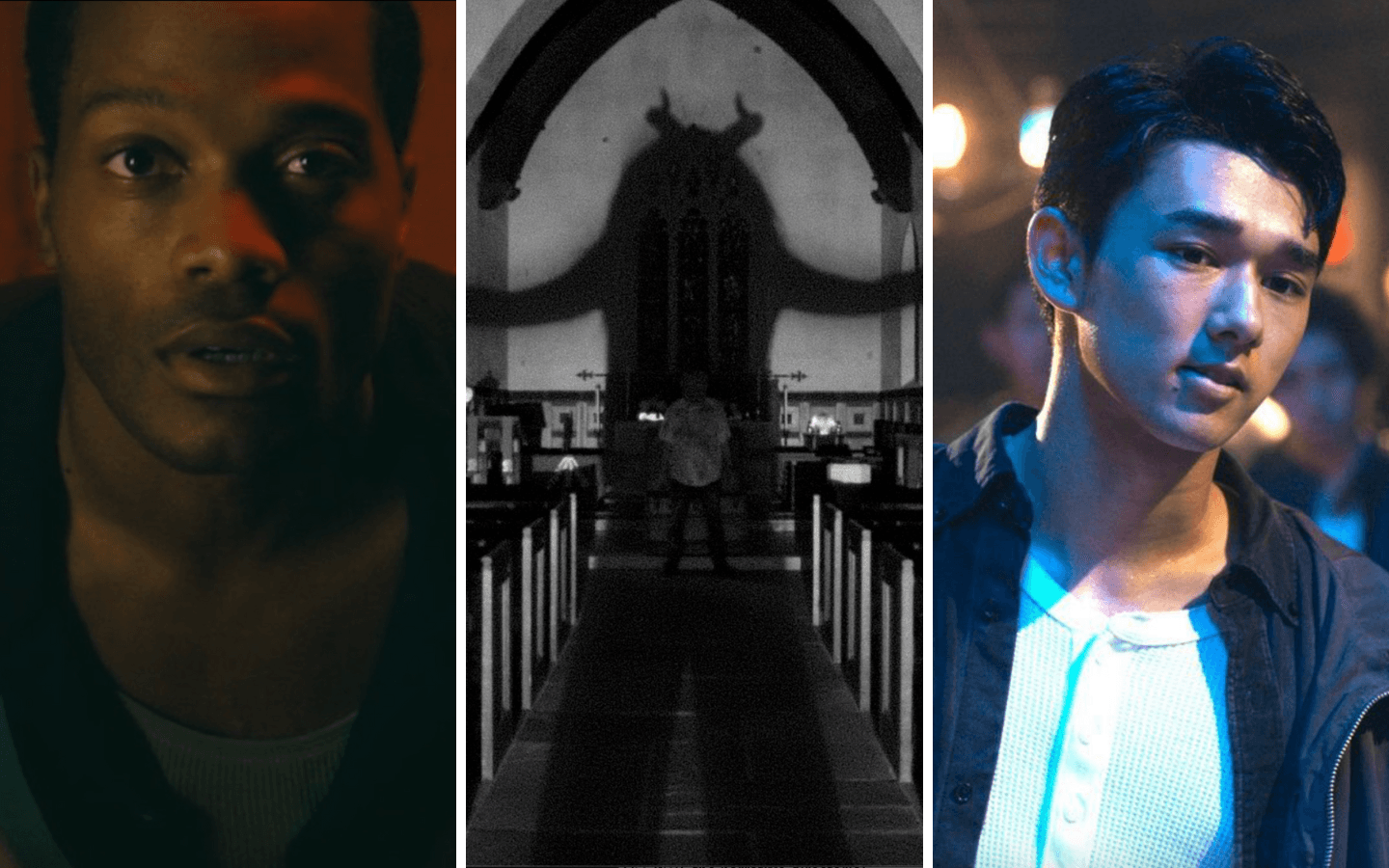
The 2025 Fantasia International Film Festival ended on August 3, and gave festivalgoers and critics an opportunity to experience another exciting, ambitious, and creatively fulfilling selection of genre films that will entertain all.
Boasting a massive catalogue, interesting viewing experiences awaited everyone for this year’s Fantasia Fest, which includes nightmarish and gory horror films, bone-chilling thrillers, martial arts action flicks, absurdist comedies, and various interesting and unique animated projects from all over the world.
I made it my goal to watch as many movies at the festival as possible. From the latest project from an established director I’m a fan of or international filmmaker I’m not familiar with, everything was on the table.
Check out my reviews for the live-action films I watched during the fest’s duration!
Blazing Fists
Director: Takashi Miike

I can’t believe it’s not based on a manga/anime! This meme best encapsulates my immediate thoughts about Takashi Miike’s Blazing Fists. Its tone, narrative structure, and portrayal of its subject matter are very similar to manga and anime about juvenile delinquents getting into gang war fistfights, like Tokyo Revengers and Wind Breaker. It wouldn’t be a first for Miike since a portion of his filmography is based on manga, anime, or video games anyway, so I was a bit surprised that it wasn’t the case for this movie. The reason why having this personal context matters is that when I approached Blazing Fists like a live-action anime/manga adaptation, it allowed me to watch and enjoy the movie under a specific context.
The film follows two characters named Ryoma (Kaname Yoshizawa) and Ikuto (Danhi Kinoshita), who, after spending time in a juvenile detention center, decide to turn their lives around by becoming fighters and winning an amateur kickboxing tournament called Breaking Down. However, they are met with challenges when various groups of gangs threaten their dreams of becoming professional fighters with intimidation and violence. On paper, there’s nothing about this premise that screams “manga or anime,” but it’s the way Miike incorporates a tone that balances over-the-top camp with unironic seriousness that makes those elements so prevalent. Almost every single character in this film is an S-tier badass combatant because they experienced some absurdly sad backstory that transformed them into the way they are; some of them even have haircuts that partially cover up their eyes. This is all inherently goofy, but because all these characters take both themselves and the plot so seriously, it ultimately becomes entertaining and even endearing at times, much like a shonen anime.
I’m not even the type of person to enjoy live-action anime/manga adaptations; in fact, I utterly despise them. Yet Miike makes something like this work because his filmmaking style treads that fine line between absurdity and seriousness. This is especially true in all the fighting scenes, where these two juxtaposing tones blend particularly well. Whether it’s a one-on-one fight or an all-out brawl between two different gangs, the fights in this film can get to an almost Rocky IV-level of silliness. Yet because the characters are so dead serious about this violence, the film rides that fine line between ironic enjoyment and actual engagement. Plus, the punches and kicks are all fairly well shot and coordinated. While it’s not as technically immersive as Creed or hyper-stylized as Raging Bull, it’s still impressive enough that the film thankfully doesn’t devolve into shaky-cam, quick-cut editing nonsense, as I can properly follow along the action without being confused or dizzy.
Unfortunately, the film’s anime and manga influence is a double-edged sword. It comes with many of the same clichés, such as progressively introducing new side characters whose roles aren’t thoroughly understood until later, when the story finally decides to share their backstory. While something like this is, at the very least, tolerable in a long-running series, it’s much less so in a movie where having a focused and streamlined narrative is imperative. The film already features a pair of charismatic and interesting lead protagonists in Ryoma and Ikuto, whose arcs are compelling enough to carry a 2-hour movie. Adding more and more characters as the plot progresses doesn’t add to anything other than just cluttering up space. Despite these flaws, Blazing Fists is still an enjoyable movie that I don’t regret seeing, even if I’m consciously aware Miike is capable of more than this.
Rating: 6/10
$Positions
Director: Brandon Daley

$Positions is somehow one of the most heart-pumping, exhilarating, intentionally cringey, and funniest films I’ve seen at this year’s Fantasia Fest. The fact that this movie managed to masterfully balance all these different tones, often simultaneously, goes to show just how much talent director Brandon Daley has behind the camera. I didn’t expect to enjoy this movie as much as I did, but now that I’ve essentially seen one of the best movies of this year, not just from Fantasia Fest, Daley has now cemented himself as a filmmaker I plan on keeping my eye on when his next feature comes out.
$Positions tells a fairly familiar story, but with a uniquely modern spin, as it is about a Midwestern blue-collar worker named Mike (Michael Kunicki) who gambles his entire savings on crypto to get rich quickly while also attempting to balance the many relationships in his life, like his mentally disabled brother (Vinny Kress), his girlfriend (Kaylyn Carter), and his recently sober cousin (Trevor Dawkins). However, what makes this film so engaging and entertaining to watch is not the story itself, but how it’s executed. This film incorporates various stylistic techniques similar to those of a Safdie Brothers movie in that, like Good Time and Uncut Gems, it features numerous close-up shots of the characters that enhance the anxiety and adrenaline both the characters and audience feel. Yet these choices in directing and cinematography never feel derivative because not only do they perfectly fit this film’s particular tone and atmosphere, but they are also complemented by other unique creative choices.
For starters, I love this movie’s sound design, particularly the noise that’s made from Mike’s phone that indicates whether his crypto funds have gone up or down. The sound this crypto app makes is already stressful, but when paired with the close-up shots of the phone and Mike’s reaction to the number, the result is a recipe filled with nothing but tension and pressure. That being said, the film is not all anxiety and adrenaline, as it’s also filled with a plethora of unhinged cringe comedy that often escalates to such heights that I found myself roaring with laughter. The funniest parts of this film reminded me of some of my favorite comedies in this particular genre, such as Nathan For You or Conner O’Malley shorts.
Ultimately, $Positions is an absolute delight of a movie that I loved from beginning to end. Not only am I eager to revisit this film in the future, but I am also excited to see what Daley has in store next.
Rating: 8/10
Obex
Director: Albert Birney

Obex is one of the most ambitious and conceptually fascinating films I’ve seen at this year’s Fantasia Fest. It’s clearly inspired by a wide variety of films, ranging from surrealist horror pieces like Eraserhead and A Nightmare on Elm Street (which is directly referenced) to video game-focused movies like WarGames and Ready Player One. Yet despite these obvious influences, it never feels like the film is a rip-off or derivative of these aforementioned movies. Instead, it takes aspects of its inspirations and melds them into a movie so creatively striking and distinctive that it is visually unlike most, if not any, movies I’ve seen this year. Director Albert Birney has a very unique voice within the world of film. If Obex is indicative of anything, it’s that this is an ambitious and talented artist I should keep my eyes on in the future.
The basic premise of this movie is that its lead protagonist, Conor Marsh (Albert Birney), spends all of his time indoors doing nothing but watching TV, creating pictures on his computer, and hanging out with his dog, Sandy. One day, when Conor plays a new video game called Obex, Sandy mysteriously disappears, forcing him to enter the game itself in an effort to save her. It’s a fairly simple concept, but at the end of the day, this is a film that isn’t really concerned with creating a coherent plot or even a logical sense of structure or progression. Obex is, first and foremost, a “vibes movie” where the priorities lie in creating an ethereal, dreamlike, and emotionally resonant experience in which the goal is not to understand what or why something is happening, but how we feel as these strange images play on screen. It’s a filmmaking approach similar to that of David Lynch or Satoshi Kon in which reality and fantasy beautifully meld together. However, the goal isn’t to challenge the audience into spotting the difference but to understand and even connect with the emotions being communicated as that blending occurs.
Obex is also an incredibly genuine and authentic film in terms of its portrayal of popular culture and technology in the ’80s, the decade in which the film is set. I should preface that the inclusion of ’80s-related pop culture isn’t just for aesthetic and referential reasons, such as how modern media like Stranger Things or It uses these attributes. These elements are here because it seems that Birney has a genuine love for video games (especially ones like the original The Legend of Zelda from 1986), ’80s horror movies, fantasy adventures, LARPing, and other nerdy obsessions that populate Obex. The way Birney expresses his love and knowledge of all these subjects while also making them fit naturally within the narrative and thematic context of the film reminds me a lot of how Anno shows his love for tokusatsu and mecha anime in his work.
That’s not to say that Obex is perfect, as it does have a couple of flaws. Admittedly, the first half of this film is quite repetitive, and it took me a significant amount of time to fully connect with it. Thankfully, the movie improved over time, and eventually, the last half hour completely won me over. Ultimately, while this is by no means the best film I saw at this year’s Fantasia Fest, it is certainly the most interesting. I had a great time watching this, and I am excited to see Birney’s past films and what he’ll be working on next.
Rating: 7/10
Terrestrial
Director: Steve Pink

Steve Pink is best known for his work in comedy, whether as a director for films like the Hot Tub Time Machine movies and Accepted or as a writer for Grosse Pointe Blank and High Fidelity. However, Pink has recently dipped his toes into more tonally serious filmmaking, as his recent directorial efforts include movies like the romantic drama The Wheel, the political documentary The Last Republican, and, of course, Terrestrial, which marks his debut in the psychological thriller genre. I admire Pink for leaving his comfort zone to try his hand at something completely different, especially when it’s in a genre that couldn’t be more tonally juxtaposed to comedy. For a first attempt at a psychological thriller film, Terrestrial has a couple of admirable qualities that are worth celebrating.
For starters, Jermaine Fowler and Brendan Hunt are the standouts of the film, as they utilize their comedic backgrounds to bring a sense of humor to both their characters and the story, which complements Terrestrial’s overall dark and thrilling tone. The inclusion of a film within a film in Terrestrial, which amusingly features two of the four Hot Tub Time Machine leads, was also an interesting choice, as it creates a parallel between fiction and reality within the context of the story. It’s clear that Pink and his cast were very passionate about what they were making, and that passion shows in every frame via its many commendable traits. Unfortunately, they are outweighed by numerous technical and narrative issues I had with the film. For example, I dislike how poorly lit and desaturated the colors are in the majority of these scenes. I got irritated by how obnoxious the music is and how much the film overly relies on it to convey tone. I was unsatisfied with many of the deaths, especially the ones that occur off-screen or are poorly edited together.
Nonetheless, all of these technical issues could have been forgiven or overlooked if Terrestrial had a core narrative that was remotely interesting or engaging to follow. The film tells a tale that is all too familiar, in which Allen (Jermaine Fowler) desperately wants to become a successful sci-fi author and spirals into chaos and violence when his idol, SJ Purcell (Brendan Hunt), disregards his manuscript and inadvertently crushes his dreams. The core concept of this film has been explored numerous times, especially in the horror genre with films like Misery and Black Swan, and Terrestrial lacks an interesting enough take on this familiar story or a stylish or unique presentation that makes it stand out. Its only notable attribute is that it is told out of order, but because the plot is so predictable and I gained nothing new from revisiting the same scenes with added context, this narrative choice didn’t matter. The film could have been told chronologically, and my experience would have remained unaffected.
Ultimately, as much as I admire Pink’s ambition to create a psychological thriller, aside from a few notable aspects, Terrestrial fails to achieve what it sets out to accomplish.
Rating: 4/10
The School Duel
Director: Todd Wiseman Jr.

I didn’t know much about Todd Wiseman Jr. or his filmography, but I was curious to check out The School Duel because the film’s premise intrigued me. The movie takes place in a dystopian Florida in which gun control is completely outlawed and school shootings are at an all-time high. To curb gun violence, the government runs a Battle Royale/Hunger Games-style competition in which the selected candidates fight to the death using guns. While gun rights are a thematic and narrative focus, the film also tackles a wide range of topics like the manosphere, toxic masculinity, how TikTok and other social media sites influence young men politically and socially, the separation between church and state, etc. It’s quite an ambitious film, especially in today’s political climate. Therefore, I figured I’d give it a watch and see how a movie like this would tackle these modern social and political issues. In retrospect, I should have snuffed out my curiosity because I could not stand a single second of this juvenile, sloppily presented, surface-level movie.
The most noticeable aspect of The School Duel is how oddly it takes everything seriously, no matter how goofy or over-the-top certain scenes would get. This is a film where people casually walk around with assault rifles strapped to their pants and cut up construction paper in the shape of a gun to make a gun-themed spinning wheel. Thus, I expected The School Duel to have some level of self-awareness, or at the very least a playful tone that conveys how inanely stupid these moments are while highlighting the underlying dangers of far-right extremism in the same vein as Paul Verhoeven’s Starship Troopers or Robocop. Instead, The School Duel takes every single second with utmost sincerity, which isn’t even something I am conceptually against, as it’s clear the film wants to take all these issues seriously. The main problem with this approach is that instead of creating an immersive and believable dystopian America fueled by fascist ideology and violence, we instead have a world that feels like it’s ripped straight out of a terrible YA novel or fanfiction.
The movie takes a page out of Southland Tales’ book in that, instead of thoroughly dissecting one or two of these complex themes, it just barrages the audience with an avalanche of some of the most surface-level observations imaginable. Every single thematic and narrative element of this film can easily be reduced to the most bare-bones and simple statements, like “guns are bad,” “religious extremism and fundamentalism are bad,” and “social media can be bad for young, maturing kids.” These are as far as The School Duel is willing to go, and it’s utterly frustrating that it doesn’t even attempt to go slightly further into more interesting or compelling explorations of the dozens of themes it struggles to juggle. It’s almost impossible for me to take anything that happens in this movie as seriously as the filmmakers seem to when my main takeaways of this movie are virtually no different than the takeaways I would have had after reading Divergent.
I also cannot understate just how dull and repetitive this film is. While I was mildly intrigued for the first 10 minutes, I quickly became bored and uninterested when I realized the movie had already rushed through its main themes and was repeating the same points. I couldn’t enjoy this movie as a Battle Royale/Hunger Games-type experience either, because not only does the death battle in this battle-to-the-death film not happen until the literal halfway mark, but it’s riddled with so many irritations that I found abhorrent, like the use of digital blood squibs and shaky cam. In an age where smartly written, thoroughly detailed, and believably serious stories about gun violence, the manosphere, and social media exist, such as Mass and Adolescence, films like The School Duel are nothing less than insufficient and substandard.
Rating: 1/10
The Well
Director: Hubert Davis

Post-apocalyptic stories about how civilization coming to an end brings out the worst in humanity are a dime a dozen. This genre has been tirelessly explored countless times by a plethora of artists through various mediums (film, TV, games, books, etc.). It has become so oversaturated that very few, if any, interesting angles remain. The Well, the narrative directorial debut from documentary filmmaker Hubert Davis, is not one of those unique takes. It is yet another post-apocalyptic film I have seen countless times. It is filled with so many of the same clichés, thematic ideas, and basic archetypes that I was somewhat surprised that zombies weren’t added just to make the narrative even more redundant.
That’s not to say The Well is devoid of any good or interesting qualities, as there are a couple of elements that I enjoyed. For starters, there were several great-looking wide shots of the environment, as well as a cool close-up shot of an animal carcass. I quite liked the film’s folky yet sinister score, which matches both the film’s forestry and post-apocalyptic setting. Some aspects of the filmmaking are praiseworthy, but unfortunately, none of that amounts to much if they are in service of a weak script and poorly written characters. Great shots and an interesting score don’t change the fact that The Well is a derivative and by-the-numbers apocalyptic film that can get incredibly dull, especially in the second act.
The only interesting idea this movie introduces is that most of the world’s water is poisonous and only a limited amount of clean drinking water remains. Unfortunately, this bit of worldbuilding plays a minimal role until the last half hour of the film, and any fascinating explorations into the world’s past or its connection to modern environmental issues are ignored. Part of what makes post-apocalyptic stories like The Road or The Last of Us so compelling is their thematic ideas that resonate and connect with modern social and political issues. I expected The Well to make similar ecological statements, given the importance of water in the plot. However, their failure to do so is disappointing, making the film even more bland and generic.
Rating: 3/10