

Zootopia 2 is hopping its way into theaters! And we couldn’t be more thrilled for everyone to see it. It’s just as terrific as the “fur”-st film, and that’s because of all of the love and care the filmmakers took into making a sequel that honors the Academy Award winning original.
Recently, Geeks of Color was invited to speak with the brilliant minds at that brought the two films to life for Disney Animation Studios.
You may recall that back in September, Geeks of Color was invited to Disney Animation Studios for a first look at Zootopia 2 during an unforgettable day! Part of that experience included getting to meet the creative team responsible for some of Disney’s best animated classics, including the first Zootopia back in 2016.

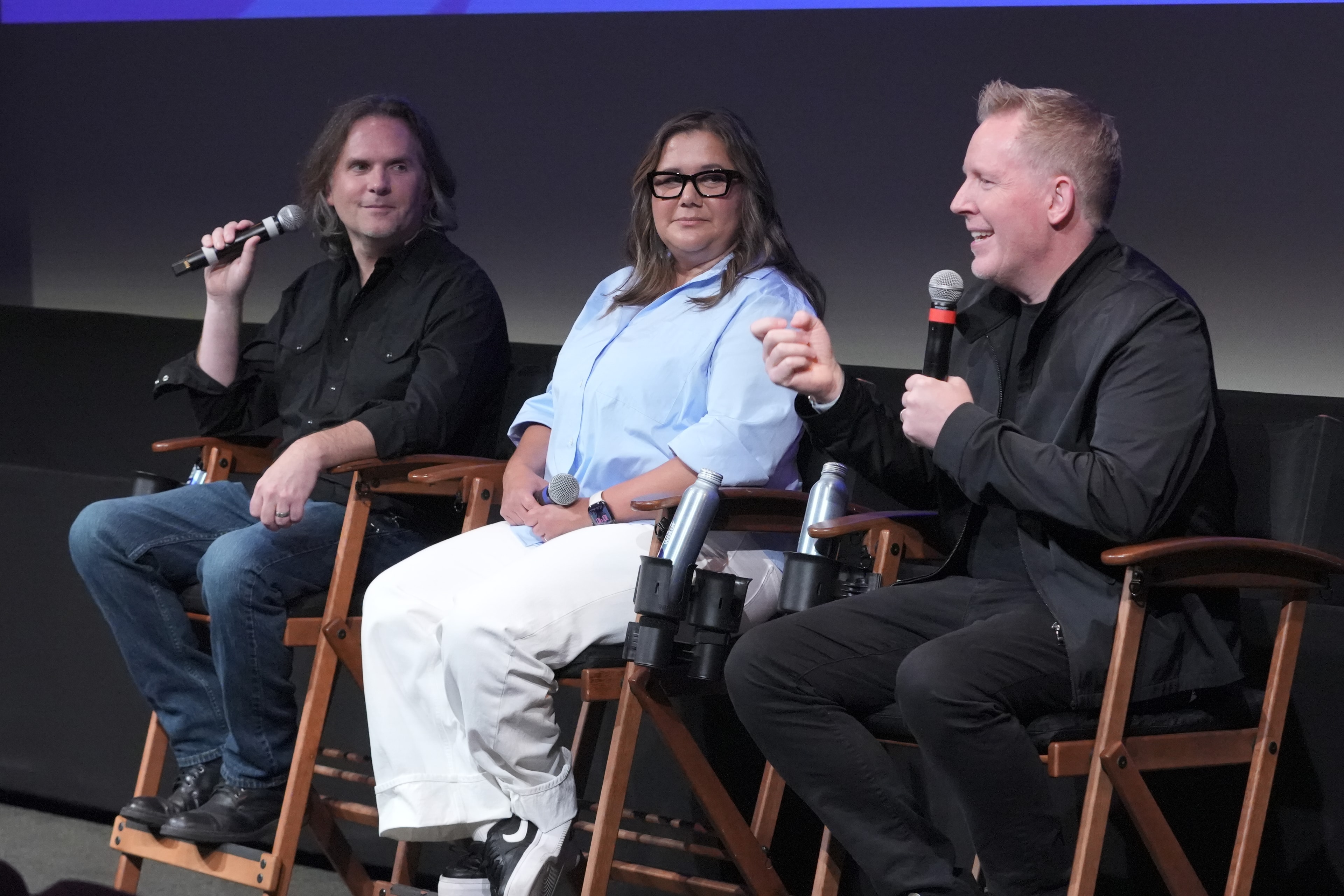
Many reunited and brought on new talent to work on Zootopia 2, and the craftsmanship, humor, and heart of the film absolutely reflect the tremendous team effort that truly lives up to its predecessor. We were so incredibly fortunate enough to speak with many of this team including directors Jared Bush and Byron Howard, producer Yvett Merino, the Co-Head of Story, David VanTuyle and the heads of animation, Chad Sellers and Kira Lehtomaki!
Here’s a look at what they all had to say here:
Jared Bush and Byron Howard
The first movie is one of my favorite animated movies of the past decade. Since we’ve seen the world change since 2016, what takeaways do you want to see audiences get from Zootopia 2?
Howard: The really nice thing is that it really does center on personal relationships. The films that we enjoy the most can be these heavy stories but they always have something very personal and very relatable. And I think it’s why Nick and Judy are still at the very center of the story, and I think it’s also why Gary De’Snake, voiced by Ke Huy Quan, is an amazing emotional anchor for the whole movie. I think that when people see his whole story, which we can’t reveal because it has to do with the plot – I think you’ll fall in love with Gary and his story and his journey.
Bush: I think when we jump into any new movies we really look at human nature and human nature repeats all the time. So the hope of this movie is that, it’s really a story about Nick and Judy, these very different animals, trying to bridge those differences. And that holds true for today as it did 5 years ago, 10 years, ago, etc. And hopefully into the future because I think innately we sometimes see these differences and are worried about them. And sometimes the simple path forward is just having a simple interaction getting to know somebody.

At the heart of the first movie, as with this one as well, there is a beautifully crafted mystery. How did you start working on the mystery for this movie? Did you start at the end and work your way back?
Bush: It’s a good question. You know I think the big thing for us was, in the first film, we talked about where are reptiles. We had a discussion that if we had another movie, reptiles would be part of it. The fun thing about that is we got to figure out how that came to be. And that became the mystery of the story. So just the fact that we wanted to branch out and bring reptiles in meant we had to explain why you didn’t see them in the first film. And it can’t be convenient or just us not paying attention to something. And that was fun for us figuring out how that happened. One really interesting thing which we rarely do here is – yes it’s a mystery in modern times – but we actually rewind the clock decades. And so you see how Zootopia was created. And so that’s part of the mystery as well. And so more than anything we got to deepen the world and the character dynamics and how everything came to be.
I’m going to ask a potentially controversial question to the world of Zootopia. How do you decide what other animals all of the animals in Zootopia eat? Because we see some people eating fish. Is that okay?
Howard: That’s true! We had this discussion on the first film because we were very dedicated to animal research. And we had animal experts who were very clear. They said if you were going to have foxes and wolves in there who are obligate carnivores, which means they have to have protein, someone had to make the sacrifice. And it turned out bugs and fish are taking it for the team! We have “Bug Burger” which is a fast food restaurant you’ll see all over Zootopia.
Bush: I will say that with that, it also means that when you see fish and bugs in this movie, we’re very very careful to make sure it doesn’t look like anybody is inside. We had a scene with grubs in it – Judy has to eat this grub and she doesn’t want to eat it – and our sound effects person put in [a desperate plea for the grub], and we were like ‘No! No! That can’t happen because now it’s an actual character with feelings and we can’t have that!’
Howard: I’m still scarred from Little Mermaid when Ursula downs that shrimp!
Yvett Merino
This is a sequel to a $1B grossing movie. And in this industry, when it comes to sequels, many think “bigger is better.” So how do you approach a sequel to a $1B grossing movie in a way that’s fiscally responsible but also creatively free?
Merino: Approaching sequels has its benefits and its challenges. One of the benefits we have in the sequel is that we have a world that everyone knows and characters everyone loves and connected with, which is great. But part of the challenge is that we have a world that everyone knows and characters everyone loves, and they have expectations based on that.
One of the things I always wanted to do in the beginning, even when Jared and I were first talking about starting to work together on Zootopia 2, was to create an environment in our story team and all the production teams where people felt safe to put forth ideas. And even if they were crazy ideas or outside of our scope, that they felt free to put that in. Because I don’t like to put rules in very early on. There are no rules or limitations. Let’s talk about what it can be because there should be no limits on imagination and creativity. And then as the story moves along and as we start going, what’s amazing in the studio is that we have such a great team of collaborators and they all come together to solve problems…everybody loves to come together to solve problems.

I love it because you see the product of that collaboration on screen. Did you ever think that there would be a second Zootopia film, and what was the confirmation that you all knew there needed to be a second?
Merino: I wasn’t involved in the first one. I was on a different film at the time. And so I know Byron and Jared love this world. And Jared came into the studio to do the original film. And they created this amazing world. I’ve been working with them for a long time, and let me tell you, their creativity does not stop. So they are constantly thinking and constantly moving things forward. So I don’t know if they always had a second one in mind. But I do know they had reptiles in mind, and they couldn’t fit it in the first film, or somehow the story didn’t work out. So coming into this one, I know they finally knew they could finally attack it.
My final question to you: If you could live in any district of Zootopia, what would it be?
Merino: Oh! I think if I could live in any district, it would be the Marsh Market. I love all the animals there. I love the water. I love Nibbles. She’s so funny. So it would be that!
David VanTuyle
What was the toughest challenge to crack in terms of coming up with the story for this one, as it follows in the footsteps of the classic first movie?
VanTuyle: The toughest thing is staying true to those two characters: Nick and Judy. We always went back to their partnership. They’re brand new partners. So where are they going to go next? What are they going to encounter? Who are they going to meet? The core of this movie is Nick and Judy and their partnership. So we just tried to stay true to that.
Zootopia is unique to most Disney movies because it’s firmly in the mystery genre. So what is the secret to cracking a good mystery?
VanTuyle: Oh man! It is so challenging. Jared and Byron are always saying mysteries are so hard. They’re one of the hardest thing to do. But I think we have so many talented and so many amazing artists in this building. They love the characters as much as you do. A lot of them worked on the first movie. They’re so passionate and so loving. They want the best possible. So having the passionate artists craft and come up with a unique story. I think fans are going to really love where this one goes!
We’ve only scratched the surface of what we’ve seen in Zootopia. That first movie took place in the one city, and we’re getting an expansion with the Marsh Market. So what ideas do you want to see specifically if future installments are told?
VanTuyle: Zootopia is so expansive. There’s definitely areas we have not seen before. I think there’s room to grow, and this movie particularly – seeing those areas – gives us a little flavor of that. It’s so rich and it’s so exciting to see new animals and getting to play around with walruses and beavers and snakes…fans are really going to love it!

Chad Sellers and Kira Lehtomaki
What’s more difficult? Animating humans or animating animals?
Lehtomaki:Depends on the animal. Snake? Harder. The thing is a lot of times with humans, we’re so familiar with them, we can pick out anything that feels not believable. With animals, we were mesmerized and surprised by how entertaining real life actually is. We learned so much about walruses and sea lions. I’ve never done such a deep dive into that world before. You just watch real life, and it writes itself. We had to incorporate it into the film.
Sellers: That’s so true. Our eye isn’t as trained to the ways that animals walk…we’re so trained in how humans move that we recognize when something feels off a lot easier than animating animals in Zootopia.
Follow up question. When you’re dealing with anthropomorphized features for animals, how do you find the balance between exaggerated features and actual real life features for the animals?
Lehtomaki:The eyes are the most important thing. The great animators here at Disney would say everybody is looking at the eyes. So you have to make sure those eyes can communicate. So you’ll see slightly larger eyes than in real life. But we’re always still trying to pull whatever mannerisms are characteristics that will work on an anthropomorphized version of that animal and incorporate that into their motion performance.
This installment we are introduced to reptiles. Did the reptiles create a bigger or different challenge for you all than in the first movie?
Sellers: A new challenge when it comes to learning about a new species and the way they move. Lizards and snakes – obviously they have different textures of skin. They’re not covered in fur. Certainly trying to emote and gesture with something like a snake has its own challenges. But the approach is the same. We go back to research and do our homework before we dive in because we try to get it right. But also we have the opportunity to exaggerate and try things because it’s animation and you can go crazy.
Are there any species you have not had the opportunity to animate before that you might want to in the future?
Lehtomaki:…Yes? (laughs) But we won’t say what.
Make sure you see this team’s amazing work by heading on down to Zootopia 2, in theaters now!